
Commercial Kitchen Cleaning Schedule: Free HACCP Template for Australian Food Businesses

A good kitchen cleaning schedule answers three questions for every task: what gets cleaned, how often, and who signs it off. It keeps your team consistent between shifts, and it is the evidence an environmental health officer will ask to see. Below is a free template you can copy straight into your food safety folder, plus a simple record sheet and a plain-English summary of what the rules require.
Table of contents
- What the rules require
- The clean-then-sanitise method
- Kitchen cleaning schedule template
- Cleaning and sanitising record
- Chemicals and equipment for each task
- Making the schedule stick
- Frequently asked questions
What the rules require
Under the Food Standards Code, every food business must keep its premises, fittings and equipment clean, and must keep eating and drinking utensils and food-contact surfaces both clean and sanitised (Standard 3.2.2).
Standard 3.2.2A, which came into force in December 2023, adds three tools for food service, catering and some retail businesses:
- Category one businesses, broadly caterers and food services that make unpackaged, potentially hazardous food into ready-to-eat food (most restaurants, cafes, takeaways and caterers), need a certified food safety supervisor, trained food handlers, and records that show key activities are under control. In NSW the Food Authority lists cleaning and sanitising among the activities that must be substantiated.
- Category two businesses, such as many delis and supermarkets that handle unpackaged ready-to-eat food without making it, need a food safety supervisor and trained food handlers.
A cleaning schedule plus a signed cleaning and sanitising record is the simplest way to meet the record-keeping part. Food safety trainers commonly advise keeping these records for at least three months; your local council can confirm what it expects.
The clean-then-sanitise method
Every food-contact task in the schedule follows the same five steps, based on FSANZ guidance:
- Scrape and pre-rinse food scraps off the surface or item.
- Wash with hot water and detergent to lift grease and residue.
- Rinse off the detergent.
- Sanitise with heat (very hot water around 77°C for 30 seconds, or a sanitising dishwasher cycle) or a food-safe chemical sanitiser used at its label strength and contact time.
- Air dry where possible, rather than wiping with a tea towel.
Non-food surfaces such as floors, walls and bins only need cleaning, unless they are contaminated. If you are unsure which product does which job, see our guide to detergent vs sanitiser vs disinfectant.
Kitchen cleaning schedule template
Adjust the frequencies to suit your menu and volume. Kitchens doing heavy frying or charcoal cooking will need canopies and filters done more often.
| Item or area | Frequency | Method | Product | Sign-off |
|---|---|---|---|---|
| Prep benches and chopping boards | Between tasks and after raw meat | Clean, then sanitise | Detergent, then food-safe sanitiser | Section chef |
| Knives, utensils, small equipment | After each use | Wash, then sanitise | Dishwasher or detergent then sanitiser | Kitchen hand |
| Slicers, mixers, stick blenders | After each use, and every 4 hours in continuous use | Dismantle, clean, sanitise, air dry | Detergent, then sanitiser | Section chef |
| Cooktops, grills, fryers (outside) | End of each shift | Degrease | Degreaser | Section chef |
| Handwash basins and soap dispensers | Daily, refill as needed | Clean | Detergent | Closing team |
| Floors | End of each shift | Sweep, then mop | Degreasing floor cleaner | Closing team |
| Bins and bin area | Daily | Empty, clean, reline | Detergent | Closing team |
| Fridge and freezer handles, door seals | Daily | Clean, then sanitise | Detergent, then sanitiser | Closing team |
| Cool room shelving and floor | Weekly | Clear, clean, sanitise shelves | Detergent, then sanitiser | Sous chef |
| Floor drains and grates | Weekly | Lift, scrub, flush | Degreaser and deck scrub | Kitchen hand |
| Walls and splashbacks near cooking lines | Weekly | Degrease and rinse | Degreaser | Kitchen hand |
| Ovens and combi ovens (inside) | Weekly or per manufacturer | Oven cleaning cycle or degrease | Manufacturer's recommended cleaner | Sous chef |
| Dry store shelving | Monthly | Clear, clean, check for pests | Detergent | Sous chef |
| Exhaust canopy and filters | Filters weekly to monthly, canopy as needed | Soak and degrease filters | Degreaser | Head chef or contractor |
| Behind and under fixed equipment | Monthly | Pull out where possible, degrease | Degreaser | Head chef |
| Stainless steel surfaces and doors | Daily wipe, polish weekly | Clean, then polish | Stainless cleaner | Closing team |
Cleaning and sanitising record
Print one sheet per week and keep it on the wall near the dish area. The sanitising column is the part an inspector looks at most, so make sure it shows how you sanitised, not just that you did.
| Date | Area or item | Cleaned (Y/N) | Sanitised by (heat, dishwasher or chemical) | Sanitiser and strength, or temperature | Issues and corrective action | Initials |
|---|---|---|---|---|---|---|
The NSW Food Authority suggests recording the temperature reached and the date if you sanitise with heat, and how and when chemicals were used if you sanitise with chemicals.
Chemicals and equipment for each task
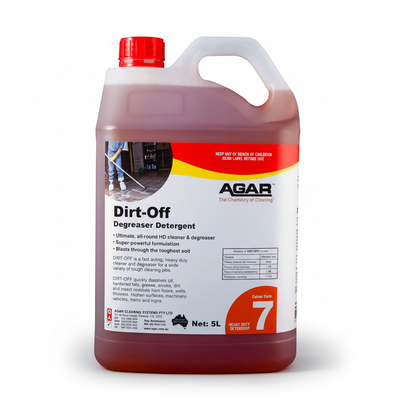
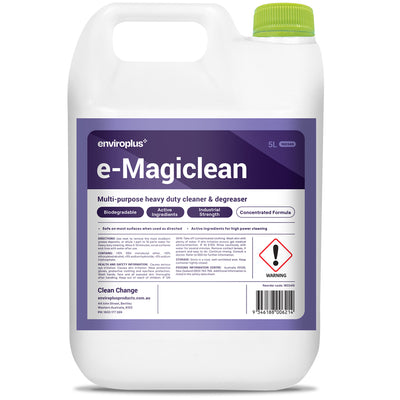
- Degreasing floors, walls and equipment: Agar Dirt-Off Degreaser Detergent 5L works with mops, auto scrubbers and pressure washers. For baked-on grease, step up to Enviroplus e-Magiclean Heavy Duty Degreaser 5L.
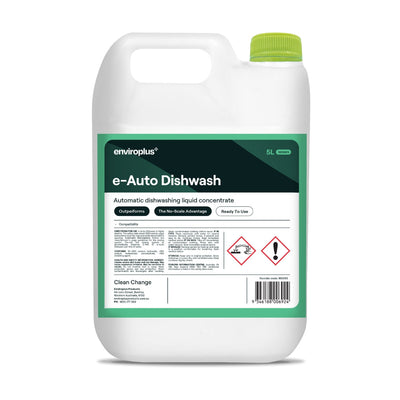
- Washing up: Cleanmax Dishspark Ultra 5L for sinks, and Enviroplus e-Auto Dishwash 5L with e-Rinse Aid for commercial dishwashers. Our dishwashing chemicals guide covers dosing.
- Sanitising benches and equipment: Agar Alcohol Sanitiser AS60 5L is no-rinse and fast drying. Plain Cleanmax Bleach 4% at 25 mL per 10 litres of cold water gives the 100 ppm FSANZ uses as a guide. More options are in our food grade sanitiser guide.
- Stainless steel: 3M Stainless Steel Cleaner and Polish 600g. See our stainless steel cleaning guide.
- Hand hygiene at the basin: Puregiene Centrefeed Hand Towel 300m rolls suit busy kitchens because staff take only what they need.
- Drains and floors: Oates Deck Scrub for grates and textured floors, and stainless steel scourers for pots and trays.
- Cloths: use one colour of microfibre cloth for the kitchen only, matched to your site's colour code. Our colour coded cleaning guide shows how to set one up.
Making the schedule stick
- Name a role, not a person, for each task, so it still gets done when rosters change.
- Keep chemicals at the point of use in labelled spray bottles and pre-measured dosing. Guessing dilutions is where most sanitising fails.
- Check the record weekly. The head chef or food safety supervisor should initial the sheet each week and follow up gaps.
- Train new starters on day one. Walk them through the clean-then-sanitise method and show them where the record sheet lives.
- Review after any inspection or complaint and adjust frequencies where problems appear.
For a full kitchen supply list, read our commercial kitchen cleaning supplies guide or the restaurant cleaning supplies checklist.
Frequently asked questions
Do I legally need a written cleaning schedule?
Every food business must keep its premises and equipment clean and sanitary. Category one businesses under Standard 3.2.2A, such as restaurants, cafes and caterers that prepare ready-to-eat potentially hazardous food, must also keep records showing cleaning and sanitising is properly managed. A written schedule and record is the simplest way to do that.
How long should I keep cleaning records?
Food safety trainers commonly advise keeping Standard 3.2.2A records for at least three months. Check with your local council environmental health officer, as some councils ask for longer.
What is the difference between cleaning and sanitising in a kitchen?
Cleaning removes grease, food scraps and dirt using detergent and water. Sanitising then reduces bacteria on food-contact surfaces to a safe level using heat or a chemical sanitiser. Surfaces must be cleaned before they are sanitised.
How often should a commercial kitchen be deep cleaned?
Most kitchens need a weekly deep clean of floors, drains, walls near cooking lines and cool room shelving, with exhaust canopies, filters and behind equipment done monthly or quarterly depending on cooking volume. Busy kitchens with heavy frying need canopy filters cleaned more often.
Can a dishwasher count as sanitising?
Yes, if it reaches sanitising temperatures. FSANZ notes a dishwasher that can sanitise, usually on its longest and hottest cycle, is an effective way to sanitise eating and drinking utensils. Record the cycle or temperature as your evidence.
Stock your kitchen cleaning cupboard
Matthews Cleaning Supplies delivers degreasers, sanitisers, dishwashing chemicals and towels Australia-wide, with volume pricing on every product. Multi-venue groups can open a trade account for repeat orders.
Sources: FSANZ, Cleaning and sanitising; FSANZ, Overview of food safety management tools; NSW Food Authority. This guide is general information. Check your obligations with your local council.
Shop this guide

Written by
Jordan MatthewsCommercial cleaning specialist at Matthews Cleaning Company. Our expert team draws on years of hands-on field experience to help businesses choose the right tools and chemicals for every cleaning challenge.


