
Restaurant Cleaning Supplies: The Complete Venue Checklist for Australian Pubs, Clubs & Cafés

A restaurant front of house needs four supply groups: a streak-free glass cleaner for tables, windows and displays; a concentrated floor cleaner and degreaser for dining room and bar floors; bin liners sized to your bins; and washroom consumables. Buy concentrates, colour-code every tool, and restock on a fixed cycle instead of mid-service.
Why front-of-house cleaning is its own job
A guest forms an opinion of a venue before the first drink lands: the glass has a film on it, the table is tacky, the floor by the bar is waiting for someone to slip. Every one of those surfaces is touched dozens of times a service, and all of them are cleaned while the venue is open, in front of paying customers.
That makes front of house a different discipline from kitchen cleaning. The kitchen is judged on food safety outcomes, where the priority is removing food residue and then sanitising food contact surfaces. The dining room is judged on appearance, grip underfoot and patron hygiene: glass without streaks, tables without a sticky patch, floors dry before the doors open, and washrooms that do not undo the meal. Both areas still have to be kept clean and sanitary under the national food safety standards, but they need different chemicals, different tools and a different pace.
The practical consequence is a kit built around speed and residue: fast, low-film chemicals for glass and tables, a floor system you can run while the room is half full, and enough consumables on hand that a busy Friday does not end with paper towel improvised from napkins.
The core front-of-house kit
Four supply groups cover almost everything a dining room, bar and entry will throw at you. The products below are ones we stock for exactly this work, with the specifications you need to compare them properly.
Glass, mirrors and table tops
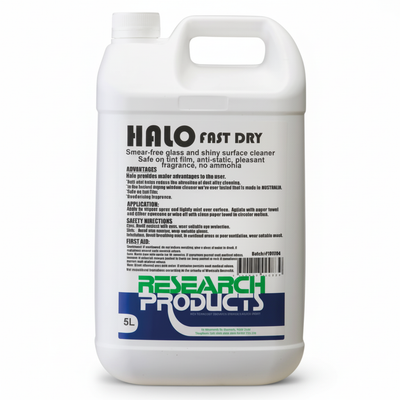
Glass is where a venue is judged fastest. Fingerprints on a door, a cloudy wine glass, a streaky display fridge: all of it reads as unclean even when the room has just been reset. A ready-to-use glass cleaner such as Oates Glass Cleaner Halo 5L lifts fingerprints, grease and dust and dries without a cloudy finish. It is safe on chrome, stainless steel, mirrors and laminate bench tops, which matters in a bar where one bottle has to cover glassware shelves, tapware and laminated menus.
Two habits do more for glass than any chemical. Spray the cloth rather than the surface, so cleaner does not run into frames and seals, and buff with a dry microfibre immediately. Keep the refill in a clearly labelled spray bottle; our guide to commercial spray bottles and trigger sprayers covers which trigger survives daily solvent and acid use.
Floors that survive a full service
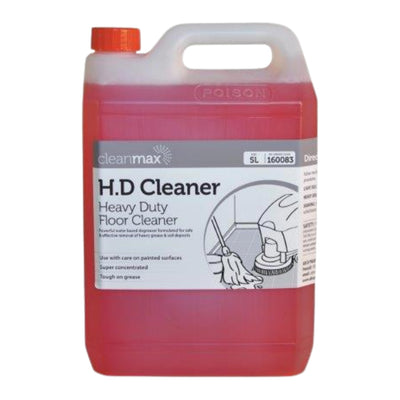
Restaurant floors collect two different soils: grease tracked out of the kitchen and from behind the bar, and general dust, sugar and spillage across the dining room. A concentrated floor cleaner such as Cleanmax Heavy Duty Floor Cleaner 5L handles both. It is a water-based degreaser with three working dilutions: 1:100 for routine mopping, 1:50 for medium duty and 1:10 for heavy grease on thresholds and behind equipment.
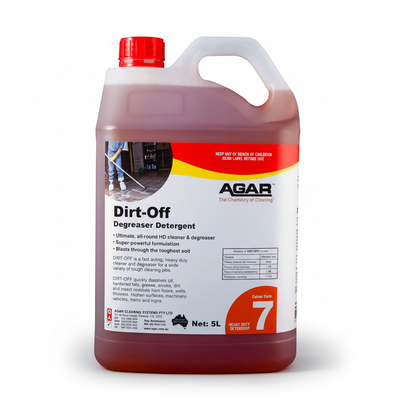
The arithmetic is the argument for concentrate. Five litres diluted 1:100 makes 500 litres of mopping solution, so a single 5 L bottle can carry a venue through weeks of nightly mopping. For the greasy strip between the pass and the dining room, bar mats and rear pavement, Agar Dirt-Off Degreaser Detergent 5L is the heavier option, and it is approved for mops, auto scrubbers, steam cleaners and pressure washers. We compare dilution economics in more depth in the commercial hard floor cleaner and degreaser guide.
Tools matter as much as the chemical. A 16 L side-press mop wringer bucket lets one person control moisture without bending, and a 400 g cotton mop head holds enough water to finish a room without re-dipping every few metres. Keep one bucket colour per zone, and put out a wet floor sign every time a mop comes off the wall.

Waste and bin liners
Front-of-house waste is bulky, wet and constant: glass, food scraps, napkins, packaging. An undersized liner splits at the worst moment; an oversized one wastes film on every change. An 80 L liner in 25 micron LDPE is the workhorse size for bar and kitchen bins, supplied 250 to a carton. Look for a star-sealed base, which resists drips when the bag is lifted out full, and an opaque finish that hides contents from the dining room. Sizing guidance by bin volume is in our commercial bin liner guide.
Washroom consumables
Washrooms are where a good meal is forgotten. Keep three lines stocked: hand towels, soap and a surface disinfectant. Scott Interfold Paper Towel 1742 gives 250 sheets per pack and 4,000 per carton at 26.6 x 23 cm, which suits standard interfold dispensers and keeps refills predictable. For basins, taps, door handles and change tables, Viraclean Hospital Grade Disinfectant 5L is ready to use, TGA-approved for surface disinfection (ARTG 103753) and formulated as a one-step clean and disinfect, so a washroom check takes minutes rather than a full bucket clean.
Once the room, the bar and the washrooms are covered, the same products carry across to accommodation floors; the hotel and accommodation cleaning guide maps the housekeeping version of this kit.
Cleaning versus sanitising
Food Standards Australia New Zealand draws a hard line between the two: cleaning removes dirt, grease and food waste, while sanitising destroys microorganisms, and you must clean before you sanitise. A sanitiser sprayed onto a greasy table is largely wasted money, because the grease shields the surface from the chemical.
For a venue, the split looks like this. Detergent and glass cleaner do the appearance work: tables, glass, floors, menus. Disinfectant handles washrooms, bar tops and high-touch points. A food-safe sanitiser goes on any surface that touches food or utensils, applied at the dilution on the label and left for the full contact time before it is wiped. The FSANZ guidance on cleaning and sanitising sets out the standard in plain terms.
Colour coding and chemical handling
Colour coding exists for one reason: to stop a washroom cloth ending up on a table. Assign one colour per zone (washroom, toilets, dining room, kitchen), keep the code posted in the chemical store, and never move a tool between zones mid-shift without washing it. Our colour-coded cleaning system guide covers the full scheme and how to enforce it with casual staff.
Chemicals carry legal obligations as well as practical ones. Under work health and safety law, hazardous chemicals in the workplace need a current safety data sheet, a register and correctly labelled containers, and decanting into an unlabelled bottle is the most common breach in a busy bar. Safe Work Australia publishes the hazardous chemicals requirements that apply. Practical version: buy purpose-made labelled bottles, store concentrates locked and upright, and keep the SDS folder where staff can find it in under a minute.
A service-day routine that holds up
Before opening
Wipe every table with detergent, buff glass and tapware, spot mop entries and the bar line, reline bins, and run a washroom check that includes towels, soap and a wipe of door handles. This is the only pass you get with an empty room, so use it on the details guests touch.
Between services
A ten-minute reset is enough if the tools are already out: clear and wipe tables, buff glass touchpoints, spot mop the entry and bar, change liners once they are two-thirds full rather than when they overflow, and check the washroom. Keep the mop bucket out of guest sight lines and a wet floor sign beside it.
At close
Mop the full floor at the dilution that matches the soil, sanitise tables and the bar top, empty and reline bins, restock towels and soap for the morning, rinse the mop head and hang it to dry rather than leaving it in the bucket. A mop head left wet overnight is the fastest way to make a clean room smell wrong.
Buying the right quantity
Two lines stop a service when they run out: bin liners and paper towels. Everything else can be borrowed for a night. Work out a par level from the number of bins multiplied by changes per day multiplied by the days between deliveries, then add roughly 20 percent for functions and double shifts. Order cartons rather than singles so the count is predictable.
Concentrates and refills do the rest of the cost work. A 5 L floor concentrate at routine dilution replaces ten ready-to-use bottles, and refilling labelled spray bottles from a 5 L glass cleaner cuts both spend and plastic. Store paper and chemicals dry, off the floor, on a one-in-one-out rotation, and keep a written monthly order rather than relying on whoever notices the shelf is empty.
Frequently asked questions
What cleaning supplies does a restaurant front of house need?
Four groups cover it: a glass cleaner for tables, windows and displays; a concentrated floor cleaner and degreaser for the dining room and bar; bin liners matched to your bin sizes; and washroom consumables including paper towels, soap and a surface disinfectant. Add mops, buckets, microfibre cloths and wet floor signs to use them.
How often should front-of-house areas be cleaned?
Tables and glass are reset between every service, floors are mopped at close and spot mopped during service, and washrooms are checked at least hourly while the venue is open. A deeper weekly clean handles high-level dusting, skirting boards, banquettes and the areas behind the bar that nightly mopping does not reach.
Can I use one mop for the kitchen and the dining room?
No. A mop used in the kitchen carries grease and food residue into the dining room, and a washroom mop carries contamination back out. Colour-code the tools, keep one bucket and mop head per zone, and wash mop heads at the end of every shift.
Is disinfectant the same as sanitiser?
Not quite. A sanitiser reduces microorganisms on food contact surfaces to a safe level, while a disinfectant is used on non-food surfaces such as basins, door handles and bar tops. Both need a clean surface first, and both need the contact time stated on the label to work.
How many bin liners should a venue keep on hand?
Count the bins, estimate the changes per day, multiply by the days between deliveries, then add about 20 percent for functions. A venue with 12 bins changed twice a day on a weekly delivery needs roughly 200 liners a week, so a 250-liner carton per fortnight is a sensible par level.
Stock the kit before the next service
We supply glass cleaners, floor concentrates, degreasers, liners, washroom consumables and the tools that go with them, delivered across Australia. Start with the full cleaning supplies range, or browse the guides library for the venue-by-venue checklists. If you are setting up a new site, our team can put together a first-order list from your floor plan and bin count.
Shop this guide
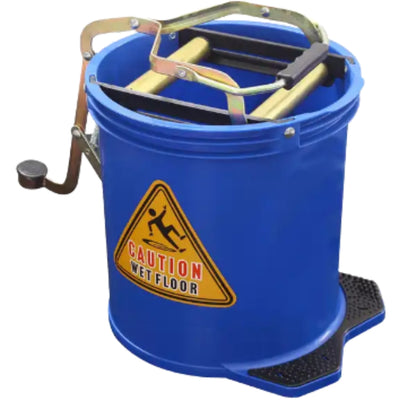 Cleanmax Contractor Mop Wringer Bucket — Blue, 16L, Side-Press
$51.10 inc GST
Buy 10+ and save $5.11 each


