
Why Do Urinals Smell? How to Find the Cause and Fix It for Good

If a gents washroom smells even after it has been cleaned, the problem is almost never the urinal bowl. The smell usually comes from one of three places: uric scale inside the trap and pipes, urine that has soaked into the floor and grout around the urinal, or a trap that has dried out. Air freshener only covers it up for an hour or two.
This guide shows how to work out which one you are dealing with, and the cleaning routine that removes the source rather than masking it. For choosing between blocks, screens and cubes, see our urinal blocks and screens buying guide.
Table of contents
- The six common causes
- Find the source in five minutes
- How to fix each cause
- A cleaning routine that keeps it fixed
- What it costs per urinal
- Frequently asked questions
The six common causes
- Uric scale. Urine reacts with minerals in flush water and forms a hard, crusty deposit inside traps and pipes. It holds bacteria and odour, and detergent will not shift it.
- Splashback on floors, walls and grout. Urine that misses or splashes lands on the floor below the urinal, soaks into grout and seals, and keeps smelling long after the surface is mopped.
- Dry or blocked traps. Floor wastes and rarely used urinals lose the water seal in their trap, letting sewer gas into the room. A partly blocked trap holds stale urine.
- Worn-out screens and blocks. Once a deodorising screen or block is spent, it becomes one more surface for urine and debris to cling to.
- The wrong chemicals or contaminated mops. Neutral detergent cleans but does not break down uric scale or organic residue. A toilet mop used across the whole washroom spreads residue into every corner.
- Poor ventilation or flushing. A faulty exhaust fan or a urinal that does not flush properly lets odour build up between cleans.
Find the source in five minutes
- Smell at floor level directly under the urinals. If it is strongest there, the floor and grout are the problem.
- Look into the trap and outlet. White, grey or brown crust means uric scale. Slow drainage after a flush points to scale or a blockage.
- Check floor wastes and unused urinals. A sewer smell near a floor waste usually means a dry trap.
- Check the screens. If there is no fragrance left, or they are clogged, they need replacing.
- Turn the exhaust fan on and hold a tissue to it. If it does not pull, call maintenance.
- Ask what the cleaners use and which mop. Detergent only, or one mop for the whole bathroom, is a common hidden cause.
How to fix each cause
Uric scale in traps and pipes
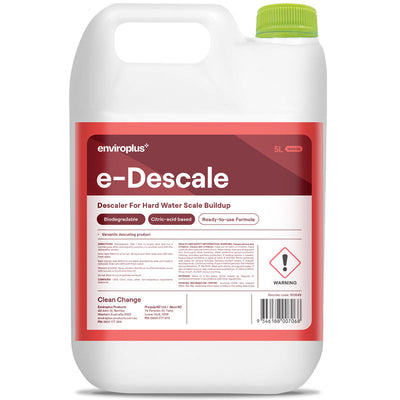
Uric scale needs an acid descaler. Chemform Shift Toilet and Urinal Cleaner 5L is an acid-based, ready-to-use cleaner that removes lime scale and mineral deposits. Enviroplus e-Descale 5L is a biodegradable option that is less hazardous for users than traditional acid descalers. Apply to the bowl, outlet and trap, leave for the time on the label, scrub and flush. For ongoing control, a biological product in the trap keeps breaking down new build-up: Puregiene Urinal Biotabs use enzyme and bacterial action and last for weeks per tablet, and Enviroplus e-Kube urinal cubes help reduce uric scale over time.
Never use bleach in the same clean as an acid cleaner. Mixing them releases toxic gas. Rinse thoroughly between products.
Urine in floors and grout
Mopping alone will not reach urine that has soaked into grout. Use an enzyme cleaner that breaks down organic residue at the source, such as Enviroplus e-Odourize 5L, which is designed for urine and other organic odours and penetrates porous surfaces. Apply it generously to the floor and wall below the urinals, leave it to work, then rinse. For heavily stained grout, follow our tile and grout cleaning guide, and reseal once clean.
Then stop the splash at the source with screens. Puregiene Urinal Screens have flexible anti-splash ribs that reduce splashback and keep floors drier, fit standard and waterless urinals, and come in Citrus, Fresh Apple and other fragrances.
Dry traps
Pour a bucket of water into floor wastes and flush rarely used urinals at least weekly so the trap keeps its water seal. If the smell persists after that, the trap or vent may be faulty and needs a plumber.
Worn-out screens and blocks
Put screen and block replacement on the cleaning schedule rather than waiting for the fragrance to fade. Puregiene screens release deodoriser for up to 30 days, so a monthly swap keeps you covered. Urinal blocks such as Cleanmax Urinal Blocks Tutti 4kg suit sites that prefer a block in the channel.
Wrong chemicals or mops
Use a dedicated colour for toilet and urinal mops and cloths, and keep them out of the rest of the washroom. A red cotton mop head and red microfibre cloths are the usual choice; our colour coded cleaning guide covers the full system. Wash mop heads hot after every use and replace them regularly.
A cleaning routine that keeps it fixed
| Frequency | Task |
|---|---|
| Daily | Clean urinal bowls, flush buttons and walls. Mop the floor under urinals with a dedicated mop. Check screens and blocks. |
| Weekly | Descale bowls and outlets with an acid cleaner. Enzyme-treat the floor and grout below urinals. Flush unused urinals and top up floor wastes. |
| Monthly | Replace urinal screens. Check traps for scale and drainage speed. Check the exhaust fan. |
| Quarterly | Deep clean grout and reseal if needed. Review whether busy urinals need biological tabs or cubes. |
For a full product list for gents washrooms, see our commercial toilet cleaning products guide, and for background fragrance, our air freshener systems guide.
What it costs per urinal
Odour control is cheaper than most facility managers expect. A carton of 12 Puregiene urinal screens costs $54.70, which is about $4.56 per screen. At one screen a month, that is roughly $55 a year per urinal for continuous odour control and drier floors. Add a weekly descale and the chemical cost per urinal is still small compared with the cost of complaints, or of a plumber clearing scale-blocked pipes.
Frequently asked questions
Why does the men's toilet still smell after it has been cleaned?
Usually because the source is not the urinal bowl. Urine soaks into grout and floor joints below the urinal, and uric scale builds up inside traps and pipes where a cloth cannot reach. Both need an acid descaler or enzyme product, not just detergent.
What is uric scale?
Uric scale is a hard mineral deposit that forms when urine reacts with the minerals in flush water. It builds up in urinal traps and pipes, traps bacteria and holds odour, and can eventually slow or block drainage.
How often should urinal screens be replaced?
Most deodorising urinal screens last up to around 30 days. Puregiene screens, for example, release deodoriser for up to 30 days, so one carton of 12 covers one urinal for about a year. Replace sooner in very busy washrooms or when the fragrance fades.
Can I use bleach to get rid of urinal smell?
Bleach disinfects but does not dissolve uric scale, so the smell soon returns. Never use bleach in the same clean as an acid urinal cleaner, as mixing them releases toxic gas.
Are urinal blocks or screens better for odour?
Screens are better at stopping splashback onto floors, which is a major source of odour, while blocks and bio cubes work on the trap and drain. Many sites use both: a screen in the bowl and a biological cube or tab working on the trap.
Shop urinal odour control
Matthews Cleaning Supplies stocks urinal screens, blocks, biological cubes and descalers with volume pricing and delivery Australia-wide. Strata managers, venues and cleaning contractors can open a trade account for regular orders.
Shop this guide



Written by
Jordan MatthewsCommercial cleaning specialist at Matthews Cleaning Company. Our expert team draws on years of hands-on field experience to help businesses choose the right tools and chemicals for every cleaning challenge.


