
Commercial Stainless Steel Cleaning: The Complete Guide for Australian Facilities

In this guide
- Why stainless steel is a different cleaning problem
- The four-step commercial cleaning routine
- Choosing the cloth, pad and polish
- Where stainless steel shows up in a facility
- Food-contact areas: clean, then sanitise
- Six stainless problems and how to fix them
- Building a stainless steel cleaning kit
- Buying checklist before you order
- Frequently asked questions
Quick answer: Stainless steel is cleaned in four steps: remove loose soil, wash with a neutral detergent and warm water, rinse with fresh water, then polish with a stainless steel cleaner to hide fingerprints and add a protective film. Work along the grain, never with chloride bleach, and always dry the surface.
Why stainless steel is a different cleaning problem
Stainless steel is the default surface in commercial kitchens, lifts, washrooms and public buildings because it survives heat, grease, disinfectant and daily abuse that would destroy laminate or painted steel. But the name oversells it. Nothing about the alloy stops soil sticking to it, and the protection that keeps it bright is a microscopic chromium oxide film that only re-forms when oxygen can reach clean metal.
Three things in a commercial building interrupt that cycle, and each one drives a different buying decision:
- Grease loads. A commercial kitchen deposits polymerised fat on range hoods, splashbacks and oven surrounds. That soil is not removed by a polish, and polishing over it simply seals the film in place.
- Hand contact. Lift doors, trolley rails, bain-marie lids and fridge handles are touched hundreds of times a day. Skin oils are the reason a surface can be chemically clean and still look dirty.
- Chlorides and coastal air. Washroom chemicals, chlorinated sanitisers and salt-laden air are the two most common causes of staining and pitting on Australian stainless steel.
The chloride trap: why bleach ruins stainless steel
Chloride ions attack the passive chromium oxide layer directly. Once that layer is breached, the steel underneath corrodes in small pits that trap soil, bleed rust streaks down the panel and cannot be polished out. Sodium hypochlorite (bleach), hydrochloric acid descalers and chlorinated sanitisers left to dry on the surface are the usual culprits.
The practical rules are simple. Use a neutral or mildly alkaline detergent for everyday stainless steel cleaning, use a citric or phosphoric descaler rather than a hydrochloric one, and rinse chlorinated sanitiser off food-prep stainless rather than letting it evaporate in place. If you must disinfect a stainless surface, apply the sanitiser, allow contact time, then wipe dry with a clean cloth.
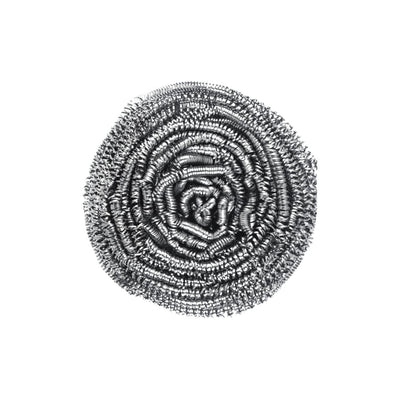
Rust spots on stainless are often not the steel corroding at all. Carbon steel wool, swarf from a nearby grinder or a steel scourer used on the wrong surface leaves iron particles embedded in the finish, and those particles rust. That is why a stainless steel scourer belongs in the pot sink and nowhere near a brushed panel.
Grain direction and why scratches show
Most commercial stainless is supplied with a directional mill or brushed finish. Under downlights, and especially on lift doors and reception joinery, any cloth movement across the grain shows as a dull haze. Fold the cloth flat and work in straight lines along the grain, top to bottom or left to right, and keep the pressure even.
Circular polishing motions are the single most common cause of a streaky stainless panel. They feel efficient and they look wrong the moment the light catches the surface.
Fingerprints are oil, not dirt
Skin oil is a light grease film. A detergent wash removes it, but detergent also leaves the surface microscopically uneven, so the next set of prints appears within minutes. A stainless steel polish works differently: it leaves a thin, uniform oil film that matches the refractive index of the surface, which is why a polished panel stays visually clean far longer than a washed one.
The four-step commercial cleaning routine
The sequence matters more than the products. Skipping step three is the reason most stainless steel looks worse after cleaning than before.
| Step | What you use | What it removes |
|---|---|---|
| 1. Dry wipe | Paper towel or a dry microfibre cloth | Crumbs, dust, loose food, flour |
| 2. Wash | Neutral detergent, warm water, colour coded cloth | Grease film, food residue, body oils |
| 3. Rinse | Clean water, a second cloth | Detergent residue that attracts soil and streaks |
| 4. Dry and polish | Dry microfibre, then a stainless steel cleaner and polish | Water marks and fingerprints; leaves a protective film |
Step 1 — Remove loose soil before anything gets wet
Wetting a crumb-covered bench turns debris into a paste that spreads into seams and screw heads. Wipe or scrape dry first. On range hoods and oven surrounds, pre-treat baked-on fat with an alkaline degreaser and give it dwell time, because no polish will cut polymerised grease. Our guide to commercial degreasers and hard floor cleaners covers dilution rates for the heavy end of that work.
Step 2 — Wash with a neutral detergent
Dilute neutral detergent to the label rate in warm water around 40 to 50 degrees Celsius. Hotter water flashes off before it works and cooler water struggles with fat. Use a colour coded cloth so a washroom cloth never touches a prep bench, and change the water before it turns grey rather than when it turns brown.
Two cloths are better than one: a wet cloth to wash, and a clean damp cloth to rinse. Flooding the surface is not cleaning. Seams, folded edges and the joint where stainless meets a wall hold water and start to corrode if they stay wet, so keep the wash solution on the panel rather than in the gaps.
Step 3 — Rinse with fresh water
Detergent residue is sticky, slightly alkaline and attracts dust. Left on the surface it produces the chalky bloom that makes a freshly cleaned stainless bench look dull in photographs. Rinse with clean water and a separate cloth, wringing frequently.
Step 4 — Dry and polish along the grain
Dry the panel completely, then apply polish. Hold an aerosol about 20 centimetres from the surface, mist lightly, and buff immediately with a dry microfibre cloth in the direction of the grain. Two cloths make this fast: one to spread the polish, one to buff it back to a uniform sheen. Never spray polish into the air near open food, and never apply it to a surface that is still wet, because the film will streak.
Choosing the cloth, pad and polish
Non-scratch pads for stainless panels
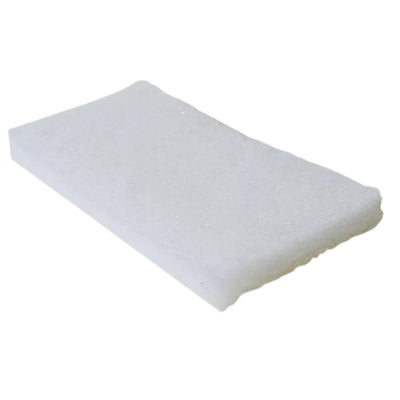
A white non-scratch pad is the correct abrasive for stainless steel panels: fine enough to lift water spots, soap scum and light grease without cutting the finish. The Cleanmax Scourer Polish Pad Economy White is rated for stainless steel, ceramic, chrome and glass, which makes it the safe default for splashbacks, fridge fronts and lift doors.
Keep two grades on the trolley and never swap them. A stainless steel scourer is a heavy-duty tool for burnt-on food on pots and pans; used on a brushed panel it leaves scratches that no polish will remove. If your team cleans cookware and panels on the same shift, buy the two products in different colours or store them apart, because the mistake is always made in a hurry.
Scrubbers and pads wear out by flattening rather than by disappearing. If a pad has stopped lifting water spots, replace it. Our scrubbing pad guide explains the colour sequence from white through to the heavy-duty grades.
Microfibre cloths do the streak-free work
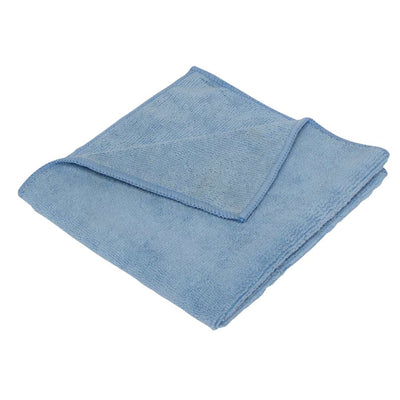
Microfibre is what makes a stainless steel clean look effortless. A premium 320 GSM cloth such as the Cleanmax Microfibre Cloth Premium Blue holds up to seven times its own weight in liquid and lifts grease and fingerprints without scratching, which means less chemical and less buffing.
Buy enough to colour code properly. Blue for general surfaces and stainless steel, red for washrooms and sanitary areas, green for food preparation, yellow for clinical and healthcare zones. The full system is set out in our colour coded cleaning guide. A trolley carrying four cloth colours costs very little more than one carrying two, and it removes the single most common cross-contamination risk in a washroom-and-kitchen site.
Aerosol polish versus liquid polish
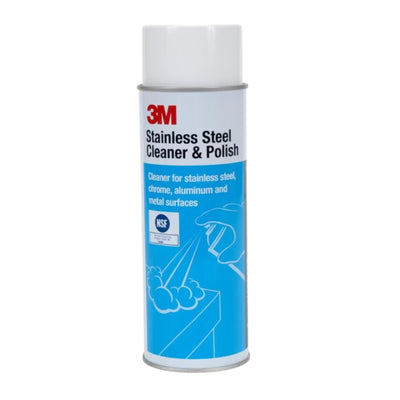
For daily commercial work, an aerosol is the practical choice. It delivers a thin, even film in one pass, which is exactly what a brushed panel needs. The 3M Stainless Steel Cleaner & Polish 600 g aerosol is a dual-action formula that cleans and polishes in a single step and leaves a barrier that resists fingerprints and water spots. That barrier is the difference between a panel that looks clean at 2pm and one that looks clean at 5pm.
Liquid and paste metal polishes have their place for restoration work, mirror finishes and one-off jobs, but they need more product and more buffing per square metre. For a team maintaining dozens of surfaces a week, the aerosol wins on labour, not just on finish.
Where stainless steel shows up in a facility
Stainless is not one cleaning job. The soil load, the finish and the acceptable method change from surface to surface.
| Surface | Typical soil | Method |
|---|---|---|
| Prep benches and tables | Food residue, grease, sanitiser film | Detergent wash, rinse, food-grade sanitiser, air dry |
| Range hoods and canopies | Polymerised fat, carbon | Alkaline degreaser with dwell time, non-scratch pad, rinse |
| Fridges, bain-maries, warmers | Fingerprints, smears | Polish and buff, no abrasive |
| Lift doors and car panels | Hand oils, bag scuffs | Neutral detergent, dry, polish along the grain |
| Washroom partitions, taps, hand dryers | Soap scum, water spots, urine salts | Washroom cleaner, non-scratch pad, rinse and dry |
| Drinking fountains and bubblers | Mineral scale, water marks | Citric or phosphoric descaler, rinse thoroughly |
| Balustrades, bollards, trolley bays | Airborne dirt, tea staining | Frequent wash and fresh water rinse; dry after rain |
| Pots, pans, utensils | Burnt-on food, carbon | Stainless steel scourer with hot detergent, then sanitise |
Food-contact areas: clean, then sanitise
On any surface that touches food, presentation comes second to compliance. The Food Standards Code requires food businesses to keep food contact surfaces clean and sanitised, and the two are separate steps: a sanitiser cannot penetrate a grease film, so a surface that has not been washed first is not being sanitised no matter what the label says.
The compliant sequence for a stainless steel prep bench is wash with detergent, rinse with clean water, apply a food-grade sanitiser at the label dilution, allow the stated contact time, then air dry or wipe with a clean single-use cloth. Polish belongs on the customer-facing side of the kitchen, not on a cutting surface. If a polish or protective film is used near food, apply it to splashbacks and external panels only, and keep overspray away from open product.
Chemical handling matters as much as the sequence. Under the WHS Regulations, every cleaning chemical on site needs its current safety data sheet available to workers, and decanted chemicals need a label that names the product and its hazards. Safe Work Australia publishes the guidance behind those duties. Our commercial kitchen cleaning supplies guide sets out the full chemical list for a food premises.
Six stainless problems and how to fix them
Fingerprints and smears that come back within the hour
Almost always too much polish. A heavy film grabs dust and shows every touch. Mist lightly, buff with a dry cloth, and finish with a second dry cloth. On very high-touch surfaces such as lift buttons and door plates, a thin film reapplied weekly outperforms a thick film applied monthly.
Water spots and limescale
Hard water leaves calcium deposits that detergent will not shift. Use a citric or phosphoric acid descaler, allow a short dwell, agitate with a non-scratch pad and rinse thoroughly. Avoid hydrochloric acid products on stainless steel, and never let any acid dry on the surface.
Heat tint and rainbow discolouration
Blue, gold and rainbow bands near a weld or a burner are heat tint: the chromium oxide layer has thickened. No cleaner removes it. It needs pickling and passivation by a fabricator, and if it appears on new equipment it is worth raising with the supplier before the job is signed off.
Tea staining on coastal sites
Brown surface discolouration on balustrades, bollards and external cladding is tea staining, driven by salt and atmospheric chlorides. It is surface level, not structural, and it responds to frequent washing with fresh water and drying. The Australian Stainless Steel Development Association (ASSDA) treats it as a maintenance regime problem rather than a material fault, which is why coastal sites need a shorter wash cycle than inland ones.
Light scratches and scuffs
On a brushed finish, small scratches can be blended by working along the grain with a fine non-scratch pad and then polishing. Deep scratches through the grain cannot be removed on site without changing the finish, and any attempt with an abrasive will leave a bright patch that is more obvious than the original mark. Replace or re-finish the panel instead.
Adhesive residue from labels and tape
Soak the residue with warm water and a little detergent, then lift it with a plastic scraper. Solvent-based adhesive removers work but must be kept off printed panels and edges, and the area needs a detergent wash and rinse afterwards so no solvent film remains under the polish.
Building a stainless steel cleaning kit
One trolley should carry everything needed for a full stainless circuit, so nobody improvises with a washroom cloth:
- One 600 g aerosol stainless steel cleaner and polish per trolley, replaced when the can loses pressure rather than when it empties.
- Five to ten white non-scratch pads in a labelled container, kept physically separate from the stainless steel scourers used on cookware.
- Two microfibre cloths per colour in use so a wet cloth never doubles as a buffing cloth, plus a dry cloth reserved for final buffing.
- Neutral detergent, a spray bottle and a descaler for the scale and water-spot work that polish cannot fix.
- A plastic scraper for adhesive and dried food, and paper towel for the dry-wipe first step.
Colour coding only works if the cloth supply matches the number of zones. A site with washrooms, a kitchen and a public foyer needs three colours as a minimum, and that is a procurement decision, not a training decision.
Buying checklist before you order
- Identify the finish. Brushed, mirror or embossed surfaces tolerate different pads. Mirror finishes need cloth and polish only.
- Separate food contact from presentation. Buy food-grade sanitiser for benches and polish for panels, and label the trolley so the two do not mix.
- Check the environment. Coastal and industrial sites need more frequent washing and more descaler, not more polish.
- Buy aerosols by consumption, not by shelf life. One can covers a lot of panel area; most mid-size sites use one to two cans a month.
- Standardise the pad. One white non-scratch pad across all sites removes the guesswork that causes scratched panels.
- Never buy steel wool for stainless panels. Embedded carbon steel is the most common cause of rust spots on otherwise sound stainless steel.
Frequently asked questions
What is the best way to clean stainless steel?
Remove loose soil dry, wash with a neutral detergent and warm water, rinse with clean water, dry the surface completely, then apply a thin film of stainless steel polish and buff it along the grain with a dry microfibre cloth. The rinse and the dry are what separate a streak-free finish from a smeared one.
Can I use bleach on stainless steel?
No. Sodium hypochlorite releases chloride ions that break down the protective chromium oxide layer and cause pitting that cannot be polished out. Use a neutral or mildly alkaline detergent for routine cleaning and a citric or phosphoric descaler for scale, and rinse any chlorinated sanitiser off rather than letting it dry.
How do I stop fingerprints showing on stainless steel?
Use a stainless steel polish rather than detergent alone. The thin oil film left by a polish gives the surface a uniform sheen so skin oils blend in, and it resists new prints. Apply light coats and buff with a dry cloth; too much polish attracts dust and makes the problem worse.
Should I clean stainless steel with or against the grain?
Always along the grain. Brushed and mill finishes have a directional texture, and cloth movement across it leaves a visible haze under downlights, especially on lift doors and reception panels. Fold the cloth flat, work in straight lines and keep the pressure even.
What causes brown tea staining on stainless steel?
Tea staining is surface discolouration caused by atmospheric chlorides, most often on coastal or industrial sites. It is not structural corrosion. Frequent washing with fresh water and drying removes it, and the fix for recurring staining is a shorter wash cycle rather than a stronger chemical.
Do I need a special polish for brushed stainless steel?
Yes, and an aerosol is the easiest format to apply evenly. Brushed finishes hold polish in the grain, so a light mist buffed along the grain gives a uniform result, while heavy application collects in the texture and dries patchy. Never use an abrasive metal polish on a brushed panel you are not prepared to re-finish.
Next step: one polish, one pad, one cloth
Most stainless steel problems in commercial buildings come from three gaps: no polish, the wrong pad, and a cloth that has been everywhere. Fix all three and the standard stops depending on who is on shift.
Start with the items in this guide: 3M Stainless Steel Cleaner & Polish, a white non-scratch polish pad, a 320 GSM microfibre cloth and a stainless steel scourer for the pot sink. Browse the full Matthews Cleaning Supplies range, or send us your site list and we will build the order around your kitchens, lifts and washrooms.
Shop this guide
Written by
Jordan MatthewsCommercial cleaning specialist at Matthews Cleaning Company. Our expert team draws on years of hands-on field experience to help businesses choose the right tools and chemicals for every cleaning challenge.


