
Detergent vs Sanitiser vs Disinfectant: What Australian Facilities Need

Detergent removes dirt. A sanitiser reduces germs on food-contact surfaces to a safe level. A disinfectant kills germs on hard surfaces in places like washrooms, clinics and childcare rooms. All three have a job, and none of them works properly if you use it in the wrong order or the wrong place. In almost every case the rule is the same: clean with detergent first, then sanitise or disinfect.
This guide explains the difference in plain English, shows which one each area of your site needs, and covers the dilution and contact-time mistakes we see most often on commercial sites.
Table of contents
- The difference at a glance
- Detergent: the step everyone skips
- Sanitiser: for food-contact surfaces
- Disinfectant: hospital grade vs commercial grade
- Which one each area needs
- Bleach dilution quick reference
- Six mistakes that make chemicals fail
- Frequently asked questions
The difference at a glance
| Detergent | Sanitiser | Disinfectant | |
|---|---|---|---|
| What it does | Lifts dirt, grease and food residue so it can be wiped or rinsed away | Reduces bacteria on a cleaned surface to a safe level | Kills a wider range of germs on hard surfaces, to a tested standard |
| Kills germs? | Not reliably. It removes many of them with the dirt | Yes, on pre-cleaned surfaces | Yes, on pre-cleaned surfaces, when left wet for the label contact time |
| Typical use | Floors, benches, desks, walls, every routine clean | Food-prep benches, chopping boards, utensils, food equipment | Toilets, basins, touchpoints, nappy change areas, clinical rooms, outbreaks |
| Who sets the rules | No specific standard | Food Standards Code (FSANZ) for food businesses | Therapeutic Goods Administration (TGA) |
| Example products | Neutral detergent, degreaser | Alcohol sanitiser, diluted bleach | Hospital grade disinfectant, bleach for outbreaks |
Detergent: the step everyone skips
Detergent does the heavy lifting. It breaks down grease, body oils, food residue and grime so they come off the surface with your cloth or mop. It is not designed to kill germs, but by removing the dirt it removes a large share of the germs living in it.
Skipping this step is the most common reason sanitisers and disinfectants fail. Dirt and grease shield bacteria and soak up the active ingredient before it reaches them. Food Standards Australia New Zealand puts it simply: you need to clean items before you sanitise them, and the same logic applies to disinfecting.
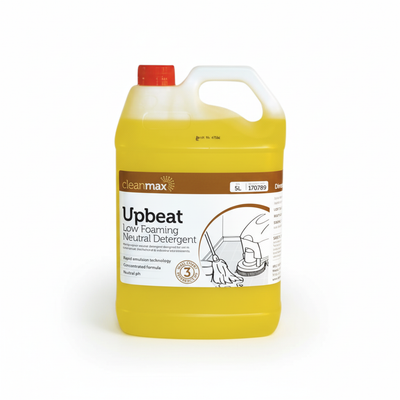
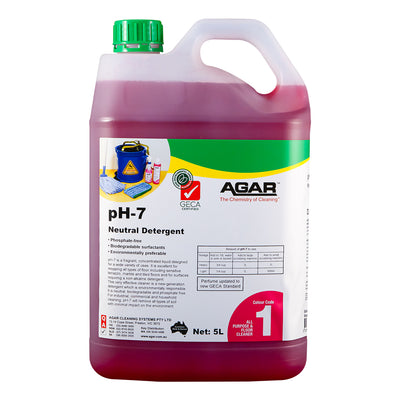
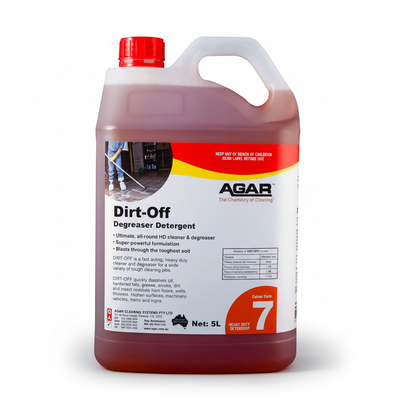
For most sites a pH-neutral detergent covers daily cleaning of floors and surfaces. The Cleanmax Neutral Detergent Upbeat 5L is safe on vinyl, timber, stone and stainless steel, and the Agar Neutral Detergent pH7 5L is a GECA-certified option for sites with green cleaning targets. Kitchens with heavy grease need a degreasing detergent such as Agar Dirt-Off Degreaser Detergent 5L.
Sanitiser: for food-contact surfaces
In Australia, sanitising is mainly a food safety term. Standard 3.2.2 of the Food Standards Code requires food businesses to keep eating and drinking utensils and the food-contact surfaces of equipment both clean and sanitised. Sanitising reduces bacteria to a safe level. It does not have to sterilise the surface.
There are three common ways to sanitise:
- Heat: FSANZ gives very hot water at about 77°C for 30 seconds as an example, or a commercial dishwasher that can sanitise, usually on its longest, hottest cycle.
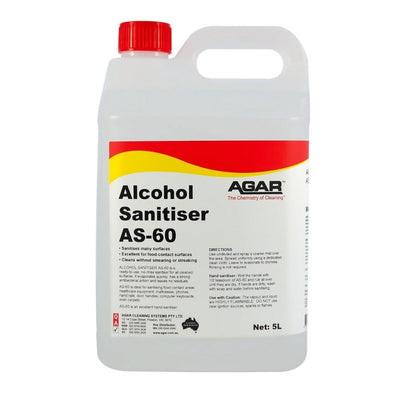
- Alcohol: a ready-to-use alcohol sanitiser sprayed on and left to air dry. The Agar Alcohol Sanitiser AS60 5L is no-rinse and fast drying, which suits benches and slicers between tasks.
- Diluted bleach: plain, unscented bleach at a weak food-safe strength. See the dilution table below.
Food service businesses that handle unpackaged, ready-to-eat, potentially hazardous food may also need to show that their cleaning and sanitising works, under the newer Standard 3.2.2A. In practice that means a written method and a simple record. Our food grade sanitiser guide covers kitchen set-ups in more detail.
Disinfectant: hospital grade vs commercial grade
Disinfectants for hard surfaces are regulated by the TGA, not by food law. They are labelled as hospital grade or household/commercial grade depending on where they are meant to be used and the performance testing they have passed. Hospital grade products are tested against a tougher set of organisms, under both clean and dirty conditions.
Two label details matter when you buy:
- Specific claims. A claim that a product kills a named virus, spores, TB or fungi is a "specific claim", and those products must be listed on the ARTG (the Australian Register of Therapeutic Goods) before they can be sold. Look for an AUST L number on the label.
- Grade wording. Household and commercial grade disinfectants must not be labelled hospital grade or use words implying they are. If a label says hospital grade, it has to meet that standard.
For aged care, clinics, childcare and any washroom where you want a tested standard, a hospital grade product is the sensible default. Viraclean Hospital Grade Disinfectant 5L is ready to use and carries ARTG number 103753, and it also comes as a 500ml trigger spray for touchpoints. Agar Chloradet 5L is a concentrated, foaming hospital grade product with a bleaching action, well suited to showers, tiles and walls. For general offices, schools and industrial sites, a commercial disinfectant such as Cleanmax Disinfectant Lemclenz 5L cleans, disinfects and deodorises in one step.
Our hospital grade disinfectant guide goes deeper on product choice and dilution for healthcare settings.
Which one each area needs
| Area | Routine clean | Then |
|---|---|---|
| Office desks, floors and walls | Neutral detergent | Nothing more day to day. Disinfect shared touchpoints during flu season or after illness |
| Kitchen benches and food equipment | Detergent or degreaser | Sanitise food-contact surfaces after cleaning |
| Cutlery, crockery, utensils | Wash with detergent | Sanitise by dishwasher, hot water or chemical sanitiser |
| Toilets, urinals and basins | Washroom cleaner or detergent | Disinfect toilets, seats, flush buttons and taps |
| Door handles, lift buttons, rails | Detergent wipe | Disinfect daily in high-traffic sites |
| Childcare nappy change and toilets | Detergent | Disinfect, and follow your service's infection control policy |
| Aged care rooms and clinics | Detergent | Hospital grade disinfectant |
| Vomit or diarrhoea spills, gastro outbreaks | Remove matter, then detergent | Bleach at outbreak strength. See our gastro outbreak cleaning guide |
Bleach dilution quick reference
Bleach is the one chemical that can be a sanitiser or a disinfectant, depending on the strength. FSANZ guidance for food-contact surfaces is 100 parts per million (ppm) of chlorine in cold water, made with 25 mL of household-strength bleach per 10 litres, and discarded after 24 hours. For gastro outbreaks, NSW Health recommends freshly made bleach at 0.1% (1,000 ppm) left on the surface for at least 10 minutes.
| Job | Strength | Cleanmax Bleach 4% | Cleanmax Bleach 12.5% |
|---|---|---|---|
| Food-contact sanitising (cold water) | 100 ppm | 25 mL per 10 L | 8 mL per 10 L |
| Gastro outbreak disinfection | 1,000 ppm (0.1%) | 250 mL per 10 L | 80 mL per 10 L |
These figures assume the bleach is at its labelled strength. Bleach weakens with age and heat, so date your containers and always check the label directions. Products: Cleanmax Bleach 4% 5L and Cleanmax Bleach 12.5% 5L.
Six mistakes that make chemicals fail
- Sanitising or disinfecting a dirty surface. Clean first, every time.
- Wiping off too soon. Every sanitiser and disinfectant has a contact time on its label. If the surface dries or is wiped before then, the product has not done its job.
- Guessing the dilution. Too weak does not work, and too strong wastes money and can damage surfaces. Use a measuring jug or a dosing pump.
- Mixing chemicals. Never mix bleach with acid cleaners (many toilet and descaling products) or ammonia. It releases toxic gas.
- Keeping diluted bleach for days. Make it fresh. FSANZ advises discarding diluted bleach after 24 hours.
- Unlabelled spray bottles. Staff cannot use the right product if they cannot tell what is in the bottle. See our guide to labelled spray bottles, and keep stock stored as set out in our chemical storage guide.
Frequently asked questions
Is a sanitiser the same as a disinfectant?
No. A sanitiser reduces bacteria to a safe level and is the term used for food-contact surfaces under the Food Standards Code. A disinfectant is a TGA-regulated product tested to kill a wider range of germs on hard surfaces. Some products, such as bleach, can do either job depending on the dilution.
Do I need hospital grade disinfectant in an office?
Not for everyday cleaning. A neutral detergent handles most office surfaces, with a commercial or hospital grade disinfectant on shared touchpoints and in washrooms. Hospital grade is the better choice for aged care, healthcare, childcare and during illness outbreaks.
Can I use bleach on food preparation surfaces?
Yes, if it is plain unscented bleach at a food-safe strength. FSANZ gives 100 ppm in cold water as a guide, which is 25 mL of household-strength bleach per 10 litres. Clean the surface first and make the solution fresh each day.
Do two-in-one cleaner disinfectants replace detergent?
On lightly soiled surfaces, often yes. Products like Viraclean are designed to clean and disinfect in one step. On greasy or heavily soiled surfaces, clean with detergent first, because dirt reduces how well any disinfectant works.
How long should disinfectant stay on the surface?
For the contact time on the product label, which varies by product and by the germ you are targeting. For bleach used during gastro outbreaks, NSW Health recommends at least 10 minutes.
Shop detergents, sanitisers and disinfectants
Matthews Cleaning Supplies stocks the full range, from neutral detergents to hospital grade disinfectants, with volume pricing on every product and delivery Australia-wide. Browse cleaning chemicals, or read our commercial kitchen cleaning supplies and childcare cleaning supplies guides for site-specific lists.
Sources: FSANZ, Cleaning and sanitising; TGA, Regulation of cleaners and disinfectants; NSW Health, Controlling viral gastroenteritis outbreaks. This guide is general information. Always follow the product label and Safety Data Sheet.
Shop this guide
Written by
Jordan MatthewsCommercial cleaning specialist at Matthews Cleaning Company. Our expert team draws on years of hands-on field experience to help businesses choose the right tools and chemicals for every cleaning challenge.


