Childcare Cleaning Supplies: The Complete Compliance Guide
Quick answer: A childcare centre needs three things to clean compliantly: a detergent for daily cleaning of every surface, a hospital-grade disinfectant for high-touch points and body-fluid spills, and single-use or hot-washed reusable cloths in a colour-coded system. Regulation 77 requires the practices and the records that prove them.
Infection control in an early learning service is not a housekeeping preference. It is a licensing requirement, and it is audited. Assessors look at the cleaning schedule, the dilution you actually mix, the condition of the mops and cloths, how nappy change areas are managed after a spill, and whether the chemicals in the storeroom are locked away from children.
This guide sets out what the National Regulations and the NHMRC Staying Healthy guidelines expect, and the supplies that meet that standard in practice. It is written for approved providers, nominated supervisors, centre directors and the cleaners they employ across Australia.
On this page
- What the National Regulations require
- The childcare cleaning supplies list
- Colour coding: the standard that satisfies an assessor
- Dilution, labelling and mixing rules
- What a 60-place centre orders and spends
- Daily, weekly and six-monthly cleaning schedule
- Frequently asked questions
What the National Regulations require
Regulation 77 of the Education and Care Services National Regulations requires the approved provider and nominated supervisor to implement adequate health and hygiene practices, and safe practices for handling, preparing and storing food, to minimise risks to children. It sits in Part 4.2 of the Regulations and carries a penalty for non-compliance.
Two elements of the National Quality Standard sit alongside it. Element 2.1.2 covers health practices and procedures: effective illness and injury management and hygiene practices are promoted and implemented. Element 3.1.2 covers upkeep: premises, furniture and equipment are safe, clean and well maintained.
In practice, the NHMRC Staying Healthy guidelines are the operational document most assessors and health departments point services to, and the Commonwealth publishes them specifically for education and care services. Three of its requirements drive most of your cleaning budget:
- Routine environmental cleaning should be done daily and whenever surfaces are visibly dirty, with horizontal and frequently touched surfaces (door handles, light switches, toys) cleaned at least once a day.
- Cleaning and disinfection must be done after any spill of body fluids - urine, faeces, mucus, saliva, vomit, blood or breastmilk. Clean first, then disinfect.
- Appropriate cleaning products are those specifically labelled and intended for cleaning. Detergent for general cleaning; a general-purpose disinfectant labelled hospital-grade, or bleach, for spills and contamination.
That last point rules out the home remedy approach. The guidelines state plainly that domestic kitchen products such as vinegar and bicarbonate of soda should not be used as cleaning products because they are not as effective against germs.
The childcare cleaning supplies list
A centre does not need a wall of chemicals. It needs seven categories, matched to the areas where the risk actually sits.
1. Detergent for daily cleaning
Routine cleaning is detergent and water, followed by rinsing and drying. That is what removes the germs from hard surfaces, and it is the step that is most often skipped in favour of a disinfectant spray. Choose a neutral or general-purpose detergent and, if you have more than one room, run it through a colour-coded system so the wrong cloth never reaches the wrong area.
2. A hospital-grade disinfectant for high-touch points and spills
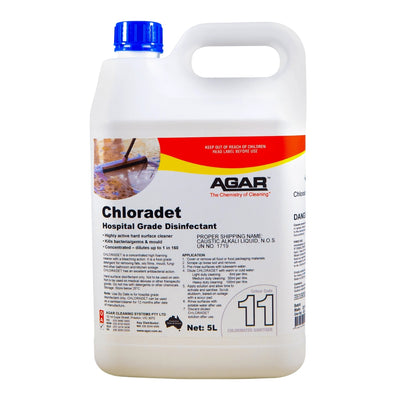
The guidelines recommend services purchase disinfectants labelled hospital-grade or similar, to be confident the efficacy claim holds. Agar Chloradet (SKU 170902, $44.30 for 5L) is a dual-action detergent and disinfectant that dilutes at 1:80 for general disinfection, so one 5L drum yields roughly 400L of working solution. For sites that want to remove dilution error entirely, a ready-to-use hospital-grade product is the safer operational choice.
If you prefer a broader product review before you commit, our hospital grade disinfectant guide compares TGA-listed options by facility type and dilution.
3. Nappy change and toileting areas
This is the highest-risk zone in the building. The procedure is fixed: hand hygiene before and after every change, disposable gloves for the change itself, clean the change surface after every nappy, and clean then disinfect where body fluids have contacted the surface. Used nappies and soiled clothing need dedicated storage - not a general waste bin.
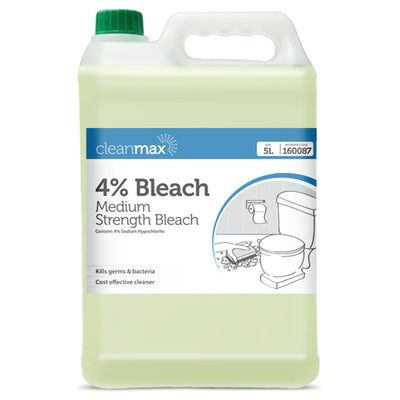
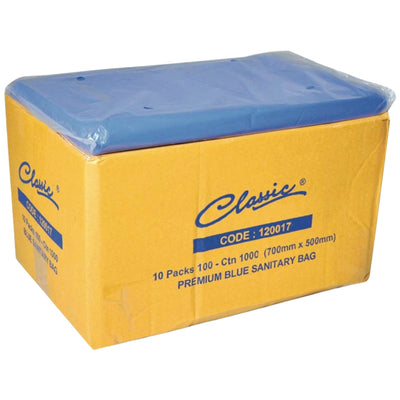
For the disinfect step after a body fluid spill, Cleanmax Bleach 4% Disinfectant (SKU 160087, $16.35 for 5L) is the cost-effective workhorse, effective against bloodborne viruses at a 1:50 dilution. It is also the product most often used incorrectly, and the FAQ below covers the two rules that matter. Line nappy and sanitary waste with Classic Sanitary Bin Liners (SKU 120017) rather than general liners, and keep nitrile gloves (SKU 210053, $14.45 per box of 100) at the change table, not in a cupboard down the hall.
4. Toys, soft furnishings and carpets
Toys must be washed at the end of every day, especially in rooms with younger children - warm water and detergent, rinsed well, dried in sunlight where possible. Soft toys and dress-ups that cannot be washed should not be shared between children. Carpets and mats are vacuumed daily and steam cleaned at least every six months; curtains are washed every six months and whenever visibly dirty. Detachable mop heads and washable cloths need to survive a hot machine wash, which is why single-use cloths remain the safest default.
5. Food preparation areas
Where the service prepares food, the kitchen follows food safety practice as well as childcare practice. Crockery and utensils are washed after every use; a dishwasher runs at 60 degrees Celsius or above, and hand-washed items are dried completely before storage. Detergent and water should be made up fresh daily in a clean container, labelled with the time and date of mixing, emptied and rinsed each day, and never topped up during the day - topping up dilutes the mix below the concentration that works.
6. Washrooms, hand hygiene and waste
Hand hygiene is a supply problem before it is a training problem. Soap and water or an alcohol-based sanitiser containing 60 to 80 percent alcohol are the two approved methods, and sanitiser belongs at the service entrance as well as in each room. Cleanmax Freshcare Pink hand soap (SKU 170788, $19.60 for 5L) is a pH-balanced liquid soap formulated for frequent washing, which matters when educators wash their hands 30 times a day. Pair it with Tork Advanced Multifold hand towels (SKU 100180, $122.55 per carton of 3,000) - drying hands properly is part of the hand hygiene step, not an optional extra - and Puregiene alcohol hand sanitiser (SKU 171189, $59.55 for 5L) for the entry point and playground.
Waste runs on volume, not cost. Classic 54L bin liners (SKU 130040, $40.81 per carton of 250) cover room bins, and all bins follow a specified cleaning schedule with lids and liners maintained.
7. PPE and chemical storage
Disposable gloves are required for nappy changes and contact with body fluids; they are not required for wiping noses. Utility gloves are required when handling cleaning chemicals. Every chemical on site needs its Safety Data Sheet accessible, safe storage away from children, and original labelling - decanting a concentrate into an unlabelled bottle is both a WHS breach and a child safety risk. Our guide to commercial cleaning chemical storage covers the register, labelling and SDS requirements in full, and the Safe Work Australia model Code of Practice sets out the legal duty.
Colour coding: the standard that satisfies an assessor
Colour coding is the cheapest credibility you can buy. A centre that runs four cloth colours - one per zone - can demonstrate at a glance that the nappy change cloth never touched a food surface. The convention used across Australian services and public health guidance is:
- Red - toilets, urinals and bathroom fixtures
- Blue - general surfaces, desks, tables and food-preparation areas where a separate colour is not used
- Green - kitchen and food handling
- Yellow - clinical or high-risk areas and children's play equipment
Whatever mapping you choose, write it into the service's cleaning policy and follow it consistently - assessors check the policy against what is actually in the cupboard. Cleanmax premium microfibre cloths (SKU 140341, from $3.69 each) come in the full colour set, launder repeatedly, and are cheap enough to keep a working stock per room.
Dilution, labelling and mixing rules
Most disinfection failures in childcare are concentration failures, not product failures. Two rules resolve most of them:
- Make working solution fresh. Disinfectants lose effectiveness once diluted, and the guidelines advise diluting just before use rather than storing diluted product in spray bottles.
- Label every container. Detergent and water mixed for the day gets the time, date and product written on it. Chemical bottles keep their original label. If a bottle cannot be identified, it cannot be used.
For bleach specifically, three rules are absolute: never mix it with any other chemical (chlorine with ammonia or acid produces toxic gas), never put it in a spray bottle, and never dilute it with hot water. Bleach is corrosive to metals other than stainless steel and can irritate the respiratory tract, so it is the wrong default for routine cleaning - use it where the guidelines intend it, for body fluid spills and outbreak response.
What a 60-place centre orders and spends
Indicative pricing from our current range, at the quantities a 60-place long day care centre with an on-site kitchen typically consumes. Actual usage varies with floor area, the number of nappy-age rooms and whether cleaning is in-house or contracted.
- Chloradet hospital-grade disinfectant, 5L - $44.30 - dilutes to ~400L of working solution; 1 drum per month covers general disinfection
- Bleach 4% disinfectant, 5L - $16.35 - spills, outbreak response, nappy change surfaces
- Freshcare Pink hand soap, 5L - $19.60 - 2 to 3 refills per month across washrooms and rooms
- Nitrile gloves, box of 100 - $14.45 - 2 to 4 boxes per month across nappy-age rooms
- Microfibre cloths, colour coded - from $3.69 each - 20 to 30 in rotation
- 54L bin liners, carton of 250 - $40.81 - roughly 1 carton per month
- Sanitary bin liners, carton of 1,000 - $229.40 - approximately one carton per year
- Multifold hand towels, carton of 3,000 - $122.55 - 1 to 2 cartons per month
The concentrated products carry the bulk of the value: a single 5L drum of hospital-grade disinfectant replaces roughly 400 trigger bottles of ready-to-use spray at a fraction of the per-litre cost. That is the calculation to put in front of your approved provider when the supply budget is reviewed.
Daily, weekly and six-monthly cleaning schedule
The guidelines expect daily routine cleaning, with deeper tasks on a defined cycle. A schedule that holds up in an assessment looks like this:
- Daily: horizontal and frequently touched surfaces; floors in all rooms; toys washed and dried; nappy change surfaces after every change; bathrooms and toilets; bins; fresh detergent solution made and labelled.
- Weekly: full bathroom and toilet deep clean; sleep mats and bedding laundered; mop heads and cloths hot washed; kitchen exhaust filters; outdoor play equipment.
- Monthly: high dusting, vents and light fittings; upholstery and soft furnishings spot cleaned; stocktake of chemicals, gloves and liners.
- Six-monthly: carpets and mats steam cleaned; curtains washed; review of the cleaning schedule and scope with the provider.
Each task needs a signature. A completed, co-signed cleaning checklist is the evidence an assessor asks for, and it is the difference between having a policy and demonstrating it.
Frequently asked questions
Does a childcare centre need to use bleach?
Not for routine disinfection. The NHMRC guidelines state that general-purpose disinfectants are appropriate for spills of body fluid and that bleach is not needed for routine disinfection, although it is effective against bloodborne viruses. Where bleach is used it must never be mixed with other chemicals, never placed in a spray bottle, and never diluted with hot water.
How often should toys be washed in an early learning centre?
Toys must be washed at the end of every day, especially in rooms with younger children. Wash them in warm water with detergent, rinse well, and dry them in sunlight where the material allows. Toys that cannot be washed, including some soft toys and books, should not be shared between children.
Can disinfectant be kept in a spray bottle?
The guidelines advise diluting disinfectant just before use and not storing it in spray bottles, because diluted disinfectant loses effectiveness over time. Bleach has an additional absolute rule: it must never be applied from a spray bottle.
Is vinegar or bicarbonate of soda an acceptable cleaning product?
No. The NHMRC guidelines specifically advise against using domestic kitchen products such as vinegar or bicarbonate of soda as cleaning products in education and care services, because they are not as effective against germs as purpose-formulated detergents and disinfectants.
What cleaning records should a service keep?
Keep a cleaning schedule covering daily, weekly, monthly and six-monthly tasks; a room-level checklist signed off after each clean; mixing records for detergent and disinfectant showing time and date; and Safety Data Sheets for every chemical on site, accessible to staff. These records are what convert a cleaning policy into demonstrable compliance.
Ordering childcare cleaning supplies
Matthews Cleaning Supplies delivers commercial cleaning and hygiene products Australia-wide, with bulk pricing on concentrates, dispenser consumables and PPE. If you are setting up a new service, refreshing a cleaning schedule for assessment, or consolidating a supplier list across multiple centres, our team can build a per-site order sheet matched to your room mix.
For related reading: school cleaning supplies, hospital grade disinfectants, and how to set up a colour coded cleaning system.
Shop this guide
 Puregiene Nitrile Gloves Powder Free — Black, Large, Box of 100
$14.45 inc GST
Buy 10+ and save $1.45 each

Written by
Jordan MatthewsCommercial cleaning specialist at Matthews Cleaning Company. Our expert team draws on years of hands-on field experience to help businesses choose the right tools and chemicals for every cleaning challenge.