Commercial Sanitary Bins: Australia Buying Guide 2026

Short answer: A commercial sanitary bin is a hands-free, lined unit for the hygienic disposal of feminine hygiene waste in workplace washrooms. Australian workplaces should provide at least one unit in every female or unisex toilet block, service it at least weekly, and fit it with a puncture-resistant liner and odour control to manage hygiene, leakage and smell.
Getting sanitary disposal right is one of the cheapest hygiene wins available to a facility manager, and one of the most visible when it goes wrong. This guide covers what Australian workplaces are expected to provide, how many units you need, which features actually matter when buying, and what the whole thing costs to run for a year.
What Is a Commercial Sanitary Bin?
A commercial sanitary bin, also called a feminine hygiene bin, sanitary disposal unit or sanitary waste bin, is a purpose-built lidded container installed in toilet cubicles, washrooms and accessible facilities. Unlike a general waste bin, it is designed around three jobs: containing waste discreetly, preventing odour and leakage, and allowing a cleaner to service it quickly without touching the contents.
Most units in commercial use are freestanding, sized between 13 and 30 litres, and lined with either an individual bag or a continuous cartridge system. They are serviced by hand as part of the routine washroom clean, or by a specialist sanitary waste contractor on a scheduled run.
How a sanitary bin works
- The lid. A foot pedal or lift lid keeps hands away from the unit, which is the single biggest driver of user confidence in shared facilities.
- The liner. A puncture-resistant bag or a sealed cartridge holds the contents and is replaced at every service, so nothing is ever emptied or reused.
- The unit body. High-impact plastic with a wipe-clean, stain-resistant interior that stands up to commercial-grade disinfectants.
- Odour control. Either a deodorising block inside the lid, or the room-level air care that sits alongside it.
- The service routine. Liner out, sealed and disposed of as general waste, unit wiped, fresh liner and deodoriser fitted.
Why a standard rubbish bin is not a substitute
An open or pedal general waste bin fails on all three jobs. Thin bin liners puncture, contents sit exposed between services, and odour becomes a complaint generator in an otherwise well-run washroom. General waste bin liners are also not sized for a secure fit around a sanitary unit, so the bag slips and the interior gets contaminated. Purpose-built sanitary bins exist precisely because the disposal task is different, and the visible standard of your washroom is judged on it.
What Australian Workplaces Must Provide
Under the model Work Health and Safety laws, a person conducting a business or undertaking (PCBU) must provide adequate and accessible facilities for workers. The Safe Work Australia model Code of Practice for managing the work environment and facilities is specific about what a toilet block should be supplied with: toilet paper for each toilet, hand washing facilities, rubbish bins, and for female workers, hygienic means to dispose of sanitary items.
The Code also sets expected toilet ratios, which matter when you are sizing a washroom: roughly one closet pan per 15 female workers, with a separate hand washing basin for every 30 workers. The ratio drives how many cubicles a site has, and therefore how many sanitary units that site needs. You can read the underlying duties in the Work Health and Safety Regulations 2011, and the practical expectations on Safe Work Australia's PCBU duties page.
The unisex and accessible cubicle rule
It is not only female-designated facilities that need sanitary disposal. The Code notes that a unisex toilet should include a closet pan, a washbasin and a means for disposing of sanitary items. Accessible facilities built to the access and mobility standard must also place waste disposal within reach of the toilet pan, not on the far side of the room. A common audit failure is an accessible cubicle with no bin at all, or a bin that a wheelchair user cannot reach from the pan.
Is menstrual waste clinical waste?
In general office, retail, education and hospitality settings, menstrual waste collected in a sanitary bin is treated as general sanitary waste, not clinical or regulated waste. That changes in healthcare and higher-risk environments, where site-specific waste procedures apply. The practical takeaway for a facility manager is that a sealed, single-use liner going to general waste is the correct pathway for a standard workplace, and that liners should never be emptied out and reused.
How Many Sanitary Bins Does Your Workplace Need?
The working rule of thumb is one sanitary bin per cubicle block, sized to the traffic that block receives. A single-cubicle washroom serving a handful of people does not need the same unit as a twenty-cubicle block in a shopping centre.
| Female users on site | Typical cubicle blocks | Units required | Recommended capacity | Service frequency |
|---|---|---|---|---|
| 1 to 10 | 1 | 1 | 13 to 15 L | Weekly |
| 11 to 30 | 1 to 2 | 1 per block | 20 to 26 L | Weekly |
| 31 to 60 | 2 to 4 | 1 per block | 26 L | Weekly, or twice weekly on the busiest block |
| 60 plus, or public access | 4 or more | 1 per block, plus one in each accessible cubicle | 26 L and above | Twice weekly |
Two practical notes. First, capacity and service frequency trade off against each other: a 26 litre unit that holds up to 300 items can carry a lightly trafficked site through a fortnight, which suits sites where the cleaner is not on site daily. Second, accessible and unisex cubicles each count as their own block for disposal purposes, so add those units before you order.
Choosing a Commercial Sanitary Bin: Five Features That Matter
1. Capacity
Match capacity to service interval, not to the size of the room. A 26 litre unit holds roughly 300 sanitary items, so it suits blocks where servicing happens weekly or less often. Smaller 13 to 15 litre units are fine where a cleaner services the washroom every day anyway, and they fit slim cubicles more easily.
2. Lid and operation
Foot pedal or hands-free lids are the standard for commercial use. They remove hand contact, they are easier to clean than a hinged lid someone has touched, and they signal to users that the unit is for their use. Lift-lid units are acceptable in low-traffic areas but should sit inside the cubicle where they can be operated comfortably.
3. Liner system
There are two systems in the market: individual liners, fitted and replaced at each service, and integrated cartridge systems where the unit's own bag cartridge seals as it is replaced. Individual liners are cheaper per service and let you buy liners in bulk; cartridge systems reduce handling and waste volume, and are popular for public-facing or high-traffic sites.
4. Freestanding or wall-mounted
Freestanding units sit beside the toilet or under a counter and can be relocated as the washroom changes. Wall-mounted or plinth-fixed units suit accessible cubicles, where the bin must be stable and reachable from the pan, and where floor space is tight.
5. Material and odour control
Choose high-impact plastic with a smooth, non-porous interior. It resists staining and odour absorption, and it wipes down properly with a commercial disinfectant instead of needing a scrub. Pair the unit with room-level air care so odour is managed continuously rather than only when the lid is opened.
Units and consumables we stock
| Product | What it suits | Price (ex GST) |
|---|---|---|
| Puregiene Sanitary Bin, lift lid and foot pedal, charcoal | Standard cubicle blocks; slim, wipe-clean, hands-free, suits most standard sanitary liners | $61.48 |
| Terracyclic Sanitary Bin White 26L Starter Kit | High-traffic and low-service-frequency sites; integrated cartridge, holds about 300 items, includes base, plinth and hygiene sticker | $92.75 |
| Classic Sanitary Bin Liners, blue, carton of 1000 | Fits most 18 to 25 L sanitary bins; puncture-resistant HDPE liner with an odour barrier | $229.40 |
| Higieneco Metered Air Freshener, 6000 spray, 10 pack | Continuous washroom air care; each refill delivers 6000 metered sprays | $112.15 |
Sanitary Bin Liners: The Consumable That Drives Your Cost
Liners are replaced at every service and never reused, so liner cost is set by your service frequency, not by the price of the unit. A single bin serviced weekly uses 52 liners a year. At the carton rate on a 1000-liner carton, that is a few tens of dollars per bin per year, which is why liners are the cheapest part of the whole system to get right and the most annoying part to get wrong.
Two things to check before ordering bulk liners:
- Fit. Liner sizing is stated against bin capacity, most commonly 18 to 25 litres. A liner that is too small slips off the rim and lets waste touch the bin interior; one that is too large pools and inflates, wasting capacity.
- Film strength. Look for high-density polyethylene or an equivalent puncture-resistant film. The purpose of the liner is to contain the contents and the moisture, so a thin general waste bag is a false economy.
Stock rule of thumb: hold six to eight weeks of liners. Sanitary liners are a low-value, high-annoyance consumable, and running out mid-service is a hygiene incident, not just a stock gap.
Servicing: A Practical Washroom Checklist
At every service
- Remove the liner without compressing it, seal it, and place it in the general waste stream.
- Wipe the lid, pedal and interior with a commercial-grade disinfectant.
- Fit a fresh liner so the rim is fully covered and the bag sits clear of the lid mechanism.
- Check the deodoriser and replace if spent.
- Wipe the outside of the unit and the surrounding cubicle surfaces, and log any damage.
Weekly and monthly
- Test the pedal or lid mechanism and tighten any loose wall fixings or plinths.
- Review liner and deodoriser stock levels against the next delivery.
- Check room-level air care refills so odour control does not lapse between services.
- Replace units showing cracked bodies, staining that will not wipe out, or broken hinges.
Washroom disinfectants and cubicle cleaning sit in the same routine. Our guides to commercial toilet cleaning products and setting up a colour coded cleaning system cover the chemistry and the cloth discipline that go with this checklist.
The Complete Cubicle Block: What Else Belongs There
A sanitary bin only solves part of the problem. A washroom that reads as professionally managed usually has these covered at the same time:
- Toilet tissue sized to your dispensers, in a jumbo or mini jumbo roll to cut refill frequency. A carton of Tork mini jumbo toilet tissue covers a mid-sized site.
- Soap from a sealed dispenser system such as Puregiene luxury foam soap refills, rather than refillable open bottles.
- Hand hygiene that survives a shift, including alcohol gel hand sanitiser where basins are limited.
- Surface disinfection for the touch points staff clean between full services, such as hospital grade disinfectant wipes.
- Urinal care and odour control, covered in our urinal blocks and screens guide.
What Commercial Sanitary Bins Cost in Australia (2026)
| Item | Typical range (ex GST) |
|---|---|
| Freestanding sanitary bin, 13 to 26 L | $60 to $95 per unit |
| Integrated cartridge system, 26 L, with base and plinth | $90 to $110 per unit |
| Sanitary bin liners, carton of 1000 | Roughly $0.23 per liner, about $230 per carton |
| Liner cost per bin, serviced weekly | About $12 per year |
| Metered air freshener refills | About $11 per refill, 6000 sprays each |
| Specialist sanitary waste servicing | Indicative $7 to $15 per unit per visit, quoted by your provider |
The unit and the liners are fixed, predictable costs. The real budget question is whether you service in-house as part of the routine washroom clean, or contract a specialist sanitary waste run. In-house servicing is cheaper per visit but depends on the cleaning team being on site at the right frequency; a contracted run gives you a documented, scheduled service and is usually the choice for public-facing and multi-site portfolios.
Frequently Asked Questions
Are sanitary bins required by law in Australian workplaces?
WHS duties require a PCBU to provide adequate, accessible facilities, and the model Code of Practice states that toilets should be supplied with hygienic means to dispose of sanitary items for female workers. In practice, every female or unisex toilet block should have at least one sanitary bin, and accessible cubicles need a bin within reach of the pan.
How often should commercial sanitary bins be emptied?
Weekly servicing is the baseline for office washrooms. Move to twice weekly where a block serves more than about 60 people or is open to the public, and choose a larger 26 litre unit where the site cannot be serviced every week.
Is sanitary waste clinical waste?
In general office, retail, education and hospitality settings, sanitary waste is treated as general waste and is disposed of in a sealed liner. Healthcare and higher-risk sites follow site-specific waste procedures, which may classify it differently.
Can I use a normal bin liner in a sanitary bin?
No. Sanitary liners are sized to fit the unit and made from puncture-resistant film with an odour barrier. General waste liners are usually too thin and the wrong size, so they slip, tear and let waste contact the bin interior.
How many sanitary bins does an office need?
One per cubicle block as a minimum, plus one in each unisex and accessible cubicle. A single-block office with up to 30 female users needs one 20 to 26 litre unit; larger or public washrooms need one per block and weekly or twice-weekly servicing.
Do sanitary bins need to be in male toilets?
They are not routinely required in male-designated facilities, but unisex and accessible toilets must include a means of sanitary disposal, so any shared or accessible cubicle should have a unit regardless of how the block is labelled.
Next Steps
If you are setting up or refreshing a washroom, start with the sizing table above, then choose a unit that matches your service frequency. We stock freestanding sanitary bins, 26 litre cartridge systems and bulk sanitary bin liners, with bulk pricing on carton quantities.
Matthew's Cleaning Supplies delivers across Australia, and our team works with facility managers on multi-site washroom setups, including dispensers, consumables and air care. Browse the full range or send us your site details and we will put together a washroom list against your cubicle counts.
Shop this guide
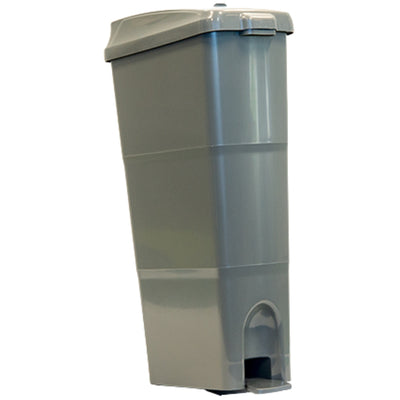
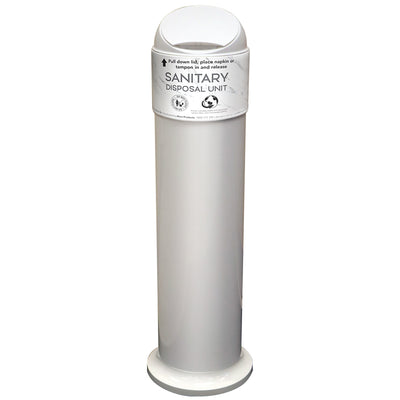 Terracyclic Sanitary Bin White 26L Starter Kit
$92.75 inc GST
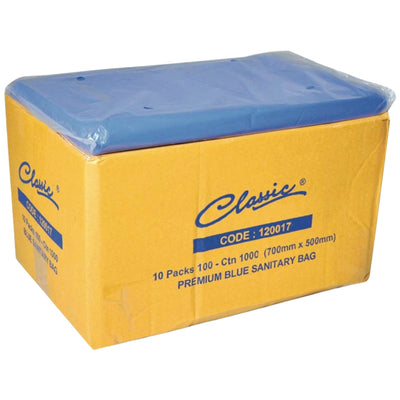
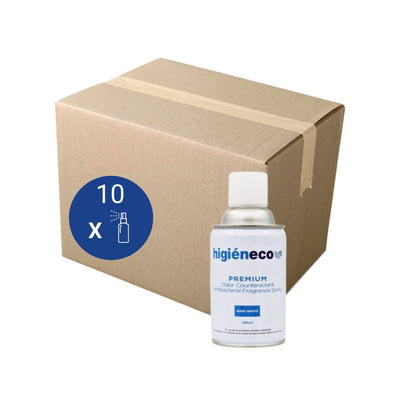 Higieneco Metered Air Freshener — Lemon Soda, 6000 Spray, 10 Pack
$112.15 inc GST
Buy 10+ and save $11.22 each
