Hospital Grade Disinfectant: Complete Guide for Australian Facilities
What Is Hospital Grade Disinfectant — and Why Does It Matter for Australian Facilities?
Hospital grade disinfectant is a TGA-listed chemical proven to eliminate a broad spectrum of bacteria, viruses, and fungi on hard surfaces. In Australia, the Therapeutic Goods Administration (TGA) requires these products to be listed on the Australian Register of Therapeutic Goods (ARTG) before they can legally carry the “hospital grade” designation — making them the most reliable surface disinfectants available to commercial operators.
The direct answer: Hospital grade disinfectant kills harmful pathogens — including influenza, norovirus, Staph aureus, and E. coli — on contact with hard surfaces, verified through TGA-mandated efficacy testing. Contact times range from 30 seconds to 5 minutes depending on the pathogen and product. It is the standard of care for healthcare, food service, childcare, aged care, and any commercial environment where infection control matters.
For facility managers, the business case is straightforward: sick leave costs Australian employers an estimated $7 billion annually. Proactive disinfection of shared surfaces is one of the most cost-effective interventions available. This guide covers the right products, correct dilution ratios, facility-size guidance, and the real $AUD ROI of switching to hospital grade protocols.
For complementary chemical guidance, see our Understanding Cleaning Chemicals guide and our Complete Guide to Professional Cleaning Chemicals 2026.
Recommended Hospital Grade Disinfectant Products
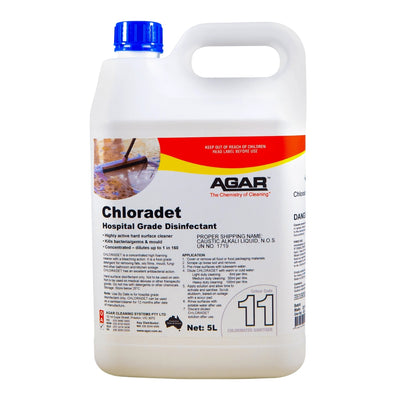
1. Agar Hospital Grade Disinfectant Chloradet — 5L (SKU: 170902)
Price: $37.44
Chloradet is a dual-action hospital grade disinfectant and detergent — it cleans and disinfects in a single step, reducing labour time significantly. It is TGA-listed and effective against a broad spectrum of bacteria and viruses including influenza and coronaviruses. At a dilution of 1:80, one 5L drum yields 400L of ready-to-use solution, making it exceptionally cost-effective for medium-to-large facilities. Suitable for hard non-porous surfaces including desks, benchtops, amenities, and food-prep areas. View product →
2. Agar Counterflu RTU Hospital Grade Disinfectant — 5L (SKU: 160651)
Price: $37.70
Counterflu RTU (Ready To Use) requires no dilution — fill your spray bottle directly and apply. It is hospital grade, TGA-listed, and formulated to kill influenza A and B, MRSA, and other priority pathogens. The RTU format eliminates dilution errors, making it ideal for multi-staff cleaning teams, childcare centres, and food-handling environments where consistent concentration is critical. Pair with a labelled Counterflu spray bottle (SKU: 144439, $1.90) for a compliant, colour-coded system. View product →
3. Agar Counterflu Concentrate — 5L (SKU: 160652)
Price: $70.71
Counterflu Concentrate is the high-yield option for large facilities with high-volume disinfection needs. Its concentrated formula delivers significantly more ready-to-use solution per dollar than the RTU variant. At standard dilution, a single 5L drum produces hundreds of litres of working solution. Hospital grade TGA-listed, effective against the same pathogen range as the RTU product. Best deployed in janitor’s dispensing stations with measured dosing pumps to control usage and ensure correct concentration every time. View product →
4. Cleanmax FreshGuard Disinfectant Spray and Wipe — 5L (SKU: 172244)
Price: $65.17
FreshGuard combines disinfection with a fresh fragrance finish — particularly useful in client-facing areas like reception, meeting rooms, and amenities where odour management matters alongside hygiene. Its spray-and-wipe formulation speeds up the cleaning process and leaves a pleasant ambient scent. A practical choice for hospitality operators, aged care, and professional services firms where first impressions count alongside infection control. View product →
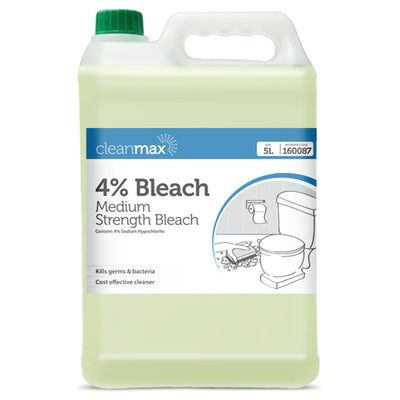
5. Cleanmax Bleach 4% Disinfectant — 5L (SKU: 160087)
Price: $13.81
For situations requiring a cost-minimised broad-spectrum disinfectant — flood remediation, sewage contamination, outbreak response — 4% sodium hypochlorite is the industry standard. It kills virtually all pathogens at correct concentrations and is indispensable as a fallback for hard-to-treat situations like mould contamination or norovirus outbreaks. Use with chemical-resistant gloves and ensure adequate ventilation. Never mix with other chemicals. View product →
Selection Guide by Facility Type
| Facility Size | Recommended Product | Format | Est. Monthly Usage |
|---|---|---|---|
|
Small (1–20 people) Office, small café, retail |
Counterflu RTU (SKU: 160651) | Ready-to-use, no dilution | 1–2 × 5L per month |
|
Medium (~100 people) Corporate office, school, gym |
Chloradet (SKU: 170902) | Concentrate — dilute 1:80 | 1 × 5L per month (= 400L solution) |
|
Large (200+ people) Hospital, aged care, industrial |
Counterflu Concentrate (SKU: 160652) | High-yield concentrate | 2–4 × 5L per month |
| Food Service / Hospitality | FreshGuard (SKU: 172244) + Bleach 4% (SKU: 160087) | Spray-and-wipe + outbreak backup | FreshGuard daily; Bleach as needed |
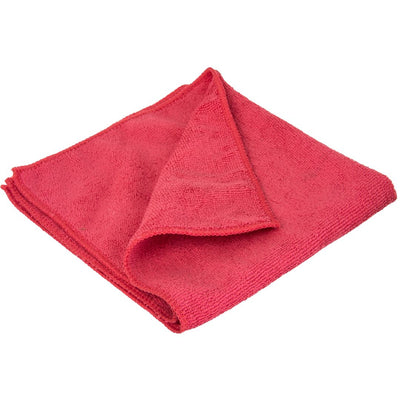
Colour coding tip: Pair your disinfectant with colour-coded labelled spray bottles and coloured microfibre cloths (from $1.90 each) to prevent cross-contamination between zones — a requirement in HACCP and healthcare environments.
Dilution Ratios and Safe Handling
Incorrect dilution is the single most common reason disinfectants fail in commercial settings. Too dilute — the product does not achieve kill claims. Too concentrated — you waste product, risk surface damage, and expose staff to unnecessary chemical load.
| Product | General Disinfection | Heavy Contamination | Contact Time |
|---|---|---|---|
| Chloradet (170902) | 1:80 (12ml/L) | 1:40 (25ml/L) | 2–5 min |
| Counterflu RTU (160651) | No dilution (RTU) | No dilution (RTU) | 30 sec–2 min |
| Counterflu Concentrate (160652) | Per label directions | Per label directions | 2–5 min |
| Bleach 4% (160087) | 1:50 (20ml/L) | Undiluted for outbreak | 10 min |
Safety requirements:
- Always read the product SDS before first use — available from the Safe Work Australia chemical register or your supplier
- Wear nitrile or latex gloves when handling concentrates
- Never mix bleach-based products with ammonia or other cleaners — toxic chloramine gas can result
- Store in original labelled containers away from direct sunlight and heat
- Keep a First Aid Kit (SKU: 210337, $50.34) accessible in all chemical storage areas
ROI Analysis: What Does Hospital Grade Disinfection Actually Save?
The productivity math is compelling. According to SafeWork Australia data, the average cost of one sick leave day (salary + lost productivity) is approximately $400–$600 for a professional role. In a 50-person office, preventing just 4–6 sick-leave days per year through improved surface disinfection protocols delivers $1,600–$3,600 in avoided cost.
| Facility Size | Annual Product Cost | Est. Sick Days Avoided | Est. Annual Saving | ROI |
|---|---|---|---|---|
| Small (20 staff) | ~$450 | 2–3 days | $800–$1,500 | ~3:1 |
| Medium (100 staff) | ~$900 | 8–12 days | $3,200–$6,000 | ~5:1 |
| Large (250 staff) | ~$2,400 | 20–30 days | $8,000–$18,000 | ~6:1 |
Beyond sick leave, hospital grade disinfection reduces the risk of regulatory non-compliance in audited industries (healthcare, food, childcare), supports ISO 9001 and HACCP hygiene records, and demonstrates duty-of-care to staff and visitors.
FAQ — Facility Manager Questions
What is hospital grade disinfectant?
Hospital grade disinfectant is a TGA-listed chemical that kills a broad spectrum of bacteria, viruses, and fungi on hard surfaces. In Australia, a product must be registered on the Australian Register of Therapeutic Goods (ARTG) to carry this classification. It is the minimum standard required in healthcare settings and is widely used in commercial facilities, schools, childcare centres, and aged care.
Do I need hospital grade disinfectant for a standard office?
Not legally, but it is strongly recommended for facilities with 10+ staff. A 50-person office sees high-touch surface contact across desks, door handles, and kitchen areas daily. Hospital grade products eliminate pathogens more reliably than standard cleaners, reducing sick-leave incidents. The cost premium over general cleaners is typically $15–$30 per 5L — easily offset by preventing even one staff sick day per month.
How often should hospital grade disinfectant be applied?
High-touch surfaces (door handles, taps, benches, light switches) should be disinfected at least once daily in standard commercial environments, and 2–3 times daily in high-traffic or food-handling areas. During flu season or following an illness outbreak, increase frequency to every 4 hours on shared contact points.
What is the dilution ratio for Agar Chloradet hospital grade disinfectant?
Agar Chloradet (SKU 170902) dilutes at 1:80 (12ml per litre of water) for general disinfection, and 1:40 (25ml/L) for heavily soiled surfaces. One 5L drum at 1:80 dilution produces 400L of working solution — approximately $0.094 per litre of ready-to-use disinfectant.
Discuss Your Facility’s Disinfection Requirements
Not sure which hospital grade disinfectant is right for your facility size, substrate type, or compliance requirements? Contact Matthews Cleaning Supplies at shop@matthewscleaningco.com.au or use the live chat function on our website to discuss your facility’s specific requirements.
Shop this guide

Written by
Jordan MatthewsCommercial cleaning specialist at Matthews Cleaning Company. Our expert team draws on years of hands-on field experience to help businesses choose the right tools and chemicals for every cleaning challenge.