
Retail Cleaning Supplies: The Complete Checklist for Australian Retailers

In this guide
- Why retail cleaning is a different job
- The retail cleaning supplies checklist, zone by zone
- Hard floors: where presentation and safety meet
- Glass, mirrors and the first three seconds
- High-touch points customers actually notice
- Waste and recycling
- Building a retail cleaning trolley
- How often should a store be cleaned?
- Buying retail cleaning supplies without over-ordering
- Compliance and chemical safety
- Frequently asked questions
Quick answer: Retail cleaning supplies fall into four groups: glass and surface cleaners for shopfronts, dust mops and squeegees for hard floors, disinfectant wipes for high-touch fittings, and colour coded bins with liners. One stocked janitor cart covering those four groups handles daily store cleaning in a single pass.
Why retail cleaning is a different job
An office is cleaned when nobody is watching. A retail store is cleaned while customers walk through it, and every cleaning decision becomes part of the shopping experience. That single fact changes what you buy.
Three constraints shape a retail cleaning program:
- Trading hours compress the work. Most of the floor can only be worked before opening, after closing, or in short gaps between customers. Supplies have to be portable, fast to deploy and quiet.
- Appearance is the product. Streaked glass, scuffed vinyl or a bin with a torn liner reads as a poorly run store, regardless of the price on the shelf. Presentation failures are commercial failures.
- Foot traffic is concentrated. Entry mats, thresholds, fitting rooms and counters take a disproportionate share of the soil load, so they need their own consumables and their own frequency.
The supply list that follows therefore looks different from a standard office cleaning supplies list. It is weighted toward glass, entrance matting, high-touch disinfection and visible waste separation.
The retail cleaning supplies checklist, zone by zone
Buy supplies against zones rather than against a general list. Each zone below has its own soil type, its own frequency and its own failure mode.
Shopfront and entry glass
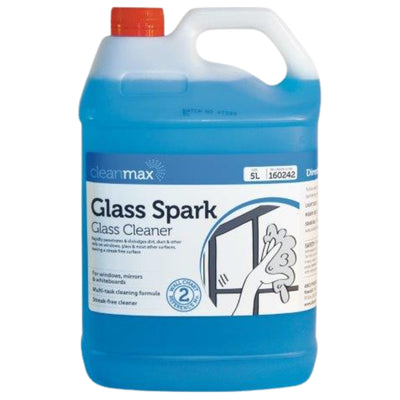
Glass is the highest-visibility surface in the store and the one most often done badly. You need a 5 litre glass cleaner diluted to the label rate, a squeegee with a clean rubber blade such as a 450mm aluminium floor and window squeegee, a washer or microfibre applicator, and dry microfibre cloths for frames and thresholds.
Entry mats sit beside the glass and do more work than most managers realise. A store without adequate matting tracks grit and moisture across the sales floor, which dulls vinyl and grinds soil into carpet. If matting is undersized or worn, treat it as a supply purchase rather than a cleaning task — our guide to commercial entrance matting covers sizing by entry type.
Sales floor and aisles
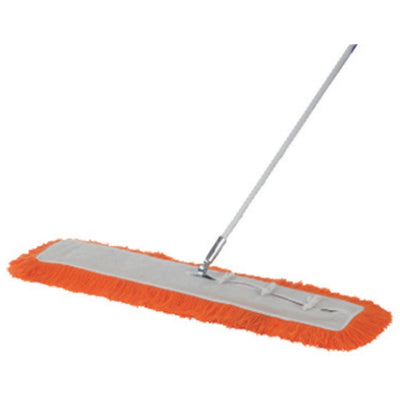
Daily work is dust mopping, spot mopping and removing marks. A wide 91cm dust control mop covers an aisle in fewer passes than a standard mop, and a doodlebug tool lifts scuffs and sticky residue from vinyl without dragging out a machine. Keep wet floor signage handy whenever a floor is wet — customers walk fast and look at shelves, not at the ground.
Fitting rooms and mirrors
Fitting rooms are the most inspected square metres in the store and the most neglected in a cleaning schedule. They need fingerprint-prone mirror cleaning, rail and hook disinfection, floor checks for pins and tags, and a wipe of bench seats. A tub of hospital grade disinfectant wipes kept on the trolley turns this into a two-minute task between customers instead of a weekly scrub.
Service counter and POS
Counters, EFTPOS terminals, scanners, pens and card machines are touched hundreds of times a day. Wipe them with a disinfectant compatible with the plastics in use, and avoid solvent-heavy products on screen coatings and printed vinyl. This is a consumable line item rather than a one-off purchase — plan on a tub or carton per store per month.
Stockroom and back-of-house
Back-of-house is where floors get genuinely dirty: cardboard dust, packing tape residue, pallet scuffs and spillages. Keep a separate mop and bucket for this area so stockroom soil never reaches the sales floor, and keep a floor squeegee for spills and for pushing water to a drain after a wash-down.
Staff amenities
Staff toilets and tearooms are judged harshly because staff use them every shift. Soap, paper towel, toilet tissue, bin liners and a washroom cleaner are recurring consumables; a store that runs out of hand towel on a Saturday afternoon will hear about it on Monday.
Hard floors: where presentation and safety meet
Most retail floors are vinyl, polished concrete or tile, and all three show soil at the same place: the first ten metres inside the door. Daily dust mopping removes grit before foot traffic grinds it in, which is far cheaper than restoring a dulled floor later.
A practical floor kit for a single-level store:
- A dust mop 91cm or wider, plus a spare head so one can be laundered while the other works
- A microfibre flat mop, or a 16 litre side-press wringer bucket for damp mopping
- A floor squeegee for spills, entryways and wash-downs
- A doodlebug tool and pads for scuffs, adhesive and trolley marks
- Neutral floor cleaner for daily damp mopping, plus a heavier degreaser for food zones
- Wet floor signage, stored where staff can reach it in seconds
Periodic work — scrub and recoat, grout cleaning, carpet extraction — should be quoted separately and scheduled outside trading hours. If you are choosing how often each surface needs attention, our guide to cleaning frequencies by area sets out a realistic starting point.
Glass, mirrors and the first three seconds
Customers judge a store before they reach the threshold, and that judgement is mostly made of glass. Three habits separate a professional finish from a smeared one:
- Clean out of direct sun. Solution flashes off before it can be squeegeed, leaving streaks that no amount of buffing fixes.
- Apply to the applicator, not the glass. Spraying straight onto shopfront glass sends product onto frames, sills and the pavement, and produces runs.
- Detail the edges. The blade cannot reach the frame; a dry microfibre cloth on the perimeter and bottom channel is what makes the job look finished.
Inside the store, fitting room and column mirrors need the same treatment at a smaller scale, plus a separate cloth for frames so soil is not transferred back onto the glass.
High-touch points customers actually notice
Disinfection in retail is a confidence issue as much as a hygiene one. Prioritise the surfaces a customer touches with bare hands, in this order: door handles and push plates, EFTPOS terminals, counters, fitting room rails and hooks, trolley and basket handles, and self-service screens.
Use colour coding to keep washroom cloths away from food and counter surfaces — a colour coded cleaning system is the simplest control available and costs nothing beyond buying cloths in the right colours. Wipes are the practical format for counters because they are single-use and leave no bucket sitting on the shop floor.
Waste and recycling
Waste is the part of cleaning customers see most and think about least, until a bin overflows. A workable setup for a mid-size store is a waste station at each traffic node, each with colour coded lids for landfill, mixed recycling and paper, lined with the correct bag size so the liner does not tear on the rim.
A 60 litre bin with a yellow mixed recycling lid suits most sales floors and pairs with a matching landfill or paper unit, so customers sort without reading a sign. Units that share a footprint and lid system also let staff swap lids when a tenant changes use instead of replacing the whole bin.
Two supply rules keep waste under control: buy liners by the correct litre size rather than the largest available, and hold a small stock of each liner at the waste station instead of in the stockroom. For container types and sizing, see our commercial recycling bins guide.
Building a retail cleaning trolley
One attendant, one pass, no return trips. A janitor cart with bag, stocked the night before, will cover a sales floor, entry, fitting rooms and amenities without the attendant leaving the floor:
- Top shelf: glass cleaner, neutral floor cleaner, disinfectant, spray bottles, microfibre cloths in at least two colours
- Middle: squeegee, doodlebug tool, scraper, spare blades
- Bag: liners in the two or three sizes actually used, a wipes tub, hand towel for spills
- Base: mop and wringer bucket — a 16 litre side-press bucket is enough for a store floor and light enough to lift
Keep the cart out of customer sightlines where possible and never leave it unattended in an aisle during trade. A trolley is also the cheapest way to make a cleaning program measurable: stocked to a set list, a supervisor can audit it in thirty seconds.
How often should a store be cleaned?
Frequency follows foot traffic, not floor area. The table below is a realistic starting point for a suburban store trading seven days.
| Task | Frequency | Timing |
|---|---|---|
| Shopfront glass and entry | Daily | Before opening |
| Dust mop hard floors | Daily | Before opening, spot during trade |
| Counters, EFTPOS, door handles | Twice daily | During trade |
| Fitting rooms | Daily, plus between customers | During trade |
| Damp mop and spot clean | Daily to every second day | After closing |
| Amenities clean and restock | Daily | Before opening and mid-afternoon |
| High dusting, vents, light fittings | Monthly | Outside trade |
| Hard floor scrub or carpet extraction | Monthly to quarterly | Outside trade |
Buying retail cleaning supplies without over-ordering
Retail groups usually overspend in two directions at once: too much stock of the wrong consumable, and too little of the one that runs out on a Saturday. Four habits fix that:
- Buy concentrates and dose them. A 5 litre concentrate diluted at label rate replaces several ready-to-use bottles and removes the temptation to mix stronger than needed, which wastes product and leaves residue.
- Standardise consumables across sites. One liner size, one hand towel format and one soap cartridge across every store means one spare stock pool instead of five.
- Order on a cycle, not on panic. Paper, soap, liners and wipes are predictable; set a fortnightly or monthly order and hold two weeks of buffer.
- Keep equipment per site, consumables shared. Machines and carts rarely move between stores; consumables benefit from pooled ordering and a single delivery point.
Compliance and chemical safety
Cleaning is a hazardous chemical environment, and retail adds a public dimension: product, buckets and equipment are used in front of customers. Keep current safety data sheets for every chemical on site, store concentrates locked and labelled, never decant into an unlabelled bottle, and keep wet floor signage at the point of use rather than in a cupboard.
Safe Work Australia publishes the national framework for managing hazardous chemicals in the workplace, including labelling and safety data sheet duties. Waste separation requirements vary by state, and the NSW EPA recycling guidance is a useful reference for what belongs in each stream.
Frequently asked questions
How often should a retail store be cleaned?
Sales floors and shopfront glass should be cleaned every trading day, with high-touch surfaces such as counters, door handles and fitting room rails wiped at least twice daily. Periodic work — hard floor scrubbing, carpet extraction, high dusting and light fittings — is best scheduled monthly or quarterly, outside trading hours.
What cleaning supplies does a retail store need every day?
A daily kit covers glass cleaner and a squeegee or microfibre cloth for the shopfront, a dust mop for hard floors, disinfectant wipes for counters, EFTPOS terminals and fitting rooms, bin liners, and a stocked hand soap and paper towel supply in staff amenities.
How do you clean shopfront glass without streaks?
Work in shade or after trade, apply diluted glass cleaner to a wet applicator rather than directly to the glass, squeegee from the top down in overlapping passes, then detail the frame and edges with a dry microfibre cloth. Change the water before it becomes cloudy, and never clean glass in direct sun.
How should fitting rooms be cleaned between customers?
Wipe rails, hooks, mirrors, bench seats and door handles with a disinfectant wipe, and check the floor for pins, tags and hangers. Deep cleaning — carpet spot treatment, mirror polish and rail sanitising — should be scheduled at least weekly, not left to the customer or to chance.
How many bins does a retail store need for recycling?
Plan on a waste and recycling station at each high-traffic point: entry, food or beverage zone, service counter and staff room. A 60 litre bin with a colour coded lid for mixed recycling, paper and landfill at each station is practical for most mid-size stores.
Can one janitor's cart cover a whole store?
Yes, for daily work. One well-stocked cart carrying glass, floor, high-touch and waste supplies plus a colour coded mop and bucket lets a single attendant work a sales floor in one pass, without returning to the storeroom and without carrying chemicals by hand.
Next step: stock the store, not the cupboard
Whether you manage one store or forty, the fastest improvement is to standardise a short list: one glass cleaner, one neutral floor cleaner, one disinfectant wipe, one liner range, one bin system. That list is what a cleaning program is actually built from.
Browse the full Matthews Cleaning Supplies range, or start with the items in this guide: glass cleaner, dust control mop, janitor cart and recycling bins. Need a list built for your sites? Send us your store details and we will put the order together.
Shop this guide
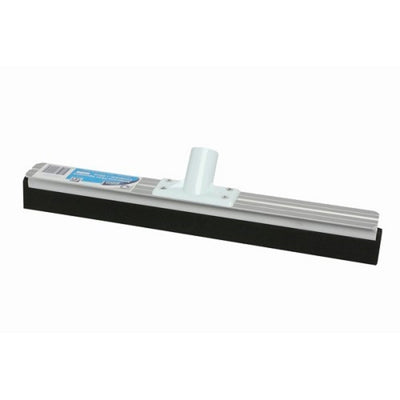 Oates Aluminium Floor Squeegee — Neoprene Rubber, White, 450mm
$44.15 inc GST
Buy 10+ and save $4.42 each
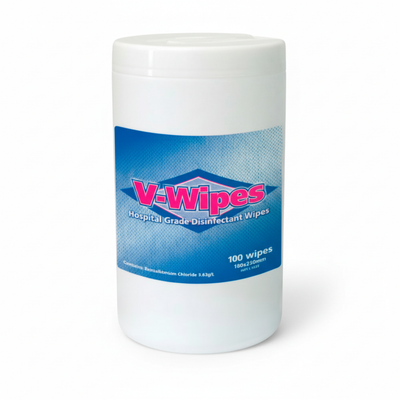 V-Wipe Hospital Grade Disinfectant Wipes Tub 100
$39.10 inc GST
Written by
Jordan MatthewsCommercial cleaning specialist at Matthews Cleaning Company. Our expert team draws on years of hands-on field experience to help businesses choose the right tools and chemicals for every cleaning challenge.


