Commercial Spray Bottles & Trigger Sprayers: Complete Guide for Australian Facilities
The Short Answer
Commercial spray bottles and trigger sprayers are the most-used tools in any professional cleaning operation. The right sprayer reduces chemical waste by up to 40%, prevents cross-contamination through colour coding, and withstands hundreds of thousands of actuations without failure. For Australian facilities, solvent-resistant triggers and pre-labelled bottles matched to your chemical system are the gold standard—cheap hardware-store bottles crack within weeks of daily commercial use.
Why Quality Spray Bottles Matter for Commercial Cleaning
It is easy to overlook the humble spray bottle. Walk through any Australian commercial facility—a school in Parramatta, a childcare centre in Newcastle, an aged care home on the Sunshine Coast—and you will see cleaners carrying them on every trolley. Yet too many facilities still buy the cheapest option and replace them monthly.
A professional-grade commercial spray bottle is engineered differently. The trigger mechanism is rated for continuous use (not occasional gardening). The bottle material resists chemical degradation. The nozzle produces a consistent, adjustable spray pattern that covers surfaces evenly rather than dribbling or misting unpredictably. These differences compound over hundreds of cleaning shifts: less chemical wasted, less fatigue for staff, and fewer replacement purchases.
Put simply: a $6 professional spray bottle that lasts two years costs less than a $2 disposable bottle replaced every six weeks—and performs better the entire time.
Types of Commercial Spray Bottles & Trigger Sprayers
Standard Trigger Sprayers
The workhorse of the cleaning industry. Standard triggers like the Cleanmax Canyon Sprayer Kit 1L are designed for general-purpose cleaning chemicals—multi-surface cleaners, glass cleaners, and mild detergents. Look for an adjustable nozzle (stream to mist), an ergonomic grip with a comfortable trigger pull, and graduated measurement markings on the bottle for accurate dilution.
What separates commercial from retail: Commercial triggers use a metal spring mechanism rather than plastic. The O-rings are chemical-grade Viton or EPDM, not generic rubber. These two differences alone account for 80% of the longevity gap.
Chemical-Resistant / Solvent-Resistant Sprayers
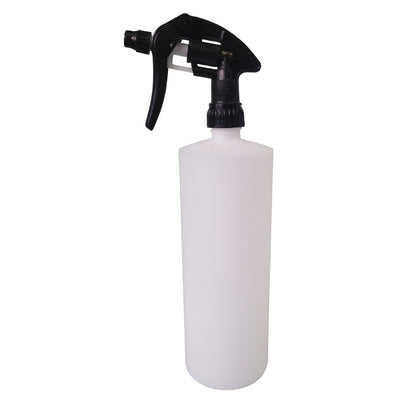
Standard spray bottles break down quickly when used with solvents, alcohol-based sanitisers, or aggressive degreasers. The seals swell, the plastic crazes, and within weeks the trigger jams or the bottle leaks. Solvent-resistant sprayers like the Cleanmax Canyon Solvent Resistant 1L Kit use HDPE or fluorinated bottles with chemical-grade Viton seals rated for ethanol, isopropyl alcohol, acetone, and hydrocarbon-based degreasers.
When you need solvent-resistant: alcohol-based hand sanitiser refill stations, heavy-duty degreaser application in commercial kitchens, brake cleaner or solvent use in workshops, and any product containing >5% solvent content.
Pre-Labelled & Colour-Coded Spray Bottles
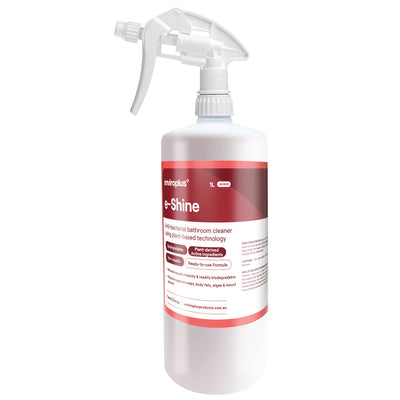
The Enviroplus range—including the Enviroplus e-Shine Spray Bottle Kit and the e-Surface and e-Fabric variants—takes the guesswork out of chemical identification. Each bottle arrives pre-labelled for its specific Enviroplus chemical, with matching colour coding that aligns with Australian industry colour-coding standards.
Pre-labelled bottles eliminate the most common chemical safety failure in Australian facilities: the unlabelled spray bottle. When a cleaner refills a bottle without relabelling it, the next person has no idea what is inside. Pre-labelled, chemical-dedicated bottles solve this at the procurement level.
Squeeze Bottles
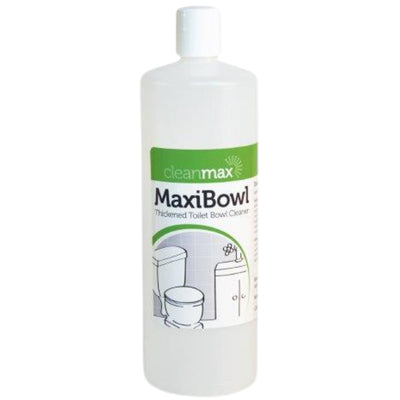
For thicker products like bowl cleaners, gel detergents, or cream cleansers that do not spray well, squeeze bottles with directional nozzles are the correct tool. The Cleanmax Maxibowl Squeeze Bottle 1L is designed specifically for toilet bowl cleaners and thickened chemicals—the angled neck reaches under rims, and the wide mouth makes refilling from 5L bulk containers fast and spill-free.
How to Choose the Right Spray Bottle for Your Facility
Step 1—Audit your chemicals. List every liquid chemical used in your facility and note its base: water-based, solvent-based, alcohol-based, or acid/alkaline. Water-based products work with standard triggers. Anything solvent- or alcohol-based needs chemical-resistant sprayers.
Step 2—Map your colours. If you use a colour-coded cleaning system (and every Australian commercial facility should—see our colour-coded cleaning system guide), match spray bottle colours to zones: red for high-risk/sanitary, blue for general low-risk, green for kitchen/food prep, yellow for clinical/infectious.
Step 3—Count your stations. How many cleaning trolleys, janitorial closets, and satellite stations do you operate? Each needs a full set of spray bottles. Order 10–20% extra to cover breakages and rotation. See our bulk buying guide for procurement strategy.
Step 4—Match the trigger to the frequency. High-frequency cleaning (hourly in a busy shopping centre food court) demands a heavy-duty trigger with a fatigue-reducing grip. Low-frequency use (weekly window cleaning in an office) works fine with a standard trigger. Buy the trigger for the workload, not the cheapest option.
Spray Bottle Maintenance & Longevity
Even the best spray bottle fails prematurely without basic maintenance:
- Flush after aggressive chemicals. Acidic or alkaline products left sitting in the trigger mechanism corrode seals. Run clean water through the sprayer at the end of each shift if using anything outside pH 5–9.
- Relieve pressure. Unscrew the head one turn at the end of the day. Constant pressure on seals accelerates wear.
- Replace, do not repair, damaged triggers. A cracked trigger or split nozzle cannot be repaired safely—the chemical inside may spray unpredictably. Keep spare triggers on hand and swap them immediately.
- Store upright and out of direct sunlight. UV exposure embrittles plastic bottles over weeks. Australian sun is particularly harsh—store spray bottles inside janitorial closets, not on open trolleys parked by windows.
Colour Coding & Chemical Safety
In Australian commercial facilities, WorkSafe guidance and industry best practice recommend physically separating cleaning tools by risk zone. Spray bottles are the delivery mechanism for this system: a red spray bottle never enters a kitchen, a green one never touches a toilet. This is not optional in food-handling environments under FSANZ Standard 3.2.3.
The most robust approach is to buy colour-coded bottles from the start rather than relying on tape, markers, or stickers that peel off after the third refill. Our colour-coded cleaning system guide walks through the full setup.
Bulk Buying: What Facility Managers Should Know
Spray bottles are a consumable, not a capital expense. Budgeting for them as a recurring line item—rather than buying reactively when a cleaner reports a broken trigger—keeps your operation running. Bulk purchasing brings the per-unit cost down 15–30% and ensures you always have replacements on the shelf.
For a facility running 15 cleaning trolleys with 4 spray bottles each, that is 60 bottles in circulation. At a conservative 20% annual attrition rate, you need 12 replacements per year. Buying a box of 12 up front costs less than 12 individual purchases and eliminates the "we're out of spray bottles" panic on a Friday afternoon.
Frequently Asked Questions
How long should a commercial spray bottle last?
A quality commercial trigger sprayer, properly maintained and used with compatible chemicals, should last 12–24 months of daily use. The bottle itself can last years; the trigger mechanism is the wear component. Budget replacements as part of your annual consumables spend.
Can I use the same spray bottle for different chemicals?
Not safely. Chemical residue from the previous product contaminates the new one and can cause dangerous reactions—mixing bleach with acid-based cleaners produces chlorine gas. Dedicate each spray bottle to one chemical and label it permanently. Pre-labelled bottles such as the Enviroplus range make this straightforward.
What is the difference between a canyon trigger and a standard trigger?
A "canyon" trigger (sometimes called a conical or canyon-style sprayer) has an elongated neck and nozzle designed for reaching into tight spaces—under toilet rims, behind equipment, into corners. Standard triggers have a shorter, straight nozzle. Canyon triggers are the preferred format for most commercial cleaning because of their versatility.
Are solvent-resistant spray bottles worth the extra cost?
If you use any alcohol-based sanitiser, solvent degreaser, or strong chemical, yes—absolutely. A standard trigger used with isopropyl alcohol will fail within 4–6 weeks as the seals degrade. A solvent-resistant sprayer costs roughly 30% more and lasts 10× longer in that application.
Shop Commercial Spray Bottles at Matthews Cleaning Supplies
We stock Australia's widest range of commercial spray bottles and trigger sprayers, from budget-friendly standard triggers to chemical-resistant workhorses rated for the toughest solvents. Every bottle in our range is selected for Australian commercial cleaning conditions—not repurposed retail or hardware-store products.
Need help choosing the right spray bottles for your facility's chemical programme? Contact our team—we will match your chemical list to the correct sprayer type and quantity.
Shop this guide
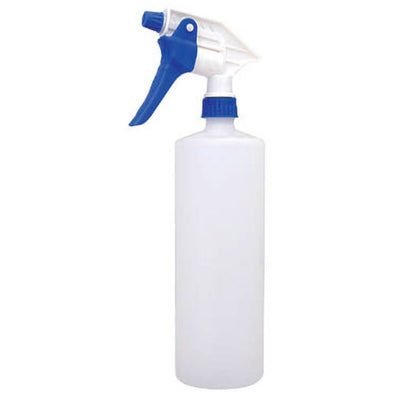 Cleanmax Canyon Sprayer Kit — 1L (Includes Spray Bottle & Trigger)
$11.00 inc GST
Buy 10+ and save $1.10 each
Written by
Jordan MatthewsCommercial cleaning specialist at Matthews Cleaning Company. Our expert team draws on years of hands-on field experience to help businesses choose the right tools and chemicals for every cleaning challenge.