School Cleaning Supplies: Complete Guide for Australian Facilities
Table of Contents
- Why School Cleaning Matters
- Key Regulations & Compliance Standards
- Essential School Cleaning Supplies
- Colour-Coded Cleaning for Schools
- High-Touch Surface Disinfection
- Washroom & Toilet Cleaning
- Floor Care for High-Traffic School Environments
- Washroom Consumables & Hand Hygiene
- Safety, PPE & Chemical Handling
- School Cleaning Procurement Checklist
- Frequently Asked Questions
Why School Cleaning Matters
Australian schools host hundreds to thousands of students and staff daily. Every surface — desks, door handles, taps, toilet flush buttons — becomes a potential transmission point for bacteria and viruses. A 2023 study by the Australian Institute of Health and Welfare found that infectious disease outbreaks in educational settings cost the economy an estimated $1.2 billion annually in lost productivity and healthcare expenses. Effective cleaning isn't just about appearance — it's a public health intervention.
Schools that implement structured commercial cleaning programs report:
- Up to 40% reduction in student and staff sick days (Source: SA Health)
- Improved indoor air quality and reduced asthma triggers
- Extended lifespan of flooring, fixtures, and furniture
- Better staff retention — teachers stay longer at well-maintained schools
Key Regulations & Compliance Standards
Australian school cleaning must comply with several overlapping standards. Facility managers should be familiar with:
Work Health and Safety (WHS) Regulations
Under the model WHS Act, schools have a primary duty of care to maintain a safe environment. This includes managing risks from infectious diseases, hazardous chemicals, and slip/trip hazards. Each state and territory has its own WHS regulator — SafeWork NSW, WorkSafe Victoria, etc. — but the core obligations are consistent nationally.
Australian Standards for Cleaning
- AS/NZS 3733:1995 — Textile floor coverings: Cleaning maintenance of residential and commercial carpeting
- AS 1884-2012 — Floor coverings: Resilient sheet and tiles — Installation practices (cleaning appendix)
- AS/NZS 4146:2000 — Laundry practice (relevant for mop and cloth management)
Infection Control Guidelines
The National Health and Medical Research Council (NHMRC) publishes Staying Healthy: Preventing Infectious Diseases in Early Childhood Education and Care Services — the definitive guide for hygiene in educational settings. Key requirements include daily cleaning of high-touch surfaces with a TGA-registered hospital-grade disinfectant, proper hand hygiene facilities, and documented cleaning schedules.
Essential School Cleaning Supplies
A well-stocked school cleaning cupboard needs products across six core categories. Here's what Australian facility managers should prioritise:
1. Surface Disinfectants & Multi-Purpose Cleaners
The backbone of any school cleaning program. Look for products that clean and disinfect in a single pass to reduce labour time. For general classroom surfaces:
- Enviroplus Concentrated Multi-Surface Cleaner e-Surface X — A concentrated formula that dilutes up to 1:100, making it cost-effective for large facilities. Suitable for desks, tables, walls, and hard surfaces throughout classrooms.
For high-risk areas (sick bays, bathrooms, food preparation surfaces):
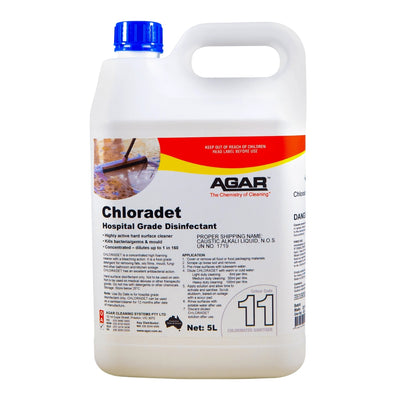
- Agar Hospital Grade Disinfectant Chloradet — 5L — TGA-registered hospital-grade disinfectant. Kills 99.99% of germs including influenza, norovirus, and COVID-19. Essential for outbreak response and daily use in high-touch zones.
2. Microfibre Cloths & Wiping Systems
Microfibre technology captures 99% of bacteria from surfaces using just water — no chemicals needed for everyday dusting and wiping. For Australian schools, colour-coding is critical (see section below). Stock up on:
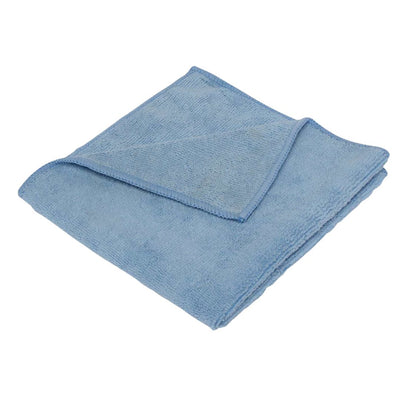
- Cleanmax Premium Microfibre Cloths — Available in blue, green, red, and yellow for full colour-coded compliance. Each cloth lasts 300+ wash cycles, making them far more economical than disposable wipes.
3. Glass & Window Cleaning
Clean windows affect both learning outcomes (natural light improves concentration) and school image. For large glass panels in modern school buildings:
- Professional squeegees and extension poles for reach
- Glass-specific microfibre cloths for streak-free results
- Low-residue glass cleaners suitable for tinted or coated glass
4. Floor Cleaning Equipment
School floors take a beating — hundreds of feet, mud from playgrounds, food spills in the canteen. Your equipment must handle multiple surfaces:
- Dust mops and brooms for daily debris removal from hallways and classrooms
- Wet mops with colour-coded heads (400g cotton contractor heads for heavy-duty floors)
- Side-press wringer buckets — safer and faster than traditional downward-pressure buckets
- Floor scrubbers for large open areas like gymnasiums and assembly halls (see our commercial floor scrubber guide)
5. Cobweb Brushes & High-Reach Tools
Schools have high ceilings, exposed beams, and ventilation ducts that accumulate dust and cobwebs. A domed cobweb brush with an extension pole lets cleaners reach 4+ metres without ladders — safer and faster.
6. Waste Management
An average primary school generates 45kg of waste daily. Reliable bin liners prevent leaks, odours, and pest problems:
- Classroom bins: 36L–54L liners in white or clear
- Canteen/outdoor bins: 72L–120L heavy-duty black liners
- Sanitary bins: Blue sanitary-specific liners for hygiene compliance
Colour-Coded Cleaning for Schools
Cross-contamination is the single biggest risk in school cleaning. A cloth used on a toilet seat should never touch a classroom desk. The industry-standard solution is a colour-coded system — every cleaning zone gets its own colour, and tools never cross zones. For a detailed implementation guide, read our complete guide to colour-coded cleaning systems.
Recommended school colour code:
| Colour | Zone | Examples |
|---|---|---|
| 🔴 Red | High-risk / sanitary | Toilets, urinals, sanitary bins |
| 🔵 Blue | General low-risk | Classrooms, offices, hallways |
| 🟢 Green | Food preparation | Canteen, staff kitchen, home economics |
| 🟡 Yellow | Washroom surfaces | Sinks, taps, mirrors, dispensers |
Implementing colour coding reduces cross-contamination risk by up to 70% and makes training new cleaning staff significantly easier — "red for toilets, blue for classrooms" is a rule anyone can remember.
High-Touch Surface Disinfection
High-touch surfaces in schools require daily disinfection — more frequently during flu season or active outbreak. The NHMRC's Staying Healthy guidelines specify these must be cleaned at minimum once per day when children are present.
Critical high-touch surfaces in schools:
- Door handles, push plates, and handrails
- Light switches and power points
- Desk and table surfaces (especially shared desks)
- Computer keyboards, mice, and tablet screens
- Tap handles and soap dispenser buttons
- Toilet flush buttons and stall locks
- Playground equipment handrails
- Water fountain/bubbler buttons and spouts
Best practice protocol:
- Clean the surface first with a general-purpose cleaner to remove visible dirt and organic matter
- Apply a TGA-registered hospital-grade disinfectant following the manufacturer's contact time (typically 5–10 minutes)
- Allow to air-dry — do not wipe off prematurely
- Document completion on a cleaning schedule sheet for audit compliance
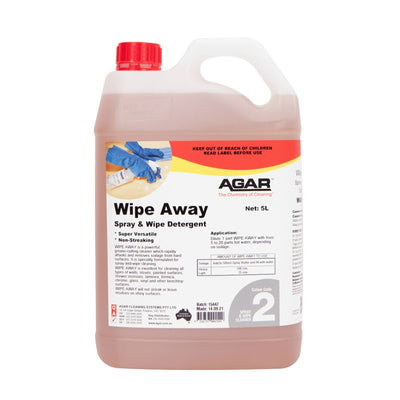
Pro tip: Use a ready-to-use spray-and-wipe detergent like Agar Wipe Away for the cleaning step on non-porous classroom surfaces. It saves labour time, but it is a detergent, so follow it with a disinfectant on high-touch points.
Washroom & Toilet Cleaning
School washrooms are the most scrutinised areas by parents, staff, and health inspectors. A poorly maintained washroom damages school reputation and drives complaints. Here's the professional approach:
Daily Washroom Protocol
- Ventilate: Open windows or ensure extraction fans are running
- Remove waste: Empty sanitary bins, replace bin liners, collect any litter
- High-dust: Wipe vents, light fixtures, and high ledges with a cobweb brush or duster
- Toilets & urinals: Apply a dedicated toilet and urinal cleaner (like Chemform Shift), scrub with a colour-coded toilet brush, allow contact time, then flush
- Basins & taps: Spray with a bathroom-specific cleaner, scrub, rinse, and dry with a yellow-coded microfibre cloth
- Mirrors: Clean with glass cleaner and a lint-free glass microfibre cloth
- Floors: Sweep then wet-mop with designated washroom mop and bucket
- Restock: Refill soap dispensers, toilet paper, and paper hand towels
- Final touch: Wipe all dispenser exteriors and door handles with disinfectant
For a deeper dive into washroom-specific products and techniques, read our commercial bathroom cleaner guide.
Floor Care for High-Traffic School Environments
School floors endure more daily foot traffic than most commercial buildings. Without proper care, floors degrade rapidly — leading to slip hazards, poor appearance, and expensive replacement costs.
Floor Types and Cleaning Methods
Vinyl & Linoleum (Most Classrooms)
- Daily: Dust mop with a 61cm modacrylic fringe mop to capture dust and grit
- Weekly: Wet mop with a pH-neutral detergent (like Agar Neutral Detergent pH7)
- Monthly: Machine scrub with a rotary floor machine and appropriate pad
- Annually: Strip and re-seal to restore the protective finish
Carpeted Areas (Libraries, Staff Rooms)
- Daily: Vacuum high-traffic lanes with a commercial backpack or upright vacuum
- Weekly: Full-room vacuum including edges and under furniture
- Monthly: Spot-clean stains with a carpet spotting solution
- Quarterly: Hot water extraction (professional carpet clean)
Timber Sports Floors (Gymnasiums)
- Daily: Dust mop with a treated dust-control mop
- Weekly: Damp mop with minimal water (timber and water are enemies)
- Termly: Professional screen and re-coat to maintain the playing surface
Entrance Matting — Your First Line of Defence
Up to 80% of dirt entering a building arrives on the bottom of shoes. Commercial entrance matting — at least 3 metres of walk-off length — captures that dirt before it reaches your floors. See our commercial entrance mats guide for sizing and specification advice.
Washroom Consumables & Hand Hygiene
Hand hygiene is the single most effective infection control measure in schools. A 2024 Australian study found that schools with well-stocked hand hygiene stations had 30% fewer illness-related absences than those without.
Hand Soap
Choose a mild, pH-balanced formula suitable for frequent use:
- Cleanmax Freshcare Pink Hand Soap — 5L: A gentle, pleasant formula that encourages handwashing without irritating young skin. Bulk 5L format reduces packaging waste and cost per wash.
- Deb Proline Soap Dispensers: Commercial-grade wall-mounted dispensers with sealed cartridge refills — more hygienic than open bulk-fill systems.
Paper Hand Towels
Air dryers can spread bacteria through aerosolisation. Paper hand towels are the NHMRC-recommended drying method for educational settings:
- Enviroplus Slimline Interleaved Hand Towels — Carton of 4,000 sheets. Compact footprint suits school dispensers. Made from recycled pulp.
- Enviroplus Roll Towels — 80m rolls for high-traffic washrooms. Carton of 20 provides excellent cost-per-dry.
Toilet Paper
Schools need bulk-capacity systems that resist pilferage and reduce refill frequency:
- Enviroplus Jumbo Toilet Tissue — 2-Ply, 300m: A single roll lasts through hundreds of uses. Locking dispenser options available to prevent misuse. Carton of 8 covers a medium-sized primary school washroom for a full term.
Hand Sanitiser
Position at building entrances, outside the canteen, and in classrooms without sinks:
- Puregiene Hand Sanitiser Alcohol Gel — 5L: An alcohol-based gel with a non-sticky finish. Bulk format refills wall-mounted dispensers economically.
Safety, PPE & Chemical Handling
Personal Protective Equipment (PPE)
Cleaning staff must have access to appropriate PPE. For school environments the minimum is:
- Nitrile gloves — for handling chemicals and cleaning washrooms. Latex-free to avoid allergy issues in the school environment
- Safety glasses — when diluting concentrated chemicals or cleaning overhead surfaces
- Non-slip footwear — essential for wet-floor work
Wet Floor Signage
A legal requirement during and immediately after wet cleaning. The Cleanmax Caution Wet Floor A-Frame Sign provides a clear, high-visibility warning with moulded text that won't fade. Place at all access points to the wet area — not just one sign at one end of a hallway.
First Aid
Every school cleaning cupboard should include a Basic First Aid Kit — 120 Piece Workplace Kit. Cleaning staff are often first on scene for spills, breakages, and minor incidents. Quick access to bandages, eye wash, and burn treatment is essential.
Chemical Storage
Store all cleaning chemicals in a locked, ventilated cupboard away from student access. Never decant chemicals into unlabelled containers. Always keep Safety Data Sheets (SDS) in a folder adjacent to the storage area — they're legally required and invaluable in an emergency. For detailed guidance, see our commercial cleaning chemical storage guide.
School Cleaning Procurement Checklist
Use this checklist when auditing or setting up a new school cleaning supply program:
| Category | Items | Quantity Guideline |
|---|---|---|
| Disinfectants | Hospital-grade disinfectant, multi-surface spray | 5L concentrate per 20 classrooms/month |
| Microfibre Cloths | Assorted colours (red, blue, green, yellow) | 20 of each colour per cleaner |
| Mops & Buckets | Wet mops, dust mops, wringer buckets | 1 set per cleaner per shift |
| Glass Cleaning | Squeegees, glass cloths, extension poles | 1 kit per cleaning team |
| Brooms & Brushes | Indoor broom, dustpan set, cobweb brush | 1 per cleaner |
| Washroom Consumables | Soap, paper towels, toilet paper, bin liners | 2-week buffer stock minimum |
| PPE & Safety | Gloves, glasses, wet floor signs, first aid kit | 1 set per cleaner + spares |
| Waste Management | Bin liners (36L, 72L, 120L) | 1 carton per size per term |
| Speciality | Carpet spotter, mould remover, graffiti remover | 1 each for as-needed use |
Frequently Asked Questions
How often should school classrooms be cleaned?
Classrooms should receive daily cleaning including: emptying bins, wiping desks and high-touch surfaces with disinfectant, vacuuming or dust-mopping floors, and spot-cleaning any visible marks or spills. A full wet-mop should be done at minimum weekly. During flu season or active illness outbreaks, increase high-touch surface disinfection to twice daily.
What's the difference between cleaning, sanitising, and disinfecting?
Cleaning removes visible dirt and organic matter using detergent and water — it reduces germ numbers but doesn't kill them. Sanitising reduces bacteria to a safe level as defined by public health standards (typically 99.9% reduction). Disinfecting kills 99.99% of germs using a TGA-registered chemical — this is the standard required for high-risk areas like school washrooms and sick bays.
Do we need different cleaning products for primary vs secondary schools?
The core product categories are identical. However, primary schools typically need more frequent cleaning of lower surfaces (younger children touch walls, floors, and low handles more) and more consumables (younger children use more soap and paper towels per wash). Secondary schools may need stronger graffiti removal products and larger bin liner sizes for outdoor areas.
How do we train cleaning staff on a colour-coded system?
Start with a simple wall chart showing the four colours and their zones. Label every tool handle, cloth, and bucket with its colour zone. Run a practical demonstration — staff clean each zone in sequence, changing tools between zones. The first week, a supervisor spot-checks cloth colours in each area. After that, compliance typically becomes habit. The key is consistency: never run out of a colour and substitute with another — that breaks the system.
What cleaning supplies do we need for a norovirus outbreak?
Norovirus requires a specific response: a chlorine-based disinfectant at 1,000ppm (or a TGA-registered product with a specific norovirus kill claim), disposable gloves and aprons, and separate mops/cloths that are either disposed of or thermally disinfected (washed at 71°C+) after use. Increase cleaning frequency to three times daily in affected areas. Isolate the affected zone and use dedicated equipment that doesn't leave that area.
Ready to Stock Your School Cleaning Cupboard?
Matthews Cleaning Supplies has been equipping Australian schools, universities, and education facilities for over a decade. We stock the complete range of commercial-grade cleaning products your school needs — all at competitive bulk pricing with fast delivery Australia-wide.
Why facility managers choose us:
- ✅ Bulk/commercial pricing — save 15-30% vs retail
- ✅ TGA-registered hospital-grade disinfectants in stock
- ✅ Full colour-coded range — cloths, mops, buckets, brushes
- ✅ Free delivery on orders over $200
- ✅ Expert advice — we help you build your school's cleaning program
Browse All School Cleaning Supplies →
Need help building a custom school cleaning supply list? Contact our team for a free procurement consultation.
Shop this guide
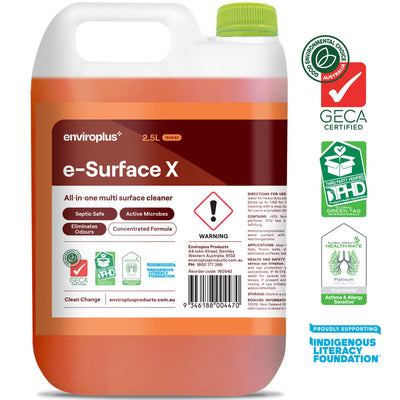 Enviroplus Concentrated Multi Surface Cleaner e-Surface X E4 — 2.5L
$162.70 inc GST
Buy 10+ and save $16.27 each
Written by
Jordan MatthewsCommercial cleaning specialist at Matthews Cleaning Company. Our expert team draws on years of hands-on field experience to help businesses choose the right tools and chemicals for every cleaning challenge.