
Commercial Wet and Dry Vacuums: How to Choose the Right Size and Use One Safely

A wet and dry vacuum picks up liquid and debris that would ruin a normal vacuum. It is the fastest way to clear a flooded floor, recover dirty water after scrubbing, or clean up after builders, and it does in minutes what takes a mop and bucket an hour. Choosing the right one mostly comes down to tank size, tank material and where you will use it.
Table of contents
- When you need one
- 30 litres or 90 litres?
- Stainless steel or poly tank?
- Wet and dry vs other vacuums
- Safety rules for wet pickup and dust
- Care after every use
- Frequently asked questions
When you need one
- Floods, leaks and burst pipes: recover standing water before it soaks into floors and walls.
- Scrub and recover: scrub a floor with detergent and a deck scrub or machine, then vacuum up the dirty solution instead of mopping it around.
- Kitchen and washroom deep cleans: pick up rinse water from floors and drains.
- Construction and renovation clean-up: general debris, slurry and offcuts. Hazardous dust needs a rated vacuum, covered below.
- Car parks, loading docks and workshops: wet leaves, grit and spills.
If none of those come up on your sites, a standard dry vacuum is lighter, quieter and better on carpet. Our vacuum buying guide covers the dry options.
30 litres or 90 litres?
| 30 litre | 90 litre | |
|---|---|---|
| Best for | Kitchens, washrooms, healthcare, small spills, daily use | Warehouses, factories, flood recovery, construction, large venues |
| Manoeuvrability | Fits through standard doorways and lifts, easier to move between rooms | Best on large open floors; heavier to move when full |
| Emptying | More frequent on big jobs | Runs much longer between empties |
| Our pick | Cleanstar Stainless Steel Wet and Dry 30L | Cleanstar Wet and Dry 90L |
A useful rule: if a typical job would fill a 30 litre tank more than two or three times, the bigger machine pays for itself in time saved. Remember water is heavy. A full 30 litre tank adds about 30 kilograms, and a full 90 litre tank is far too heavy to tip, so use the drain port.
Stainless steel or poly tank?
Stainless steel resists corrosion and chemicals, does not absorb odours and is easy to sanitise, which makes it the better choice for commercial kitchens, food processing, hospitals and aged care. The Cleanstar 30L has a stainless tank, a drain port for emptying without lifting the tank, and a blower function for clearing debris from hard-to-reach spots.
Heavy-duty poly or plastic tanks are lighter and suit warehouses, construction and general industrial work where hygiene is less critical. The Cleanstar 90L is built for this kind of large-volume work, with a wide floor tool, large wheels and a large drain port.
Wet and dry vs other vacuums
| Machine | Wet pickup | Carpet | Best use |
|---|---|---|---|
| Wet and dry vacuum | Yes | Basic | Spills, floods, scrub and recover, workshops, construction |
| Backpack vacuum | No | Good | Offices, stairs, theatres, fast daily vacuuming. See our backpack vacuum guide |
| Canister vacuum | No | Good | Offices, classrooms, hotels. See our Henry Pro review |
| Floor scrubber | Recovers its own solution | No | Large hard floors cleaned daily. See our floor scrubber guide |
For sites with large hard floors that are cleaned every day, a floor scrubber will usually beat a wet and dry vacuum on labour. For occasional deep cleans and spills, the wet and dry vacuum is the cheaper and more flexible tool.
Safety rules for wet pickup and dust
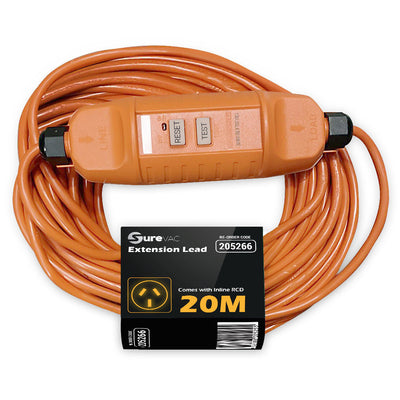
- Use RCD protection. You are running an electrical machine in water. Plug into an RCD-protected outlet or use a lead with a built-in RCD, such as the Surevac 20m Extension Lead with Inline RCD. Keep the plug and lead connection out of water.
- Set up the filter for the job. Many wet and dry vacuums need a dust bag or paper filter removed before wet pickup. Check the manual before switching from dry to wet.
- Watch the float valve. Most wet and dry vacuums shut off suction when the tank is full. Empty it straight away rather than forcing it.
- No flammable liquids. Never vacuum petrol, solvents or other flammable liquids with a standard machine.
- Hazardous dust needs a rated vacuum. Cutting, grinding and drilling concrete, brick, tile and stone creates respirable crystalline silica. Australian WHS guidance calls for an M class or H class industrial vacuum for this dust. Use a general wet and dry vacuum for ordinary debris and slurry only. Our builders clean guide covers this in more detail.
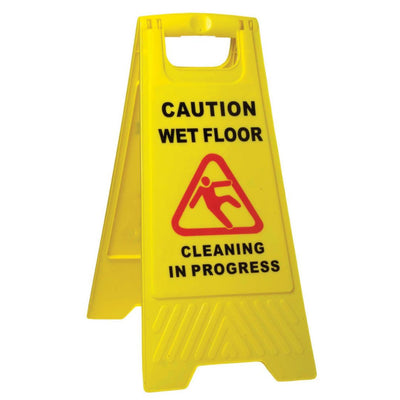
- Put out signage. Floors stay slippery after wet pickup. Use a wet floor sign until the floor is dry; see our wet floor signs guide.
Care after every use
- Empty the tank through the drain port and rinse it out. Dirty water left in the tank smells within hours.
- Rinse the hose and floor tool, and let everything dry with the lid off.
- Tap out or wash the filter as the manual directs, and let it dry fully before dry vacuuming.
- Wipe the cord, check it for cuts, and coil it loosely.
- In food or healthcare settings, sanitise the tank and tools after each job.
For scrub-and-recover jobs, pair the vacuum with a degreasing detergent such as Agar Dirt-Off 5L, which is suitable for mops, auto scrubbers and pressure washers, and an Oates floor squeegee to push water towards the vacuum on large areas. Our floor squeegee guide explains how.
Frequently asked questions
Can a wet and dry vacuum replace my normal vacuum?
For hard floors, workshops and warehouses, often yes. For carpeted offices, a dedicated dry vacuum such as a backpack or canister model is lighter, quieter and better at lifting dust from carpet pile, so most sites keep both.
What size wet and dry vacuum do I need?
A 30 litre tank suits kitchens, washrooms, small spills and daily wet pickup where the machine has to fit through doorways. A 90 litre tank suits warehouses, flood recovery, construction clean-up and any job where emptying a smaller tank every few minutes would slow you down.
Is a stainless steel tank worth it?
In food service, healthcare and anywhere the vacuum handles chemicals or needs to be sanitised, yes. Stainless steel resists corrosion, does not absorb odours and is easy to clean. For general warehouse and construction work, a heavy-duty poly tank is fine.
Can I use a wet and dry vacuum for silica or concrete dust?
Only if the vacuum is rated for hazardous dust. Respirable crystalline silica from cutting and grinding concrete, brick or stone needs an M class or H class industrial vacuum under Australian WHS guidance. A general wet and dry vacuum is fine for ordinary debris and slurry, but check its rating before using it on silica dust.
Why has my wet and dry vacuum stopped sucking?
Most often the tank is full and the float valve has closed to protect the motor, or the filter is blocked or wet. Empty the tank, clean or dry the filter, and check the hose for blockages.
Shop wet and dry vacuums
Matthews Cleaning Supplies stocks the Cleanstar 30L stainless and 90L industrial wet and dry vacuums, plus floor tools, squeegees and RCD-protected leads, with delivery Australia-wide. Browse all commercial vacuums.
Shop this guide
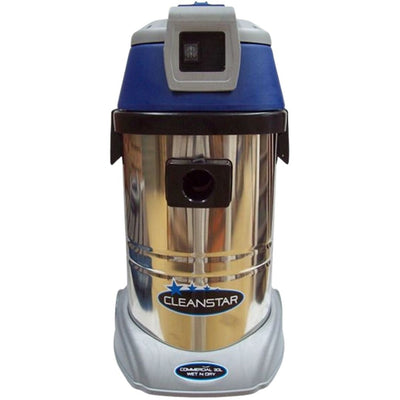 Cleanstar Commercial Wet & Dry Stainless Steel Vacuum — 30L
$740.85 inc GST
Buy 10+ and save $74.09 each
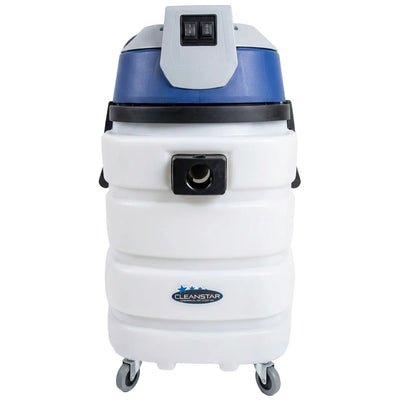 Cleanstar Commercial Wet & Dry Vacuum — 90L Industrial Vacuum
$1,270.65 inc GST
Buy 10+ and save $127.07 each
Written by
Jordan MatthewsCommercial cleaning specialist at Matthews Cleaning Company. Our expert team draws on years of hands-on field experience to help businesses choose the right tools and chemicals for every cleaning challenge.


