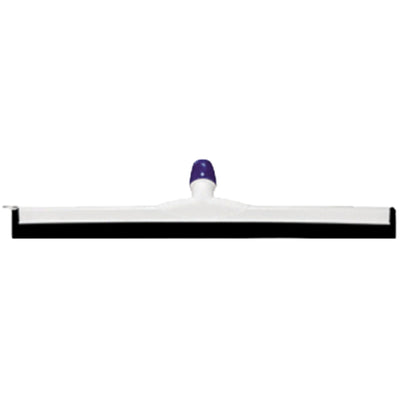
Commercial Floor Squeegees: The Complete Buying Guide

A floor squeegee is the least glamorous tool in the cleaning cupboard and the one that decides whether a wet area dries in five minutes or stays a slip hazard until lunchtime. Most facilities buy one at a time, on price, with no plan for blade compound, frame strength or width — then replace it every few months because the rubber has torn or the frame has bent.
This guide covers what actually matters when you specify squeegees for a commercial site: blade material, frame build, width, handle compatibility, and how each choice behaves on sealed vinyl, epoxy, quarry tile and bare concrete. Every recommendation below maps to gear we stock and use on our own contracts across New South Wales.
Quick answer: A commercial floor squeegee is a wide-blade tool that pushes standing water, slurry and spillage to a drain or collection point instead of spreading it. Choose a neoprene rubber blade for smooth sealed floors, an aluminium frame for daily heavy use, and 450mm for corridors or 525mm for open washdown areas.
What a floor squeegee does that a mop cannot
A mop is a wetting tool. It deposits solution, agitates soil and picks up a fraction of the liquid it lays down. On a level floor, a mop leaves a film measured in tenths of a millimetre; on a floor with a fall, it leaves that film in the low spots. A squeegee is a removal tool — a continuous rubber edge held at a shallow angle that lifts water off the surface and drives it in one direction.
The practical difference shows up in three places:
- Drying time. A squeegeed floor is walkable almost immediately because the water is gone, not thinned out.
- Slip risk. Standing water is the hazard. Removing it is faster and more reliable than trying to make it evaporate with more airflow.
- Water volume. Washdown, rain ingress and burst-pipe events produce litres, not millilitres. A 525mm squeegee moves roughly four times the water per pass of a 250mm window blade, and a mop is not in the same contest.
Where a squeegee loses: textured or unsealed surfaces, deep grout lines, and anywhere the blade cannot make continuous contact. We cover those cases in the floor type section below.
Floor squeegee vs window squeegee
These two tools share a name and almost nothing else. Using one for the other's job is the single most common buying mistake we see on site audits.

Blade geometry and frame build
A window squeegee uses a thin, hard, precisely machined rubber or silicone strip clamped in a channel, held at a steep angle against glass. It is designed to leave zero residue on a non-porous vertical surface. A floor squeegee uses a thick, soft, forgiving rubber strip mounted on a rigid bar, often with a curved or angled profile, and is dragged across a horizontal surface carrying a heavy load of water.
Put a window squeegee on a wet floor and the blade folds, the channel fills with grit, and the frame flexes until it warps. Put a floor squeegee on glass and the thick soft rubber smears rather than cuts.
Where each belongs
- Floor squeegee: washdown bays, shower and change rooms, commercial kitchens, loading docks, car parks, pool surrounds, spill response, rain ingress at entrances.
- Window squeegee: glazing, mirrors, partition glass, shopfronts. If you need glass work, our commercial window cleaning equipment guide covers the full kit.
Blade compound: what the rubber is actually for
The blade is the wear part. Frame decisions are one-off; blade decisions repeat, so get the compound right first.
Neoprene rubber
Neoprene is the default for commercial floor work, and the reason is chemical rather than mechanical. It resists the oils, degreasers, hypochlorite and quaternary ammonium sanitisers that a squeegee meets every day, and it keeps its flexibility across the temperature range of an Australian washdown bay — from a cold-room exit to a sun-exposed loading dock. A neoprene blade holds a clean edge against sealed vinyl, epoxy and tile without chattering.
What it is not: a precision edge. Neoprene is comparatively soft, which is exactly why it tolerates grit and floor irregularities. It will not give you the water-cut of a silicone window blade, and it should not be asked to.
Natural rubber, EPDM and hybrids
Natural rubber is slightly softer and cheaper, with good abrasion resistance on smooth concrete but poorer resistance to oils and solvents. EPDM handles weathering and UV better for outdoor and car park use but is less resistant to hydrocarbon solvents. For most facilities the difference is marginal — the failure mode you will actually hit is mechanical (nicks, tears, blade set) rather than chemical, which is why blade thickness and storage matter more than compound marketing.
Frame material: aluminium vs plastic
The frame decides how much downward force you can apply and how straight the blade stays under load. Both options in our range use the same neoprene blade; the difference is the handle interface and the life of the tool.
| Build | Best for | Trade-off |
|---|---|---|
| Aluminium frame | Daily commercial use, washdown, heavy water volumes, long handles | Higher unit cost; dents if dropped on edge |
| Plastic frame | Light duty, small teams, storage cupboards where weight matters | Flexes under load on wide blades; shorter service life |
Aluminium is the sensible default for a cleaning contractor. It holds a straight edge at 450mm and 525mm, it takes a standard 25mm tapered or threaded handle, and it survives being leaned against a wall a hundred times a week. Our Oates aluminium floor squeegee in white, 450mm is the workhorse spec for colour-coded wet areas, with the same tool in blue, 450mm for general floor work — and a third colour if your site code separates kitchen from washroom.
Width and handle selection
Matching width to the space
- 450mm: the practical default. Fits between fixtures in bathrooms and change rooms, light enough to control one-handed, wide enough to clear a corridor in a few passes.
- 525mm: for open floor — kitchen production areas, washdown bays, loading docks. More water per pass with less walking, but you need an aluminium frame if you intend to lean on it. The Oates plastic floor squeegee, 525mm is a good low-cost option for lighter volumes.
- 600mm and above: only worth it on genuinely open slab where a straight run exists. Wider blades need a rigid frame and a strong operator, or the blade bows and leaves a stripe down the middle.
Handles
Most commercial floor squeegees take a 25mm handle, either tapered fit or threaded. Two rules: match the thread to the socket or the head will work loose mid-pass, and use an aluminium handle rather than timber where the tool lives wet. Timber swells, splits at the ferrule and eventually snaps under the load a squeegee demands. Colour-coded handles are worth the small premium if your site runs a colour-coded cleaning system — the squeegee is one of the tools most often moved between areas.
Choosing by floor type
| Surface | Blade and technique |
|---|---|
| Sealed vinyl, LVT, linoleum | Neoprene, straight push, shallow angle. Excellent contact — the best surface for a squeegee. |
| Epoxy and resin | Neoprene, aluminium frame. Watch for abrasive grit from boots; rinse the blade before each pass. |
| Ceramic and quarry tile | Squeegee clears the flats, not the grout lines. Follow with a wet vacuum or mop; grout lines need a separate joint routine. |
| Bare or sealed concrete | Use a stiff-bladed or heavy-duty squeegee and accept two passes. Porous concrete absorbs water before the blade reaches it. |
| Safety flooring (vinyl with aggregate) | Squeegee only, never a stiff broom — the aggregate will shred a soft blade. Replace blades more often. |
| Outdoor slab, car park, dock | Aluminium frame, wide blade, EPDM or neoprene. Push to drain, not across the fall. |
Where squeegees earn their keep
Across our own contracts, the squeegee shows up in seven recurring jobs. If two or more of these describe your site, this is not a one-tool purchase — buy by area.
1. Washdown bays and food production floors
High-volume water plus food waste means the squeegee is a hygiene control, not a convenience. Clear water to the drain before it spreads into dry zones, then sanitiser.
2. Spill response
A squeegee plus a wet vacuum clears a spill faster than absorbent alone, and leaves no residue to re-wet. Keep one dedicated to spills so it never carries kitchen fats into a clean area.
3. Rain ingress at entrances
Hard floors plus a busy foyer is where slip claims start. A 450mm squeegee and a wet floor sign used together deal with the water and the warning; the sign alone only deals with the warning.
4. Bathrooms, showers and change rooms
Sealed vinyl and tile with a fall to a floor waste. One pass at the end of a shift removes the film that otherwise becomes mould along the wall junctions.
5. Commercial kitchens at close
Degreased floors are wet floors. Squeegee to the drain, then let the surface dry before the grease trap and equipment are reassembled.
6. Car parks and loading docks
Oil and water together are the worst case for slip resistance. Wide aluminium blade, EPDM or neoprene, pushed to the pit — and swept first, because grit destroys blades.
7. Pool decks and aquatic centres
Continuous water movement, high bather load, chlorine exposure. This is the case where neoprene's chemical resistance genuinely matters; natural rubber blades harden and crack within a season.
Technique: clearing water without leaving a film
- Remove solids first. Sweep or vacuum grit. A single screw head will nick a neoprene edge and leave a permanent stripe.
- Set the angle shallow. Around 30–45 degrees to the floor, blade flexed just enough to stay in contact. Too steep and you scrape; too shallow and water runs under the blade.
- Work in lanes, overlap by a third. Start at the furthest point from the drain and pull toward yourself, then step back and repeat. Pushing away from the drain just relocates the water.
- Finish at the drain or the collection point. Never leave a pool at the edge of the workspace — that is the puddle someone finds at 6am.
- Dry the strip you walked on. Your boots carry water backwards; a final pass over the entry path is the difference between a clean job and a call-back.
Cleaning, storage and replacement
A squeegee fails for predictable reasons, and most of them are storage.
- Rinse both sides after every use. Chemical residue left on the blade dries into a hard film that then scratches floors and destroys the edge.
- Never store blade-down. Hanging is correct. Leaning a squeegee in a bucket sets a permanent curve in the rubber and the tool will never clear a floor properly again.
- Inspect the edge weekly. Run a thumbnail along the blade — nicks and tears mean replacement. A damaged blade smears water instead of removing it, which is worse than no squeegee at all.
- Replace the blade, not the tool. Aluminium frames outlast several blades. Keep a spare blade per site and swap on the spot rather than waiting for a purchase order.
- Retire warped frames. A bowed bar leaves a stripe down the middle of every pass. No amount of technique fixes it.
Slip safety and compliance
Under the model Work Health and Safety Regulations, a person conducting a business or undertaking must manage the risk of falls at the workplace, and slips on wet flooring are squarely within that duty. Safe Work Australia's model code of practice for managing the risk of falls at workplaces sets out the hierarchy: eliminate the hazard where possible, then substitute, engineer, administrate and finally rely on PPE.
For wet floors, that hierarchy maps directly onto tooling. Eliminating standing water with a squeegee is a higher-order control than putting a sign on it. Signage is an administrative control — necessary, but the weakest link, and it depends on someone reading it. Our slips, trips and falls guidance is worth reading alongside your own incident register if wet areas generate repeat reports.
Two practical compliance points. First, floor slip resistance is classified under AS 4586, and wet-area products are rated for wet conditions specifically — a floor that is compliant dry can be marginal wet, which is why removing water matters more than the rating on the specification sheet. Second, document the routine: a squeegee pass at the end of every shift is auditable, and it is the kind of control that reads well in an incident investigation.
Buying checklist
- Count the areas, not the sites — one squeegee per wet area, plus one dedicated spill tool.
- Neoprene blade for chemical resistance and smooth sealed floors.
- Aluminium frame for anything used daily or wider than 450mm.
- 450mm for bathrooms, change rooms and corridors; 525mm for open washdown and kitchen floors.
- 25mm handle, aluminium, colour-coded to the area.
- Spare blades in stock before the first one tears.
- A wall hook or rack at every storage point — hanging is the whole maintenance plan.
- Pair every wet-area kit with a wet floor sign and a documented drying routine.
Ready to spec your wet areas?
We stock neoprene floor squeegees in plastic and aluminium frames, 450mm and 525mm, plus the handles, signs and wet vacuums that make a wet-area routine actually work. Trade pricing, next-day dispatch across NSW.
Frequently asked questions
What width floor squeegee should I buy for a commercial site?
450mm covers most commercial needs — bathrooms, change rooms, kitchens and corridors. Move to 525mm for open washdown bays, production floors and loading docks where you are clearing large volumes of water and want fewer passes. Wider than 600mm only makes sense on open slab with a rigid aluminium frame.
Is a neoprene floor squeegee better than rubber?
Neoprene is a synthetic rubber and is the better default for commercial cleaning because it resists oils, degreasers, chlorine and sanitisers while staying flexible. Natural rubber is cheaper and slightly softer but hardens and cracks faster when exposed to solvents and chlorine, which is why neoprene suits washdown and aquatic areas.
Can I use a window squeegee on floors?
No. A window squeegee has a thin, hard blade in a narrow channel designed for glass. On a wet floor it folds under load, traps grit and warps the frame, and it cannot move the volume of water a floor squeegee handles. Use each tool for its intended surface.
How often should floor squeegee blades be replaced?
Inspect weekly on daily-use tools and replace when the edge is nicked, torn or set into a curve. In heavy washdown or safety-flooring environments expect a blade every one to three months. A damaged blade smears water rather than removing it, which is a slip hazard rather than a saving.
How do I stop a floor squeegee leaving a stripe?
A stripe almost always means a warped or flexing frame, a nicked blade, or too wide a blade for the frame's rigidity. Check the frame is straight, replace the blade, and drop to a narrower width if the bar bows under pressure.
Do I still need wet floor signs if I use a squeegee?
Yes. Removing water is the primary control, but there is always a window between the floor becoming wet and it being cleared. Signage covers that window and any area you cannot clear immediately. Treat the squeegee and the sign as one system, not alternatives.
Shop this guide
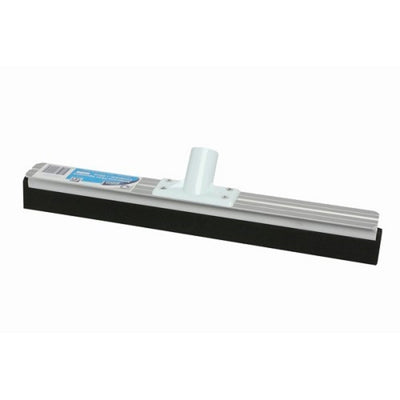 Oates Aluminium Floor Squeegee — Neoprene Rubber, White, 450mm
$44.15 inc GST
Buy 10+ and save $4.42 each
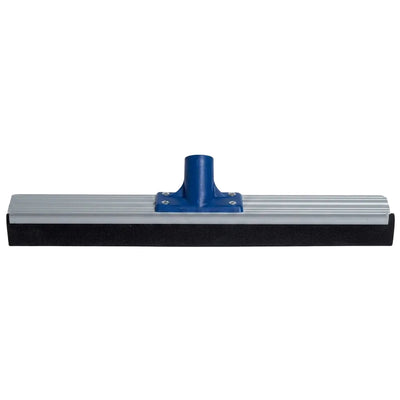 Oates Aluminium Floor Squeegee — Neoprene Rubber, Blue, 450mm
$40.60 inc GST
Buy 10+ and save $4.06 each