Choosing the Right Vacuum Cleaner: A Professional Buyer’s Guide (2026)

Not all vacuum cleaners are created equal — especially when you’re cleaning on a commercial scale. Whether you're outfitting a cleaning crew, maintaining high‑traffic facilities, or simply want professional‑grade performance, choosing the right vacuum is essential for productivity, air quality, and lasting results.
At Matthews Cleaning Co, we stock a curated range of vacuums designed for real daily use by professional cleaners. From ergonomic backpack vacuums to cordless powerhouses, here’s how to choose what’s right for you and which products we recommend.
🧰 What Makes a Vacuum “Professional‑Grade”?
Compared to domestic models, commercial vacuums are designed to:
- Deliver stronger, sustained suction
- Handle larger dust loads without frequent emptying
- Include advanced filtration like HEPA for healthier air
- Stand up to daily use without frequent breakdowns
- Offer ergonomic designs to reduce fatigue during long shifts
Whether you’re cleaning offices, schools, healthcare facilities, retail spaces, or hospitality venues, the right vacuum can save time and improve results.
🎒 Backpack Vacuums — Mobility Meets Power
Backpack vacuums are the go‑to for most professional cleaners who need mobility, comfort, and efficiency in tight spaces like stairs, hallways, and between furniture.
-
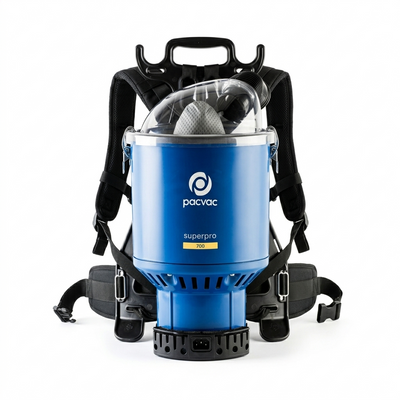
Pacvac Superpro 700 Backpack Vacuum
A reliable corded backpack vacuum that delivers powerful suction, a comfortable padded harness, and proven HEPA‑rated filtration. With an 18m cord and 5L capacity, it’s a classic choice for daily commercial cleaning. -
Pacvac Backpack Vacuum Micron
If indoor air quality matters — especially in healthcare, schools, offices and hospitality — this corded unit with H13 HEPA filtration captures microscopic dust and allergens as small as 0.3 microns, improving air quality while it cleans. -
Pacvac Superpro Go Cordless Backpack Vacuum
For teams that need total mobility without trip hazards or extension leads, this cordless backpack vacuum delivers up to ~45 mins runtime per battery with HEPA‑grade filtration and tool‑free maintenance — ideal for dynamic commercial environments.
Best for: Schools, offices, retail, healthcare, hospitality, transport hubs, event venues.
⚡ Vacuums By Use Case
🪟 Tight Spaces, Stairs & Interiors
Backpack vacuums such as the Pacvac Superpro 700 and Micron excel here because they keep the unit off the floor and close to the body. This makes cleaning stairs, vehicle interiors, and crowded spaces faster and less fatiguing.
🏢 Large Open Areas & Long Shifts
If you’re cleaning large open spaces like halls, warehouses, or retail floors, the extended cord on the Superpro 700 — or the cordless freedom of the Superpro Go — lets you cover more ground with fewer interruptions.
🧹 HEPA Filtration for Sensitive Environments
Use vacuums with HEPA filtration (like the Pacvac Micron and Superpro Go) where allergy control, fine dust extraction, and indoor air quality are priorities. These capture ultra‑fine particles that typical vacuums miss.
🧰 Essential Vacuum Accessories
No vacuum system is complete without the right accessories to match the floor type and cleaning task:
-
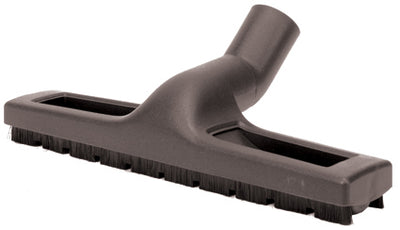
32mm Hard Floor Brush Attachment
A universal vacuum attachment designed to pick up dirt and debris from hard floors — hardwood, tile, polished concrete — without scratching. -
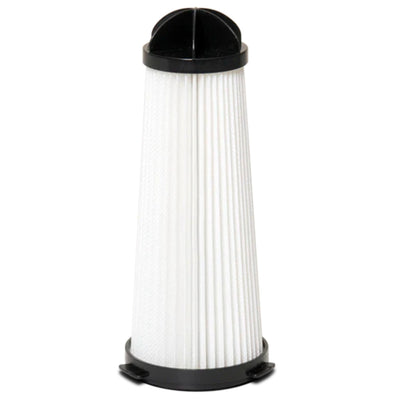
Pacvac Replacement Filter FIL001
Genuine replacement filters help maintain suction power, improve air quality, and protect your machine’s motor over time.
🔌 Corded vs Cordless — Choosing What’s Right
Corded vacuums provide continuous power and are great for long shifts and large areas without worrying about battery life — ideal for regular facilities and deep cleans.
Cordless vacuums offer flexibility and zero trip hazards, letting you clean stairs, vehicles, and hard‑to‑reach spots more safely — perfect for fast jobs or mixed surfaces.
Whichever route you choose, consider investing in spares like extra batteries (for cordless units) or RCD‑protected extension leads (for corded models) to keep your team moving efficiently.
🛠️ Maintenance Tips for Long‑Lasting Performance
- Empty dust bags before they fill to capacity — this maintains suction and airflow. (See our range of vacuum dust bags and accessories.)
- Clean or replace HEPA filters regularly to ensure optimal air quality and performance.
- Check hoses and attachments for blockages or wear — a clear airway maximises suction.
- If your cordless model uses batteries, keep spare units charged to avoid downtime.
�� Shop All Vacuums & Accessories
Ready to upgrade your cleaning toolkit with a professional vacuum solution? Browse the full range below and choose a model that fits your workflow and environment.
👉 Browse Professional Vacuums & Accessories
Commercial Vacuum Maintenance Schedule
Proper maintenance extends the lifespan of any commercial vacuum and ensures consistent performance. A simple maintenance schedule: after every use — empty the bag or canister and check the hose for blockages; weekly — clean or tap out the pre-filter and check brush roll for hair and fibre wrap; monthly — wash the foam pre-filter and inspect HEPA filter; every 6 months — replace HEPA filter and check all seals and gaskets; annually — service the motor brushes and electrical components. Matthews Cleaning stocks genuine spare parts and filters for all major commercial vacuum brands.
Vacuum Safety in the Workplace
Commercial vacuums carry workplace safety considerations that domestic machines do not. In Australia, portable electrical equipment used commercially must be tested and tagged per AS/NZS 3760. The Pacvac Superpro with Inline RCD provides built-in electrical protection. Backpack vacuums should be fitted and adjusted correctly for the operator to prevent back and shoulder strain — all Pacvac models feature adjustable, ergonomic harness systems. Never vacuum liquid with a dry-only vacuum; use a rated wet and dry machine from our commercial vacuum range.
Vacuum for Specialist Applications
Not all vacuums are interchangeable. Specialist applications require specific machines: Class AS2 vacuums (such as the Henry AS2) for light asbestos remediation work; wet and dry industrial vacuums (Cleanstar 30L–90L range) for construction and workshop environments; HEPA backpack vacuums for healthcare facilities where airborne particle control is critical; and commercial carpet extractors for deep cleaning of carpets in hotels and aged care. Using the wrong vacuum for a specialist task can create safety hazards and may void manufacturer warranties. Browse our specialist vacuum range.
Comparing the Top Commercial Vacuum Brands
Matthews Cleaning Company stocks the best commercial vacuum brands available in Australia. Pacvac (Australian-designed, globally recognised for backpack vacuums), Numatic/Henry (UK-engineered canister vacuums trusted by professionals worldwide), and Cleanstar (industrial wet and dry specialists) collectively cover every commercial and industrial vacuum application. Each brand has distinct strengths — Pacvac for ergonomic backpack design and HEPA performance, Henry for reliability and simplicity, and Cleanstar for raw industrial capacity. Our team can help you match the right brand and model to your specific environment and requirements.
Shop Commercial Vacuum Cleaners at Matthews Cleaning Company
Matthews Cleaning Company is your trusted Australian supplier for commercial cleaning products. We stock a comprehensive range of products from leading brands, with competitive trade pricing, reliable stock, and fast Australia-wide delivery. Whether you're a professional cleaning contractor, facilities manager, or business owner, our team has the expertise and product range to support your operation. Browse our commercial vacuum range online or contact us for expert advice and bulk pricing.
Fast Delivery and Trade Pricing Across Australia
Choosing the right commercial vacuum for your facility is an investment in productivity, hygiene, and operator safety. Matthews Cleaning Company delivers to commercial customers across Australia with fast dispatch from our warehouse. We offer competitive trade pricing for cleaning contractors, facilities managers, and businesses purchasing in volume. Setting up an account with Matthews Cleaning simplifies your procurement — regular orders, consistent stock, and a single point of contact for all your commercial cleaning supply needs.
Not sure which product is right for your application? Our team is available to help. We combine genuine product knowledge with real-world cleaning experience to guide you toward the right solution for your environment, compliance requirements, and budget. Contact us for personalised product advice or browse our full commercial cleaning range online.
Return on Investment Analysis
Investing in professional-grade glass cleaning tools may carry a higher upfront cost, but the long-term returns for Australian facility managers are substantial. Here's how the numbers break down across typical scenarios.
Labour Efficiency Gains
Quality squeegees, microfibre applicators, and extension pole systems reduce cleaning time by up to 35% compared to standard spray-and-wipe methods. For a facility employing cleaners at $32–$38/hour (typical Australian commercial cleaning rates), this translates to significant annual savings:
| Facility Type | Weekly Glass Cleaning Hours (Before) | Weekly Hours (After) | Estimated Annual Labour Savings |
|---|---|---|---|
| Small office (500 m²) | 3 hrs | 2 hrs | $1,820–$2,160 |
| Medium commercial building (2,000 m²) | 10 hrs | 6.5 hrs | $6,370–$7,560 |
| Large facility or campus (5,000+ m²) | 25 hrs | 16 hrs | $15,390–$18,270 |
Chemical & Consumable Savings
- Professional-grade microfibre pads last 300–500 washes versus 80–120 for budget alternatives, reducing replacement costs by up to 60% — saving a mid-sized facility approximately $450–$700/year on consumables alone.
- Precision applicators and streak-free squeegees cut chemical usage by 20–25%, as less product is wasted on re-cleaning. For a facility spending $1,200/year on glass cleaning chemicals, that's a saving of $240–$300 annually.
- Concentrated professional solutions at $45–$55 per 5L unit last 30% longer than generic alternatives priced at $25–$30, delivering a net saving of around $380/year for a typical 2,000 m² building.
Payback Period
A complete professional glass cleaning kit — including a quality squeegee set, T-bar applicators, extension poles, and microfibre sleeves — typically costs $350–$600 for a small operation and $1,200–$2,000 for a large facility. Based on combined labour and consumable savings:
- Small office: Full kit pays for itself within 3–4 months.
- Medium building: ROI achieved in under 8 weeks, with $7,000+ in net annual savings.
- Large facility: Payback in as little as 5–6 weeks, with annual net savings exceeding $16,000
Frequently Asked Questions
Q: How often should commercial vacuum cleaners be serviced or replaced in a high-traffic facility?
A: For high-traffic environments such as office buildings, schools, and healthcare facilities, we recommend a basic maintenance check — including filter inspection, belt assessment, and brush roll cleaning — every 30 to 60 days of active use. HEPA filters should be replaced according to manufacturer guidelines, typically every 6 to 12 months, though facilities with heavy dust loads or allergen concerns may need more frequent changes. As for full replacement, a well-maintained professional-grade vacuum should last 3 to 5 years under daily commercial use. If you're noticing a consistent decline in suction, increased motor noise, or frequent breakdowns that drive up repair costs, it's generally more cost-effective to invest in a new unit rather than continuing to service an aging machine.
Q: Are cordless vacuums powerful enough for large-scale commercial cleaning operations?
A: Today's commercial cordless vacuums have come a long way and can absolutely hold their own in professional settings — but with some caveats. Modern lithium-ion battery technology delivers suction performance comparable to corded models, and the elimination of cords dramatically improves productivity by reducing trip hazards, setup time, and the need to locate power outlets across large floor plans. That said, facility managers should plan around battery runtime. For expansive facilities, we recommend purchasing units with swappable battery packs so cleaners can rotate charged batteries without downtime. Cordless models are particularly well-suited for quick-response cleaning, multi-floor buildings, and facilities where cord management poses safety or logistical challenges. For continuous, hours-long deep cleaning sessions, a corded commercial upright or backpack model may still be the more practical primary tool.
Q: What type of vacuum is best for maintaining indoor air quality in sensitive environments like healthcare or childcare facilities?
A: For any environment where indoor air quality is a priority — including healthcare settings, childcare centres, aged care facilities, and buildings with occupants who have respiratory sensitivities — a vacuum equipped with true HEPA filtration is non-negotiable. HEPA filters capture 99.97% of particles down to 0.3 microns, trapping allergens, fine dust, bacteria, and other airborne contaminants that standard filters simply recirculate. We specifically recommend sealed-system HEPA vacuums, where the entire airflow path is sealed so that no unfiltered air escapes through gaps in the housing. Backpack vacuums with HEPA filtration are an excellent choice for these settings, as they combine superior air filtration with the manoeuvrability needed to clean around medical equipment, furniture, and high-touch areas efficiently. Always verify that the unit meets your facility's compliance standards and keep a documented filter replacement schedule as part of your cleaning audit trail.
Q: How do I determine the right number and type of vacuums to outfit my cleaning team across a multi-use facility?
A: The ideal vacuum fleet depends on several factors: total cleanable square footage, floor surface mix (carpet vs. hard floor vs. both), facility layout, shift schedules, and any specialised requirements such as HEPA filtration or low-noise operation for occupied spaces. As a general rule, we recommend assigning one vacuum per cleaner on shift and keeping at least one backup unit on-site to avoid downtime. For multi-use facilities, a blended fleet often works best — for example, lightweight backpack vacuums for open offices and corridors, an upright or wide-area vacuum for large carpeted zones, and a compact cordless stick vacuum for break rooms, restrooms, and spot cleaning. We encourage facility managers to conduct a walkthrough audit with their cleaning team to map out cleaning zones and match equipment to each area's demands. At Matthews Cleaning Co, we're happy to assist with fleet planning consultations to ensure you're getting the right tools without over-investing.
Shop this guide