
Automotive Workshop Cleaning Supplies: The Complete Guide for Australian Garages

Oil, grease and brake dust do not respond to the same products as office floors and bathroom tiles. They need a degreaser with the right chemistry, a floor tool that can move washdown water, and hand cleaning that does not strip the skin off the people using it. This guide covers what actually belongs in an Australian automotive workshop's cleaning cupboard, and how to use it without wasting chemical or creating a slip hazard.
What cleaning supplies does an automotive workshop need?
A workshop needs four core supplies: a heavy-duty degreaser for floors and equipment, a grit hand cleaner for oil and grease, a floor squeegee or wet/dry vacuum for washdown, and absorbent spill control. Add nitrile gloves, a stocked SDS register and a lined waste bin, and the kit covers almost every daily cleaning task in a garage.
Why workshop cleaning is different from office cleaning
Office soils sit on top of a surface. Workshop soils bond to it. Oil soaks into unsealed concrete, polymerises under machinery and re-deposits on boots for days after the original spill. Brake dust is fine enough to stay airborne, and coolant leaves a sticky glycol film that a neutral floor cleaner spreads rather than removes. Mopping an oily workshop floor without a degreaser does not clean it, it dilutes the film and pushes it into the corners, where it becomes a genuine slip hazard on polished concrete.
The four soils in a typical garage
- Oil, grease and hydraulic fluid — engine bays, hoist pads, parts benches, workshop floors, waste oil areas.
- Brake dust and carbon — tyre bays, wheel areas, near balancers and machining equipment. Fine, dark and easily made airborne, so wet it down rather than dry-sweeping.
- Coolant, AdBlue and battery electrolyte — glycol and urea spills that leave a sticky residue, plus the occasional acid splash around battery work.
- Road grit, tyre debris and general dust — entry areas, wash bays and the customer-facing edge of a dealership showroom.
Each soil needs a different product. A single all-purpose spray will handle the fourth item on that list and nothing else, which is why workshops that buy one cleaner end up buying three after the first month.
Choosing a workshop degreaser
The degreaser does most of the work in a workshop, so it is the one product worth getting right. There are two families, and most professional garages end up stocking both.
Detergent-based degreasers for everyday floors and equipment
Water-soluble detergent degreasers are the workhorse: floors, walls, machinery, hoist pads, wash bays and tiled or painted surfaces. They emulsify oil so it can be picked up by a mop or auto scrubber instead of being spread around. They are also safer around drains and cheaper per litre once diluted.
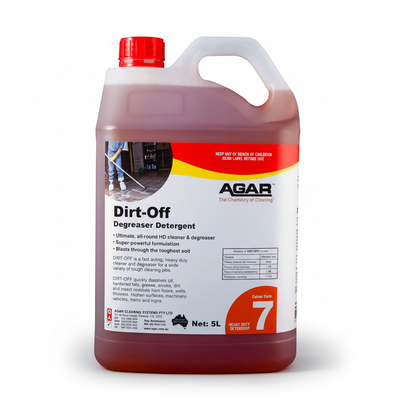
Agar Dirt-Off Degreaser Detergent is a good benchmark for this category. It is a heavy-duty detergent and degreaser that is approved for use with mops, auto scrubbers, steam cleaners and pressure washers, so the same drum covers hand mopping in a small workshop and machine scrubbing in a larger site. The 5L concentrate is the practical size for a business with one to three bays.
Solvent and heavy-alkaline products for the hard jobs
Baked-on carbon, parts-washer solution, adhesives, paint overspray and years of accumulated grease under a hoist need either a solvent-based product or a caustic-heavy cleaner. These are harsher on surfaces and on people: they need ventilation, gloves and eye protection, they should never be decanted into an unlabelled spray bottle, and they must not go to stormwater.
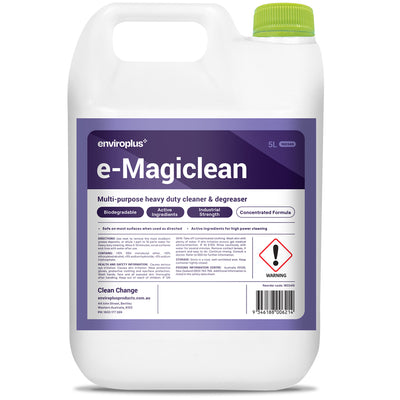
Enviroplus Heavy Duty Degreaser e-Magiclean sits in the middle of that range: a multi-purpose concentrated cleaner that combines detergency, emulsification and solvency, biodegradable and safe on most surfaces. It is the product to reach for when a detergent degreaser at normal dilution leaves a shadow on the concrete.
Dilution and dwell time matter more than the label
Most workshop degreasers are concentrates, and the difference between a product that works and one that disappoints is usually dilution and dwell time rather than brand. Two rules apply across the range:
- Dilute to the job. Routine maintenance mopping is typically a light dilution; a first deep clean of a never-degreased floor needs a stronger mix. Mixing everything at full strength wastes chemical and leaves residue that attracts dirt.
- Let it dwell. Apply, wait three to five minutes, then agitate. Scrubbing immediately after spraying is the most common reason a degreaser appears not to work.
Check that the product is approved for your machine before putting it in an auto scrubber. Foaming products can damage vacuum motors, and a drum of the wrong chemistry is an expensive mistake. Our commercial hard floor cleaner and degreaser guide covers matching chemistry to floor type if you are working across sealed concrete, epoxy and vinyl.
Floor care: squeegees, brooms and wet/dry vacuums
Standing water and an oil film is the highest-risk combination in any workshop, and it is entirely preventable with three tools. The routine is always the same order: sweep or vacuum the dry grit, degrease and agitate, then squeegee or vacuum the water to a proper drain or oil separator. Never squeegee washdown water into stormwater, and never send it down a trade waste connection without checking the site's arrangement.
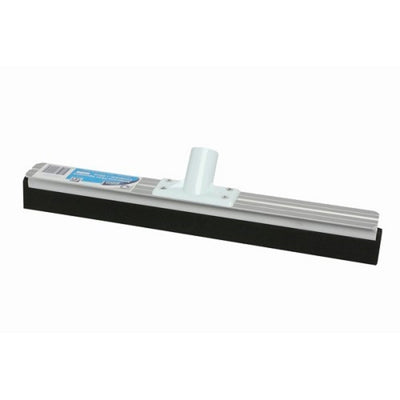
- Floor squeegee. The Oates Aluminium Floor Squeegee, 450mm has a dual-blade neoprene head that moulds to the floor and a replaceable rubber blade, which matters because workshop blades wear quickly on concrete. 450mm is the practical width for doorways, bay aprons and narrow wash areas; wider heads move more water but are harder to control around hoists and equipment legs.
- Industrial broom. The Oates Industrial Broom Complete, 450mm uses stiff solvent- and abrasion-resistant polypropylene bristles with a reinforced handle, built for concrete and asphalt rather than showroom floors. It is the broom for grit, tyre debris and dry sweeping before a washdown.
- Wet/dry vacuum. For sumps, wash bays and larger spills, the Cleanstar 90L Wet & Dry Commercial Vacuum handles liquid and dry debris in the same tank, which means one machine instead of two on site. The 90L capacity is aimed at large-volume recovery, so it suits workshops with multiple bays or a dedicated wash area.
Note the sequencing: a squeegee removes water, not oil. If the floor is still slick after the water is gone, the degreaser step was skipped or under-diluted, and a second pass is cheaper than a workers compensation claim.
Hand hygiene and grit hand cleaners
This is the most under-specified consumable in most workshops. Technicians handle oil, grease, ink, adhesives and paint, and ordinary liquid hand soap does not lift any of it. The result is predictable: people reach for solvent, which removes the oil and the skin's barrier with it, and dermatitis becomes a recurring cost.
A grit hand cleaner solves it without solvent. Cleanmax Grit Clean Heavy Duty Hand Cleaner uses biodegradable walnut-shell grit to lift embedded dirt and grease, is pH-balanced with lanolin to avoid drying and cracking, and is formulated to be safe on plumbing. The thick gel suits wall-mounted dispensers, and the 5L refill is the size that keeps a dispenser running for months.
Two placements do most of the work: one dispenser at the wash-up sink, and one at the exit from the work bays so hands are cleaned before touching door handles, keyboards and customer vehicles. Our heavy-duty hand cleaners guide compares grit, pumice and solvent-based options if your team has a strong preference.
Spill control and waste
A knocked-over 5L drum is both a slip hazard and a trade waste problem, and it usually happens at the worst possible time. Granular absorbent is slow and dusty; a gelling absorbent is faster and leaves less mess.
Enviroplus Super Absorbent Gel e-Sorb converts liquid spills into a non-drip gel, absorbing up to 100 times its own weight. It works on water, coolant and aqueous chemicals as well as oils, and being biologically inert it can be swept up and disposed of once you have confirmed the disposal route with your local council. A 500g tub is compact enough to sit in a spill kit at each bay.
The waste streams need separating as carefully as the cleaning itself:
- Used oil and coolant go to a licensed recycler through your existing waste oil contract. Never to a drain, and never into general waste.
- Solvent and oily rags belong in a lidded metal bin. Oily rags can self-heat and ignite, so a plastic bucket in the corner is not adequate.
- General workshop waste needs a liner rated for the sharp, heavy debris that goes into it, not a domestic bag. Our commercial bin liners guide covers sizing and strength for industrial waste.
Also worth having on hand: drip trays under every drum and parts washer, and a spill kit with the absorbent, a squeegee and a bin liner already assembled so nobody has to find the pieces mid-spill.
PPE for solvent and chemical handling
Glove choice is not a formality when the product is a solvent degreaser. Nitrile resists petrochemicals and is the default for oil, grease and solvent handling. Latex degrades quickly against oils and is best avoided in a workshop entirely. Vinyl is fine for short, dry, aqueous tasks and for food handling, not for parts washing.
Puregiene Heavy Duty Nitrile Gloves in a box of 100 are the practical consumable: powder-free, available in a full size range, and heavy-duty enough for repeated contact rather than a single wipe. Pair them with safety glasses and a PVC apron for any decanting, and a P2 respirator when there is airborne dust from brake or machining work. Our nitrile gloves buying guide covers thickness, length and chemical resistance in more detail.
Safety data sheets, registers and storage
If a workshop stores or uses hazardous chemicals, WHS law requires the current safety data sheet to be readily accessible to workers and to anyone else likely to be exposed, and a hazardous chemical register to be kept up to date with an SDS for each chemical on it. Suppliers must provide the SDS when a chemical is first supplied, and an updated one when it changes.
In practice that means two things: a physical or electronic register that a new starter can actually find, and a habit of filing the SDS when a new drum arrives rather than when an inspector asks. Safe Work Australia publishes guidance on safety data sheets and a hazardous chemicals register requirement summary, and your state regulator sets the enforcement detail.
Storage is the other half of compliance: concentrates locked and ventilated, away from ignition sources, never decanted into unlabelled containers, and never stored above eye level where a drum can fall. Our commercial cleaning chemical storage guide covers shelving, bunding and signage.
How much to stock
Consumable usage in a workshop tracks bay count and washdown frequency more than floor area. The figures below are a starting baseline for an Australian garage doing a daily sweep and a weekly machine degrease; adjust after the first month of actual use rather than guessing twice.
- 1 to 3 bays: one 5L degreaser concentrate every four to six weeks; one 5L grit hand cleaner every two to three months; one box of 100 nitrile gloves per technician per month; one 500g absorbent tub per quarter.
- 4 to 8 bays: double the degreaser and gloves, keep two hand cleaner refills on the shelf, and move to a 20L degreaser drum if the washdown is daily.
- Dealership or fleet workshop: 20L drums for degreaser, a 90L wet/dry vacuum per wash area, and absorbent by the carton rather than the tub.
Buying concentrate is the single biggest cost lever. A 20L drum of a dilutable degreaser is a fraction of the per-litre cost of ready-to-use spray bottles, and it removes the packaging waste that otherwise fills the workshop bin every week.
A simple daily, weekly and monthly routine
Daily
Sweep grit and tyre debris, squeegee or vacuum washdown water, wipe benches and tool boards, empty bins, and check that the spill kit is complete. Five minutes at the end of the day prevents the floor becoming a two-hour job at the end of the month.
Weekly
Degrease the floor with a scrubber or doodlebug, clean hoist pads and the area under vehicles, wipe walls near tyre machines and balancers, and restock dispensers. This is also the point to check that no drum has been decanted into an unlabelled bottle.
Monthly
Deep degrease under hoists and fixed equipment, service the scrubber and wet/dry vacuum, review the chemical register against what is actually on the shelf, and confirm SDS versions are current.
Quarterly
Inspect sealed concrete and epoxy for wear, do the high dusting on racking and ductwork, and stocktake PPE. A worn sealer turns every oil spill into a permanent stain, and resealing is far cheaper than replacing a floor.
Frequently asked questions
What is the best degreaser for a workshop floor?
A detergent-based concentrate approved for mops and auto scrubbers is the best default for workshop floors, because it lifts oil without the fume and surface risk of a solvent. Use a stronger alkaline or solvent product only for baked-on build-up and spot work, and always dilute and allow dwell time before scrubbing.
Can I use a wet/dry vacuum on oil and coolant spills?
Yes, in wet mode, provided the machine is genuinely rated for liquids and is emptied immediately afterwards. Recovered oil and coolant must go to your waste oil recycler, not a drain, and the tank should be cleaned before the machine is used for dry debris again.
How do I clean brake dust without making it airborne?
Dampen the area first, then wipe or vacuum rather than dry-sweeping, and wear nitrile gloves and a P2 respirator. Brake dust can contain heavy metals from pad and rotor wear, so it should never be blown out with compressed air or swept into a general waste bin in a dry state.
Does an automotive workshop need a safety data sheet register?
Yes, if the workshop stores, handles or uses hazardous chemicals. WHS law requires a current SDS to be readily accessible and a hazardous chemical register kept up to date, with an SDS for each chemical listed. Your state or territory regulator sets the specific enforcement requirements.
How often should a workshop floor be degreased?
Daily sweeping and squeegeeing, a weekly machine degrease of the main floor, and a monthly deep degrease under hoists and fixed equipment. High-traffic bays or sites doing daily washdown usually need the weekly step run twice.
Stock your workshop from one supplier
Matthews Cleaning Supplies carries the degreasers, grit hand cleaners, floor squeegees, wet/dry vacuums, absorbent and nitrile gloves covered in this guide, with bulk pricing on concentrates and next-business-day dispatch across Australia. Browse the full workshop cleaning range, or talk to us about setting up a standing consumables order so the shelf never runs dry mid-job.
Shop this guide
 Oates Aluminium Floor Squeegee — Neoprene Rubber, White, 450mm
$44.15 inc GST
Buy 10+ and save $4.42 each

Written by
Jordan MatthewsCommercial cleaning specialist at Matthews Cleaning Company. Our expert team draws on years of hands-on field experience to help businesses choose the right tools and chemicals for every cleaning challenge.


