Shower Block Cleaning: Pro Guide for Change Rooms
Shower block cleaning is the hardest wet-area job in any facility. Warm, constantly damp, used by dozens of people a day and built from materials that quietly absorb soap, body oil and minerals — change rooms fail faster than any other space on site. This guide covers the zone sequence professional cleaners use, the three chemicals that do 90% of the work, and the compliance points that matter when someone slips.
Quick answer: Clean shower blocks in four zones — dry areas first, then cubicles top-down, then floors and drains, then fixtures and bins. Use a descaler for mineral scale, a washroom cleaner for soap scum and body oil, and a residual mould treatment on grout and silicone. Squeegee the floor last: wet tiles, not dirty tiles, cause most shower block injuries.
Last updated: 20 November 2026 · 8 minute read
In this guide
- Why change rooms degrade faster than other wet areas
- The four-zone cleaning sequence
- Choosing the right chemicals
- The equipment list that halves the job time
- Slip resistance and your WHS duties
- How often should a shower block be cleaned?
- Seven mistakes that shorten the life of a shower block
- Frequently asked questions
Why change rooms degrade faster than other wet areas
Four conditions combine in a shower block and nowhere else on a commercial site:
- Constant moisture. Water never fully dries between uses, so mould has a permanent foothold in grout lines and silicone.
- Body oils and soap. The residue is alkaline and waxy. It bonds to tile, traps dirt, and ordinary neutral detergent smears it rather than lifting it.
- Mineral scale. Hard water leaves calcium and magnesium deposits on glass, chrome and tiles. Scale is porous — it holds soil and harbours bacteria.
- Bare feet. No other area has people walking on a wet hard surface with no grip. Slip risk here is a safety issue, not a presentation issue.
The practical consequence: shower blocks need a chemistry routine, not a stronger version of the toilet routine. A general-purpose bathroom spray will look acceptable for a week and then stop working, because the layer it is trying to cut through has already set.
The four-zone cleaning sequence
Work from dry to wet and from clean to dirty. Cleaning the floor before the walls means you clean the floor twice — and cross-contaminate the whole block in the process.
Zone 1 — Entry, benches and lockers
Start here while the block is still dry. Remove rubbish, clear hair from benches, and wipe horizontal surfaces with a colour-coded cloth. This is also where you check the things that generate complaints: broken hooks, missing toilet paper, blocked sanitary bins and burnt-out lights. Log faults now so they are not discovered by a user at 6am.
Keep a separate cloth colour for this zone. If you carry that cloth into a cubicle and back out, you have just moved faecal bacteria onto the bench people sit on. The colour-coded cleaning system exists precisely for this.
Zone 2 — Shower cubicles, walls and glass
Apply chemical to the walls and screens first, then let it dwell while you do something else. Dwell time is where the labour saving is — scrubbing immediately after spraying wastes both the chemical and your shoulder.
- Spray from the top of the wall down, so product runs over untreated tile rather than over cleaned tile.
- Give a washroom cleaner 3–5 minutes on soap scum, then agitate grout lines with a grout brush or doodlebug pad.
- Treat scale on glass and chrome with a descaler, but do not let it dry on chrome or anodised aluminium — dried acid leaves a permanent etch.
- Rinse top-down and squeegee glass rather than towelling it. Towelling glass re-deposits lint and oils.
Zone 3 — Floors, grout and drains
Now the wet work. Textured non-slip tiles — the correct choice for a shower floor — are also the hardest surface to clean, because soil sits in the profile of the tile. A flat mop glides over the top of it.
- Use a deck scrub on textured floors, working from the far corner back toward the drain.
- Push dirty water to the drain with a floor squeegee rather than mopping it around. A 450mm squeegee clears a standard shower bay in two passes.
- Lift the drain grate, remove hair and debris by hand (gloved), then flush the trap. A blocked trap is the single most common cause of "the change room smells" complaints.
- Once a month, treat grout with a restorative product — build-up in grout is what makes a shower block look old before it is.
Zone 4 — Fixtures, dispensers and bins
Finish with the touch points: taps, flush buttons, dispensers, hand dryers, door handles and bin lids. These are the highest-transfer surfaces in the block and the ones most often skipped because they look clean.
Empty sanitary bins before they are full, wipe the lid and pedal, and check the unit is functioning — a broken sanitary bin is a compliance issue, not just an unpleasant one. Empty and rinse mop buckets, then invert them to dry. Water left in a bucket overnight is a bacterial incubator you will spread across the floor tomorrow.
Choosing the right chemicals
Three products cover almost everything in a shower block. Adding a fourth rarely helps; using the wrong one on the wrong soil wastes a full clean.
Descaler — for mineral scale
Acid-based. Dissolves calcium and magnesium deposits on glass, chrome, taps and tiled walls. This is the product that fixes cloudy shower screens and rough-feeling tiles.
Use it where scale is visible: screens, tapware, the bottom 300mm of walls where water sits. Dilute according to the label, allow 3–5 minutes dwell, agitate lightly and rinse thoroughly. Never mix with a chlorine product — the reaction releases chlorine gas.
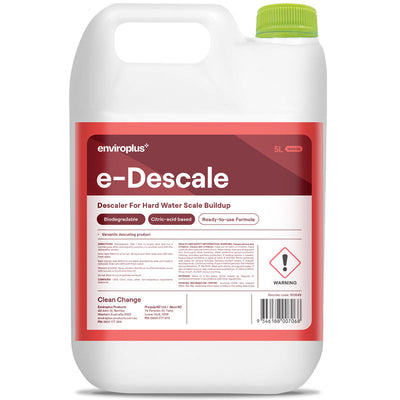
Enviroplus e-Descale Biodegradable Descaler — 5L is the workhorse for this job: it is biodegradable, low-foaming, and safe on most tiled and stainless surfaces when used as directed.
Washroom cleaner — for soap scum and body oils
Alkaline, and formulated to break the waxy soap-and-skin-oil layer that neutral detergent cannot lift. This is your daily product for walls, cubicle panels and basin surrounds.
Agar Shower Star Shower and Washroom Cleaner — 5L is purpose-built for this soil type and is the product most commercial cleaners in the Hunter default to for daily shower work. Dilute per the label for daily use, stronger for first-time recovery cleans.
Mould treatment — for grout and silicone
Mould in a shower block is a moisture problem, not a dirt problem. Kill it, then remove the food source (soap residue) and the moisture (ventilation, squeegeeing, drying). If you clean the mould and leave the soap film, it returns within a fortnight.
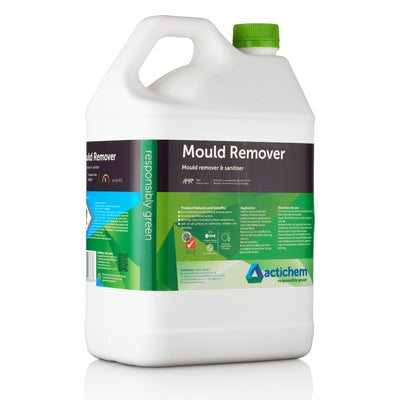
Actichem Mould Remover — 5L is a residual treatment for grout and silicone lines. Apply to a dry surface, ventilate the area, wear gloves and eye protection, and allow the dwell time on the label. Never mix it with an acid descaler in the same bay at the same time.
For stubborn black mould on a long-neglected ceiling or cornice, the heavier treatment in our commercial mould removal guide is the right escalation.
The equipment list that halves the job time
Most slow shower block cleans are not a labour problem — they are a tool problem. Four items change the maths:
- Floor squeegee (450mm). Clears water in two passes instead of ten mop strokes, and removes the standing water that makes the floor a slip hazard. See our floor squeegee buying guide for blade and channel options. Ours is the Oates 450mm neoprene floor squeegee.
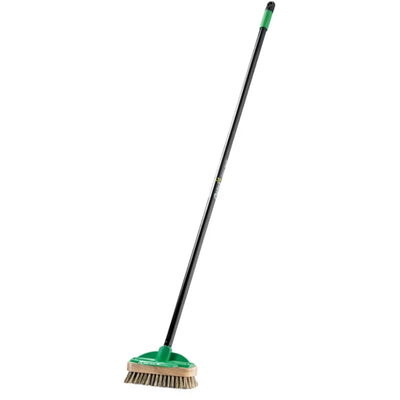
- Deck scrub with handle. The only way to get into textured non-slip tile. A mop will not do it.
- Colour-coded microfibre. One cloth per zone, laundered daily. Microfibre removes the soap film that a cotton cloth pushes around — premium microfibre cloths are the cheapest per-clean option when they survive 300+ washes.
- A working sanitary bin. Foot-pedal units cut hand contact and last longer in wet environments than lift-lid bins. See the Puregiene foot-pedal sanitary bin.

Slip resistance and your WHS duties
A wet shower floor is a hazard you create every time you clean. Under the model WHS laws, a person conducting a business or undertaking must provide and maintain a work environment that is without risks to health and safety — and that explicitly includes washing facilities, showers and change rooms. Slips are not a minor category: Safe Work Australia reports around 32,000 workers' compensation claims a year for serious injuries from slips, trips and falls.
Four controls do most of the work in a change room:
- Leave the floor dry. Squeegee and dry-mop before you leave. A clean wet floor is still a hazard.
- Sign it properly. A-frame signs at every entrance, not one in the middle of the room — and remove them once the floor is dry, or people stop reading them.
- Specify the right surface. Pedestrian surface slip resistance is classified under AS 4586. Shower and change room floors should carry a P3 rating or higher for wet barefoot use; if the existing tile does not, an anti-slip treatment or matting is the fallback.
- Manage the water temperature and the lines. Warm, stagnant water grows Legionella. Keep hot water storage at 60 °C or above, flush outlets that go unused for days, and have dead legs and shower heads cleaned on a schedule.
Document all four. In a slip claim, the question is never "was the floor wet" — it is "what did you have in place, and can you prove it".
How often should a shower block be cleaned?
Frequency is driven by users per day, not floor area. As a starting point for commercial sites:
| Facility | Full clean | Touch-point check | Deep / descale |
|---|---|---|---|
| Gym or fitness studio | 2–3× daily | Hourly | Weekly |
| Aquatic centre | 2× daily + hourly checks | Hourly | Weekly |
| School or childcare | Daily | Daily + midday | Monthly |
| Office end-of-trip | Daily | Daily | Monthly |
| Campsite or holiday park | Daily (peak: 2×) | Daily | Fortnightly |
| Industrial / warehouse | 3× weekly | Daily | Monthly |
Whatever the schedule, the pattern matters more than the label: a daily clean that includes a descale on the screens and a drain flush beats a weekly "deep clean" that skips both.
Seven mistakes that shorten the life of a shower block
- Cleaning floor-first. Everything above it lands back on the clean floor.
- No dwell time. Spraying and immediately scrubbing removes perhaps a third of the soil the product was designed to lift.
- Neutral detergent on soap scum. Alkaline soil needs alkaline chemistry. Neutral product smears it into a film.
- Bleach as a mould strategy. Bleach whitens the surface mould and does nothing to the root in grout and silicone. It also degrades the silicone, which creates a bigger harbour.
- Mixing chemicals to "boost" them. Acid plus chlorine releases chlorine gas. In an enclosed cubicle this is a genuine emergency, not a bad smell.
- Leaving water on the floor. It is a slip hazard, and it feeds the mould you just treated.
- Ignoring the drain. Hair and biofilm in the trap produce the smell people blame on "the drains" for years. Pull the grate, clean it, flush it.
Frequently asked questions
How often should a commercial shower block be cleaned?
Most commercial sites need a full clean daily, with touch-point checks once or twice more. High-use facilities such as gyms and aquatic centres need two to three full cleans a day, plus a weekly descale of screens and tapware and a monthly grout treatment.
What is the best way to remove soap scum from shower tiles?
Use an alkaline washroom cleaner rather than a neutral bathroom spray. Apply it to the wall, let it dwell for three to five minutes, agitate the grout lines, then rinse top-down. Soap scum is alkaline body oil and soap residue — the right product softens it so it lifts instead of smearing.
Can I use bleach to kill mould in a shower?
Bleach will lighten surface mould but does not reach the root in grout and silicone, and repeated use degrades the silicone seal, which gives mould a larger place to grow. Use a dedicated residual mould treatment on a dry surface with the area ventilated, and fix the underlying moisture.
Why does my change room still smell after cleaning?
Almost always the drain trap or the sanitary bin, not the floor. Lift the drain grate, remove hair and biofilm, flush the trap, and check the sanitary bin is being serviced. If the smell persists, check for a dry floor waste or an unvented dead leg in the plumbing.
What is the difference between a descaler and a washroom cleaner?
A descaler is acidic and dissolves mineral scale on glass, chrome and tile. A washroom cleaner is alkaline and removes soap scum and body oils. You need both: the descaler fixes cloudy screens and rough tiles, the washroom cleaner handles the daily soil. Never apply them together.
Get the shower block kit in one order
If you are setting up or resetting a change room routine, the four-product core is a descaler, a washroom cleaner, a mould treatment and a floor squeegee — plus colour-coded microfibre so zones stay separate. Everything in this guide is stocked for next-day dispatch across Australia.
Shop commercial cleaning supplies
Need help sizing a routine for a specific site? Our team supplies cleaning contractors and in-house facility teams across NSW — get in touch and we will map products to your block.
Shop this guide
 Agar Shower and Washroom Cleaner Shower Star — 5L
$70.80 inc GST