Chemical Dilution Systems: ROI Guide for Australian Facilities
Table of Contents
- What Is a Chemical Dilution System?
- The ROI of Switching to Concentrates
- Types of Chemical Dilution Systems
- Australian Compliance & Safety Standards
- Best Chemical Dilution Products for Australian Facilities
- How to Implement a Dilution System in Your Facility
- Frequently Asked Questions
In a Nutshell: A chemical dilution system lets Australian commercial facilities buy concentrated cleaning chemicals and mix them on-site at the point of use. Instead of paying to ship water in ready-to-use (RTU) bottles, you store a single 5-litre concentrate that yields 50-200 litres of usable solution - cutting chemical spend by 40-80%, slashing freight costs, and reducing plastic waste by up to 90%.
What Is a Chemical Dilution System?
A chemical dilution system is any method - manual or automatic - that mixes concentrated cleaning chemicals with water at a precise ratio to produce a ready-to-use solution. Rather than buying pre-diluted spray bottles that are 90-95% water, you purchase a super-concentrated formula and add water yourself at the point of use.
The Australian commercial cleaning industry has been slower to adopt dilution systems than markets in Europe and North America, but the economics are impossible to ignore. With freight costs rising and sustainability mandates tightening across government contracts, facility managers are increasingly asking: why are we paying to truck water across the country?
At its simplest, a dilution system can be a measured-dose dispensing pump on a 5-litre concentrate bottle. At scale, it can be a wall-mounted proportioner station feeding multiple spray bottles from a single drum. The principle is the same: precise ratio, every time, with no guesswork.
The ROI of Switching to Concentrates
Cost Comparison: RTU vs Concentrate
Let's run the numbers on a typical Australian facility - say a medium-sized commercial office building with 15 cleaning staff using 3 spray bottles each per shift.
Scenario A - Ready-to-Use (RTU):
3 bottles x 15 staff x 5 shifts/week = 225 RTU bottles/week.
At an average cost of $4.50 per 750ml RTU bottle (including freight), that's $1,012.50 per week - or roughly $52,650 per year.
Scenario B - Concentrate + Dilution System:
A single 5-litre super-concentrate (dilution ratio 1:100) yields 500 litres of RTU solution - the equivalent of ~667 spray bottles. At $65 per 5-litre concentrate, plus a one-off $12 dispensing pump, your cost per bottle drops to about $0.10. The same 225 bottles/week now costs $117/week - roughly $6,084 per year.
Annual saving: $46,566 - an 88% reduction in chemical costs.
Even at more conservative dilution ratios (1:50), the savings typically exceed 70%. The ROI on a basic manual dilution setup is measured in weeks, not months.
Hidden Savings: Freight, Storage & Waste
The direct chemical cost is only part of the picture. Australian facilities also save on:
- Freight: One 5-litre concentrate ships in a box the size of a shoebox. The equivalent RTU bottles fill a pallet. For regional facilities and remote sites, freight savings alone can justify the switch. Read our complete guide to commercial cleaning supplies for more on procurement strategy.
- Storage footprint: A single shelf of concentrates replaces an entire storeroom of RTU bottles. This is critical for facilities with limited storage.
- Plastic waste: Concentrate systems reduce empty bottle waste by 80-90%, directly supporting corporate sustainability targets. See our eco-friendly cleaning products guide for more sustainable options.
- Consistency: Manual mixing produces inconsistent concentrations. A measured-dose system guarantees the correct ratio every time.
Types of Chemical Dilution Systems
Manual Dispensing Pumps
The simplest and most affordable entry point. A measured-dose pump screws onto a concentrate bottle and dispenses a precise amount per stroke. The operator pumps the dose into a spray bottle, fills with water, and the bottle is ready to use.
Best for: Small-to-medium facilities, multi-site operations with inconsistent water access, budget-conscious transitions. The Cleanmax 8ml dose pump and Drum Pump 5ml are our most popular manual options.
Wall-Mounted Proportioners
A step up from manual pumps: a wall-mounted unit connects directly to a water line and concentrate container, mixing at a pre-set ratio when the operator activates the fill station. No pumping, no measuring.
Best for: High-volume facilities (shopping centres, hospitals, universities), operations with centralised cleaning stores.
Automatic Dosing Stations
The premium option: fully automated chemical management systems that dispense measured doses into scrubber-dryers, auto-scrubbers, mop buckets, and spray bottles. These systems log usage data and can integrate with building management systems.
Best for: Large-scale facilities (airports, convention centres, major hospitals), organisations with strict chemical tracking requirements.
For drum-based operations, the Aeroflow Dispenser Cap fits 15, 20, and 25-litre drums.
Australian Compliance & Safety Standards
Chemical dilution systems in Australian workplaces must comply with several regulatory frameworks:
- Work Health and Safety (WHS) Regulations: Employers must provide safe systems of work for handling hazardous chemicals. A dilution system reduces worker exposure compared to open-pour mixing.
- Safe Work Australia Code of Practice: Recommends engineering controls (closed dilution systems) over administrative controls (training alone).
- GHS Labelling: Any bottle filled from a dilution station must carry a compliant workplace label identifying the chemical, hazard pictograms, and risk/safety phrases.
- Environmental Protection: Concentrate systems reduce packaging waste, supporting compliance with state-based environmental regulations and ESG reporting.
Best Chemical Dilution Products for Australian Facilities
At Matthews Cleaning Supplies, we stock a curated range of concentrated chemicals and dispensing equipment purpose-built for Australian commercial facilities:
| Product | Type | Best For |
|---|---|---|
| Enviroplus e-Power X Concentrated Cleaner 1L | Heavy-duty concentrate | Industrial floors, workshops, kitchens |
| Enviroplus e-Guard X Concentrated Disinfectant 1L | Disinfectant concentrate | Healthcare, aged care, high-touch areas |
| Enviroplus e-Surface X Multi-Surface Concentrate 2.5L | General-purpose concentrate | Desks, benches, daily office cleaning |
| Enviroplus e-Washroom X Concentrate 2.5L | Washroom concentrate | Bathrooms, showers, tiles, grout |
| Agar Counterflu Concentrate 5L | Hospital-grade disinfectant concentrate | Medical, dental, pathology labs |
| Cleanmax Dispensing Pump - 8ml Dose | Manual pump | Entry-level dilution, 2.5L & 5L bottles |
| Aeroflow Dispenser Cap - 15/20/25L Drums | Drum dispensing | High-volume sites, bulk concentrate drums |
How to Implement a Dilution System in Your Facility
Switching to a dilution system doesn't require a capital-intensive rollout. Here's a phased approach:
- Start with your highest-volume chemical. Identify which RTU product you buy the most of. Switch that one product to a concentrate + pump system. Track usage and costs for 4 weeks.
- Train your team. The biggest barrier isn't the equipment - it's habit change. Run a 15-minute training session. Most teams adapt within a week.
- Label everything. Every spray bottle needs a GHS-compliant workplace label. Stock pre-printed labels at the fill station.
- Measure and expand. After 4-6 weeks, review the numbers. If the pilot delivers savings, roll out across your next 3-5 highest-volume chemicals.
- Upgrade when volume justifies it. Once validated with manual pumps, consider wall-mounted proportioners for high-traffic fill stations.
For facilities managing chemical storage compliance, pair your dilution system with proper storage practices. Our guide to commercial cleaning chemical storage covers bunding, segregation, and Australian Standard compliance.
Frequently Asked Questions
What dilution ratio do I need for general cleaning?
Most general-purpose concentrates use a 1:50 to 1:100 ratio (20ml to 10ml of concentrate per litre of water). Heavy-duty degreasers may go as low as 1:10, while glass cleaners can be as dilute as 1:200. Always follow the manufacturer's instructions.
Can I use any spray bottle with concentrate chemicals?
Standard HDPE spray bottles work for most diluted solutions, but some concentrates contain solvents that can degrade standard plastics. If using solvent-based products, invest in solvent-resistant sprayers with chemical-grade Viton seals.
Are concentrated chemicals more dangerous to handle?
In their concentrated form, yes - which is precisely why a dilution system is safer. A closed dispensing pump or proportioner limits worker contact with the concentrate to a few seconds per refill, compared to open-pour measuring. Safe Work Australia specifically recommends engineering controls like closed dilution systems over relying solely on administrative controls and PPE.
How do I prevent staff from over-diluting or under-diluting?
Use a measured-dose dispensing pump or a locked-ratio proportioner. The Cleanmax 8ml pump delivers exactly 8ml per stroke - no guessing. For wall-mounted systems, the dilution ratio is set at installation and locked. Staff simply fill and go.
Is a dilution system worth it for a small facility?
Yes - the maths works at surprisingly small scale. Even a facility with just 3-5 cleaning staff using 30-50 spray bottles per week can save $3,000-$5,000 per year with a single $12 dispensing pump and a handful of 5-litre concentrates. The payback period for manual pumps is measured in weeks. The question isn't whether a small facility can afford a dilution system - it's whether it can afford not to have one.
Ready to Cut Your Chemical Costs?
Browse our full range of concentrated cleaning chemicals and dilution equipment - purpose-built for Australian commercial facilities. Free shipping on orders over $150.
Shop Chemical Dilution Systems →Questions? Call us on 1300 123 456 or email sales@matthewscleaningco.com.au
Shop this guide
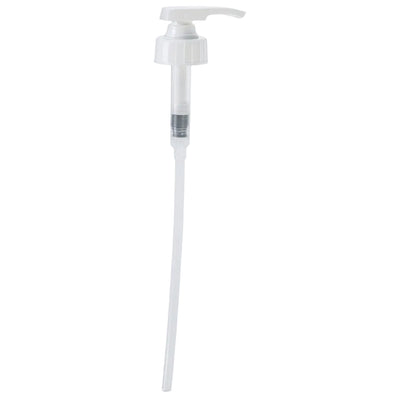
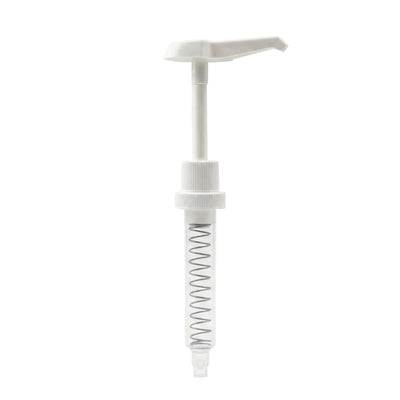 Cleanmax Dispensing Pump Suits 2.5L & 5L Bottles — 8ml Dose
$9.75 inc GST
Buy 10+ and save $0.98 each
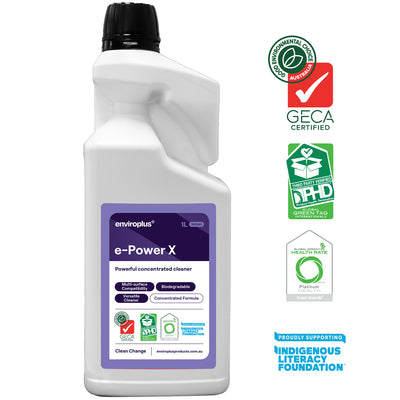 Enviroplus Concentrated Cleaner e-Power X 1L Each
$104.55 inc GST
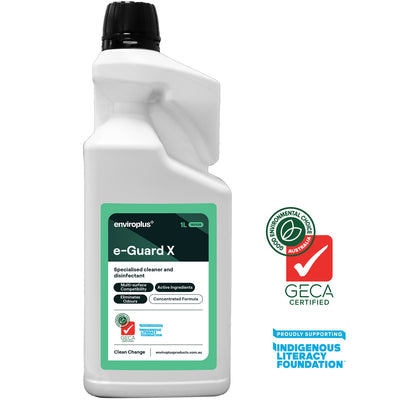 Enviroplus Concentrated Disinfectant Cleaner e-Guard X — 1L
$110.20 inc GST
Buy 10+ and save $11.02 each
Written by
Jordan MatthewsCommercial cleaning specialist at Matthews Cleaning Company. Our expert team draws on years of hands-on field experience to help businesses choose the right tools and chemicals for every cleaning challenge.